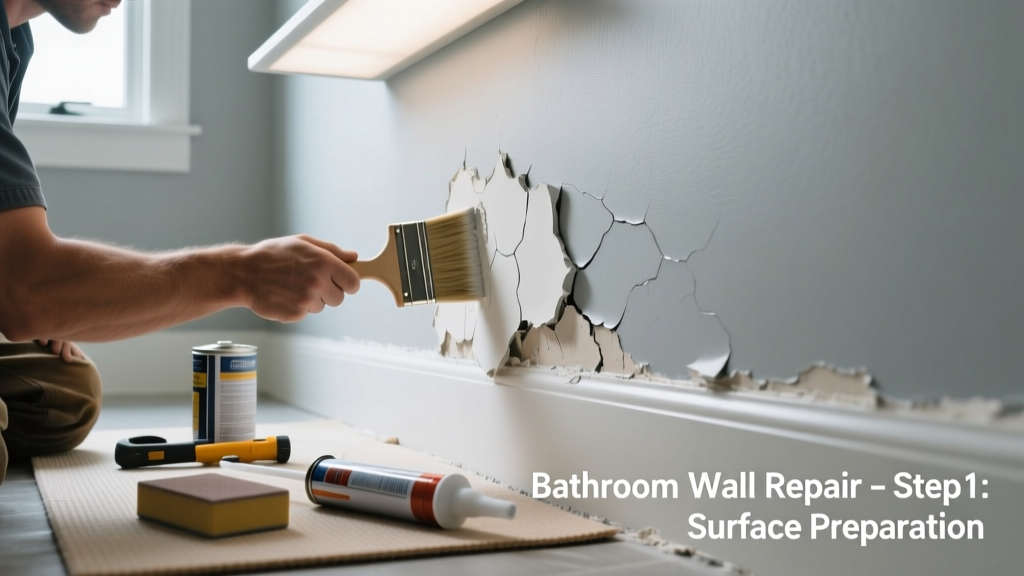
Exterior paint peeling inside your bathroom isn’t just odd—it’s a red flag. That glossy, weather-resistant coating wasn’t meant for humid indoor spaces, and its failure signals moisture intrusion or material incompatibility. Ignoring it invites mold, drywall decay, and costly structural repairs down the line.
Quick Diagnosis
Before grabbing a scraper, confirm the root cause. This isn’t typical interior paint failure—it’s a mismatched system under stress.
- High humidity without adequate exhaust (e.g., no fan or fan vented into attic instead of outside)
- Exterior paint applied over interior drywall or greenboard—lacking proper vapor permeability
- Water infiltration from roof, siding, or window flashing behind the bathroom wall
- Use of oil-based exterior paint over latex primer or damp substrate
- Temperature swings causing differential expansion between paint, sheathing, and drywall
Tools & Materials Needed
| Item | Purpose | Estimated Cost |
|---|---|---|
| 100-grit sandpaper or pole sander | Removes loose paint without gouging drywall; essential for adhesion prep | $8–$15 |
| Moisture meter (pin-type) | Measures drywall moisture content—critical before repainting (safe range: <15% MC) | $45–$90 |
| Zinsser Bulls Eye 1-2-3 Primer | Stain-blocking, alkali-resistant primer that bonds to chalky or glossy surfaces | $22–$28 per gallon |
| Bathroom-specific acrylic eggshell paint | High-mildew resistance, low-VOC, vapor-permeable finish (e.g., Benjamin Moore Aura Bath & Spa) | $65–$85 per gallon |
| Exhaust fan timer switch | Ensures fan runs 20+ minutes post-shower—even if user forgets | $18–$32 |
Step-by-Step Fix
Don’t repaint over failure—rebuild the system. These methods address severity tiers:
- Surface-level peeling (small patches, dry substrate): Scrape, sand, prime with Zinsser Bulls Eye 1-2-3, then apply two coats of bathroom-rated acrylic paint.
- Chalking + bubbling (moisture present but <15% MC): Install a dedicated 110-CFM inline exhaust fan vented through roof or soffit (not attic), run dehumidifier for 48 hours, then follow Step 1.
- Peeling with soft drywall or musty odor: Cut out affected drywall (minimum 6" beyond damage), replace with mold-resistant drywall (e.g., USG Mold Tough), seal seams with setting-type joint compound, prime with Kilz Mold & Mildew Resistant Primer, then topcoat.
When to Call a Pro
DIY stops where structural integrity or hidden water damage begins.
- Moisture meter reads >17% in framing or subfloor beneath wall
- Peeling extends behind baseboard or into adjacent rooms
- You find black staining, warped studs, or efflorescence on concrete slab below
- Roof or window flashing inspection requires ladder work above second story
According to the Insurance Institute for Business & Home Safety's 2023 report, 68% of bathroom-related water damage claims involved undetected leaks behind walls—most missed during DIY visual checks.
Prevention Tips
Fixing peeling is reactive. Prevention is systemic—and cheaper long-term.
- Run bathroom exhaust fan for minimum 20 minutes after every shower (use a timer switch)
- Maintain indoor RH between 30–50% year-round with hygrometer monitoring
- Inspect exterior walls annually for cracked caulk, missing flashing, or gutter debris near bathroom windows
- Never use exterior paint indoors—even "low-VOC" versions lack interior breathability standards
Can I use bleach on this?
No. Bleach kills surface mold but doesn’t penetrate or address moisture sources. It also degrades drywall paper facing and can react unpredictably with exterior paint resins. Use EPA-registered mold inhibitors like Concrobium Mold Control instead, followed by thorough drying.
Why does exterior paint peel faster in bathrooms than outdoors?
Outdoors, UV exposure and temperature cycling are predictable. Indoors, constant high humidity (often 70–90% RH during/after showers) creates sustained osmotic pressure behind non-permeable exterior films—forcing blistering and delamination. Exterior paint’s low vapor permeability (<1 perm) traps moisture against drywall, unlike bathroom-rated paints (5–10 perms).
Is this a sign of mold behind the wall?
It’s highly likely—especially if peeling is accompanied by discoloration, musty odor, or soft drywall. The U.S. EPA estimates that 14% of household water usage is from leaks, many hidden behind walls. Test with a moisture meter first; if readings exceed 16% at multiple depths, assume mold colonization and follow mold remediation protocols.
Can I just paint over it with regular interior paint?
Only after full removal of failing exterior paint and substrate stabilization. Simply covering peeling layers risks adhesion failure within weeks—and may trap moisture, accelerating decay. Always test a small area first: apply primer, let cure 72 hours, then check for bubbling or tackiness.
How long should I wait after fixing to repaint?
Wait until moisture readings stay ≤14% for 72 consecutive hours—verified at three points: surface, middle of drywall, and backside (if accessible). Rushing leads to repeat failure. For context, most bathroom-rated paints require 4–7 days to fully cure in 50% RH; at 70% RH, add 2–3 extra days.
Do I need to replace the drywall if only the paint is peeling?
Not always—but inspect closely. Gently press around peeling edges. If the drywall gives or feels spongy, replacement is mandatory. If firm and dry, aggressive scraping + feather-sanding + proper priming suffices. Refer to drywall repair vs. replacement guide for visual benchmarks.
Exterior paint in a bathroom isn’t a quirk—it’s a symptom. Fixing the paint without addressing humidity control, ventilation, or underlying water paths is like changing oil while ignoring a cracked block. Get the system right, and your walls will hold paint for a decade—not months. And next time you’re choosing paint, remember: the label ‘exterior’ means ‘outside,’ not ‘extra tough.’