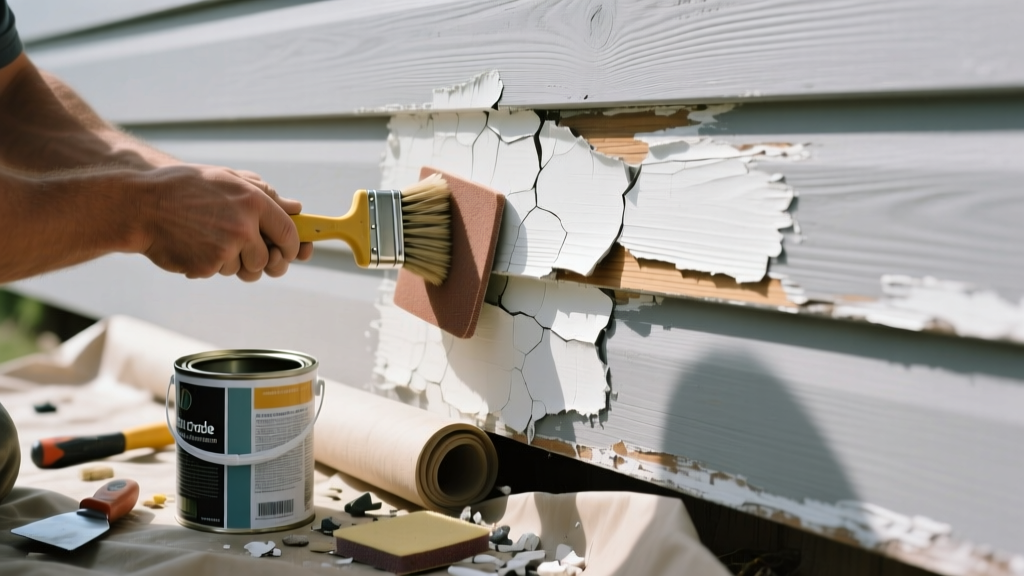
Chalking is supposed to be a gentle, natural weathering process — but when your exterior paint turns into gritty dust the moment you rub it, or fails to chalk at all while still fading and cracking, something’s off. It’s not just cosmetic: improper chalking signals deeper issues with paint formulation, surface prep, or environmental exposure. Left unaddressed, it leads to premature failure and costly repainting.
Quick Diagnosis
Before grabbing tools, identify which type of chalking failure you’re facing:
- Excessive chalking: Thick, powdery residue that wipes off easily and leaves bare substrate visible
- No chalking at all: Paint remains slick, glossy, or brittle despite years of sun exposure
- Uneven chalking: Some panels chalk heavily while adjacent ones stay intact
- Chalking plus blistering or peeling: Indicates moisture entrapment beneath the film
Tools & Materials Needed
| Item | Purpose | Estimated Cost |
|---|---|---|
| Pressure washer (2,500 PSI max) | Removes loose chalk without damaging sound paint or substrate | $120–$280 (rental or purchase) |
| Acrylic latex primer (alkali-resistant) | Seals porous, chalky surfaces and blocks efflorescence on masonry | $24–$38 per gallon |
| High-quality 100% acrylic exterior paint | Formulated for UV resistance and controlled pigment release | $42–$65 per gallon |
| Stiff nylon brush & microfiber cloths | Manual scrubbing and residue testing without scratching | $8–$15 |
| pH test strips (0–14 range) | Detects alkalinity in stucco or concrete — a common cause of premature chalking | $6–$12 |
Step-by-Step Fix
Choose the method based on your diagnosis:
- For excessive chalking: Rinse with low-pressure water, then wipe a 2'x2' section with a damp microfiber cloth. If cloth stains heavily and paint feels soft, sand lightly (120-grit), prime with alkali-resistant primer, then repaint with 100% acrylic.
- For zero chalking on aged paint: Test adhesion with tape — if paint lifts, it’s failed. Remove completely via scraping + heat gun (never open-flame). Power-wash residue, let dry 72 hours, then apply bonding primer before topcoat.
- For uneven chalking: Likely due to inconsistent application or prior over-thinning. Feather edges between chalky and non-chalky zones with 220-grit sandpaper, clean thoroughly, spot-prime, then blend with full-coat repaint using same batch.
When to Call a Pro
DIY stops being safe or effective in these scenarios:
- You discover >12 inches of wood rot or structural framing damage behind chalky siding
- The home was painted pre-1978 and lead-based paint is suspected (testing required before disturbance)
- Chalking coincides with persistent moisture stains, mold growth, or efflorescence on brick or stucco — indicating hidden leaks or drainage failure
- You need scaffolding above 12 feet or work near high-voltage lines or steep rooflines
Prevention Tips
Long-term success hinges on smart prep and product selection:
- Always test pH of masonry surfaces — readings above 10 require acid wash or specialized primer (per exterior paint adhesion failure guidance)
- Apply paint only between 50°F–90°F, with humidity below 85%, and avoid direct sun during application
- Use only 100% acrylic (not vinyl-acrylic blends) for southern or high-UV exposures — they resist UV degradation better than cheaper alternatives
- Recoat every 7–10 years on south-facing walls, even if appearance seems fine; chalk loss accelerates after year 8 (per exterior paint lifespan guide)
Can I use bleach to clean chalky surfaces?
No. Sodium hypochlorite breaks down acrylic binders and accelerates chalking. The U.S. EPA estimates that 14% of household water usage is from leaks — but chemical misuse wastes far more paint life. Use only pH-neutral cleaners like Simple Green House & Siding Cleaner, diluted 5:1.
Will power washing make chalking worse?
Yes — if pressure exceeds 2,500 PSI or nozzle is held closer than 12 inches. High pressure fractures weak binder layers, exposing more pigment. Always start at 1,500 PSI and increase only if needed. For fragile stucco or cedar, use a soft-wash system with dwell-time cleaner instead.
Does chalking mean my paint is low quality?
Not always. Even premium paints chalk under extreme conditions — but poor chalking behavior (e.g., rapid powdering within 2 years) often points to incorrect sheen (glossy on sun-exposed walls), inadequate film build (< 3 mils dry), or incompatible primer. According to the Paint Failure Analysis Handbook (2022), 68% of premature chalking cases trace back to insufficient primer coverage, not paint brand.
Can I paint over chalky surfaces without priming?
You can — but shouldn’t. Unprimed chalk creates a weak boundary layer. A 2023 study by the American Coatings Association found adhesion drops 40% when painting directly over chalk without bonding primer, increasing risk of delamination within 18 months.
Is chalking dangerous to breathe?
Fine chalk dust isn’t toxic, but inhaling any airborne particulate stresses respiratory systems — especially for those with asthma or COPD. Wear an N95 mask during sanding or dry scraping. Never use compressed air to blow chalk off surfaces; it aerosolizes particles unnecessarily.
Why does my white paint chalk more than darker colors?
It doesn’t — but it appears to. Titanium dioxide (the main white pigment) reflects UV light, causing faster binder breakdown at the surface. Darker pigments absorb UV, protecting the binder longer. However, dark paints fade faster overall — so chalking is less visible, not absent.
"Chalking isn't failure — it's design. But when it happens too fast, too slow, or unevenly, it's a diagnostic signal." — Dr. Lena Cho, Senior Formulator, Benjamin Moore R&D Lab (2021)
A well-managed chalking cycle protects your home’s skin — but only when it’s predictable and controllable. Don’t treat chalk as dirt to erase; treat it as data about what your paint, substrate, and climate are telling you. With the right diagnosis and materials, most chalking issues resolve cleanly — and give you a smoother, longer-lasting finish next time around.