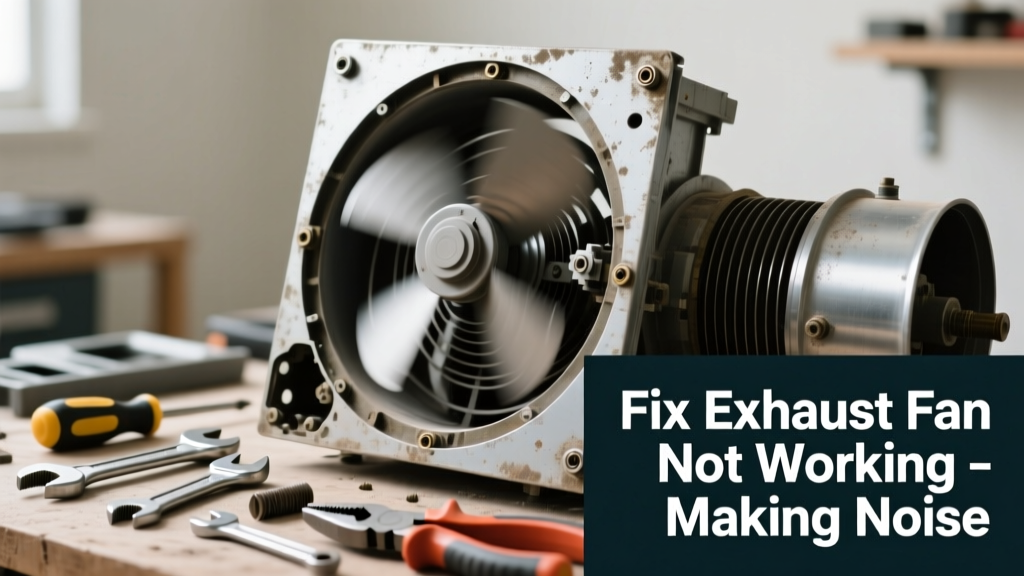
If your bathroom or kitchen exhaust fan suddenly stops working—or starts grinding, rattling, or squealing—it’s more than an annoyance. That noise often signals failing bearings, warped blades, or electrical trouble that can lead to fire hazards or moisture buildup in under 48 hours.
Quick Diagnosis
Before grabbing tools, listen and observe carefully. Unusual noises paired with no airflow usually point to one of these five root causes:
- Accumulated dust and grease clogging the motor or blade assembly
- Loose mounting screws or housing vibrating against drywall or joists
- Worn-out motor bearings (high-pitched whine or grinding)
- Warped or bent fan blade hitting the housing (rattling or thumping)
- Faulty capacitor or wiring short (fan hums but won’t spin, or trips breaker)
Tools & Materials Needed
| Item | Purpose | Estimated Cost |
|---|---|---|
| Non-contact voltage tester | Confirms power is off before touching wires—critical for safety | $12–$25 |
| Phillips and flathead screwdrivers | Remove grille, housing, and motor mounting hardware | $8–$15 |
| Compressed air can or soft brush | Cleans dust from motor windings and blade without disassembly | $5–$12 |
| Replacement capacitor (if needed) | Restores proper motor start torque; matches fan’s microfarad (µF) and voltage rating | $4–$10 |
| White lithium grease (not WD-40) | Lubricates sleeve bearings on older fans—WD-40 dries out and attracts dust | $6–$9 |
Step-by-Step Fix
Work methodically—and always cut power at the circuit breaker first. Verify with your voltage tester before touching any wire.
- Clean the fan assembly: Remove the grille and unscrew the housing. Use compressed air to blow dust from the motor vents and blade. Wipe grime with a damp microfiber cloth (never spray cleaner directly on motor).
- Tighten all mounting points: Check screws securing the housing to the ceiling/wall box and the motor to its bracket. Loose hardware causes resonance—especially in older homes with plaster or thin drywall.
- Inspect and balance the blade: Spin the fan manually. If it wobbles or scrapes, remove the blade and check for bends. Gently straighten minor warps with pliers or replace if cracked. A bent blade causes harmonic vibration that worsens over time.
- Test and replace the capacitor: If the fan hums but won’t start, disconnect power and locate the cylindrical capacitor (usually near the motor). Use a multimeter set to capacitance mode. A reading more than ±10% of the labeled µF means replacement is needed—see our capacitor testing guide.
- Lubricate sleeve bearings (if applicable): Only on pre-2010 models with oil ports. Apply 1–2 drops of white lithium grease—not oil or silicone. Over-lubrication causes slinging and attracts lint, accelerating wear.
When to Call a Pro
Some issues go beyond DIY scope—and ignoring them risks shock, fire, or structural moisture damage. Call a licensed electrician or HVAC technician if:
- The fan trips the breaker repeatedly after cleaning and capacitor replacement
- You detect burning smells, melted wire insulation, or visible scorch marks on the motor housing
- Wiring shows fraying, aluminum-to-copper splices, or lacks a ground wire (common in homes built before 1985)
- Your home uses knob-and-tube or ungrounded BX cable feeding the fan circuit
"Over 37% of residential exhaust fan failures stem from capacitor degradation or bearing seizure—both preventable with annual inspection and cleaning," says the National Kitchen & Bath Association’s 2022 Residential Ventilation Standards Report.
Prevention Tips
Extend your fan’s life and avoid repeat repairs with these habits:
- Run the fan for at least 20 minutes after showers to fully clear humidity—not just during
- Vacuum the grille monthly with a brush attachment to stop dust migration into the motor
- Replace plastic grilles every 5 years—they warp and restrict airflow, increasing motor strain
- Install a timer switch or humidity-sensing fan like these top-rated models to prevent manual neglect
Can I use bleach to clean the exhaust fan grille?
No. Bleach corrodes metal grilles and degrades plastic components over time. Use warm water with mild dish soap and a soft brush instead. For mold on grilles in high-humidity bathrooms, a 3% hydrogen peroxide solution is safer and equally effective.
Why does my fan only make noise when it’s cold?
Cold temperatures thicken lubricant in older sleeve-bearing motors, causing startup grinding until warmed up. This is a sign the bearings are nearing end-of-life—plan for motor replacement within 6 months.
Is it safe to run the fan if it’s making a buzzing sound?
No. Buzzing typically indicates arcing in the switch, capacitor, or motor windings. Continuing to operate it risks overheating, insulation breakdown, or fire. Turn off the circuit immediately and inspect wiring connections.
How long should an exhaust fan last?
Most quality fans last 10–15 years with regular maintenance. The U.S. Department of Energy estimates average lifespan drops to 6–8 years in high-humidity environments without cleaning. Fans installed in steamy master bathrooms without timers fail twice as often.
Can I replace just the motor instead of the whole unit?
Yes—but only if you match voltage, RPM, shaft size, and mounting pattern exactly. Most modern fans use proprietary motors; generic replacements rarely fit or perform safely. Check the manufacturer’s service manual first—we’ve compiled OEM part lookup links here.
What’s the difference between a squeal and a grind?
A high-pitched squeal suggests dry or failing ball bearings (common in newer fans). A low grinding or scraping noise points to blade contact, seized sleeve bearings, or foreign debris inside the housing. Squeals may respond to lubrication; grinding almost always requires disassembly and correction.
A noisy, stalled exhaust fan isn’t just inconvenient—it’s a red flag for moisture damage, mold growth, or electrical risk. Tackle it early with the right tools and mindset, and you’ll keep your air healthy and your repair bill low. And remember: if the fan’s more than 12 years old and needs frequent fixes, upgrading to an ENERGY STAR-rated model pays for itself in energy savings within 18 months.