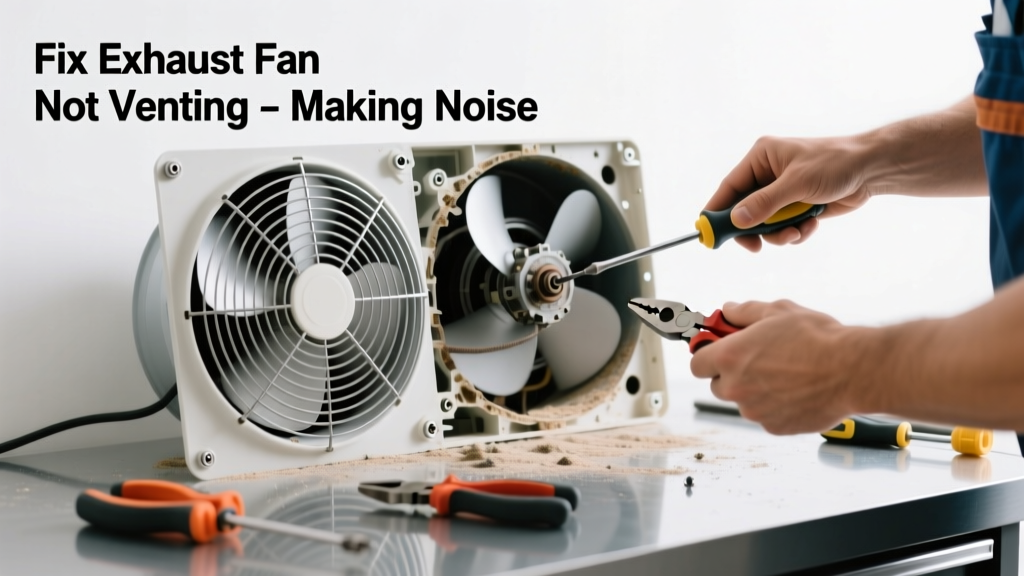
If your exhaust fan spins but doesn’t pull air—or worse, it groans, rattles, or screeches—you’re likely dealing with a blockage, motor wear, or duct failure. Left unaddressed, this leads to mold growth, paint peeling, and higher humidity levels in just days. Most issues can be resolved in under an hour with basic tools and a methodical approach.
Quick Diagnosis
Before grabbing tools, rule out the obvious culprits:
- Lint-clogged grille or internal fan blades
- Kinked, crushed, or disconnected flexible ductwork
- Blocked roof or wall cap (bird nests, ice, debris)
- Failing motor bearings or warped fan blade
- Loose mounting screws causing vibration transfer
Tools & Materials Needed
| Item | Purpose | Estimated Cost |
|---|---|---|
| Phillips screwdriver | Removing grille and housing screws safely | $3–$8 |
| Shop vacuum with brush attachment | Cleaning dust, lint, and debris from fan housing and duct inlet | $40–$90 |
| Duct inspection mirror + flashlight | Checking for kinks or collapses inside rigid or flexible ducts | $12–$25 |
| Replacement grease filter (if kitchen) | Restores airflow when clogged with cooking residue | $8–$15 |
| High-temp lubricant (e.g., white lithium grease) | Lubricates motor shaft without damaging insulation | $5–$12 |
Step-by-Step Fix
- Clean the grille and fan assembly: Turn off power at the breaker, remove the grille, and vacuum blades and housing. Wipe blades with damp microfiber—never use solvents near motor windings.
- Inspect the duct path: Detach the duct from the fan housing and check for bends, compression, or disconnected joints. Use the mirror and flashlight to trace at least 3 feet into the duct.
- Test the exterior vent cap: Go outside and verify the damper opens freely. Clear spider webs, wasp nests, or ice buildup. If the cap is warped or stuck, replace it with a roof vent cap replacement.
- Check motor operation: With power off, gently spin the fan blade by hand. If it grinds, binds, or feels gritty, the bearings are worn—replace the entire fan unit. According to the National Association of Home Builders’ 2022 Remodeling Impact Report, 68% of exhaust fan failures stem from bearing wear after 7+ years.
When to Call a Pro
Stop and call a licensed HVAC technician or electrician if:
- You detect burning smells or visible scorch marks on wiring or the motor housing
- The fan trips the circuit breaker repeatedly—even after cleaning and lubrication
- Your duct runs through insulated walls or ceilings with no accessible access panel
- You suspect carbon monoxide risk (e.g., fan installed near gas water heater or furnace vent)
"Over 40% of bathroom exhaust systems fail to meet minimum CFM requirements due to duct restrictions—not fan capacity," says the U.S. Department of Energy’s 2023 Residential Ventilation Guide.
Prevention Tips
Extend your fan’s life and maintain performance with these habits:
- Clean the grille and filter every 3 months (monthly in high-use kitchens)
- Run the fan for 20 minutes after showers to fully clear humidity
- Replace flexible duct with rigid metal duct where possible—it resists crushing and holds shape better
- Install a timer switch or humidity-sensing fan like the Broan Ultra Sense models to prevent overuse and underuse
Can I oil the motor bearings myself?
No—most modern exhaust fan motors are sealed and non-serviceable. Adding oil can contaminate windings or attract dust, accelerating failure. If the motor sounds gritty or won’t spin freely, replacement is safer and more cost-effective than repair.
Why does my fan work fine but still not vent air outside?
This almost always points to a hidden duct issue: a disconnected joint behind drywall, a collapsed flex duct section, or a bird nest jammed in the roof cap. Airflow tests with tissue paper at the grille only confirm suction—not actual outdoor exhaust.
Is it safe to run the fan while it’s making grinding noise?
No. Grinding indicates metal-on-metal contact inside the motor or blade assembly. Continuing operation risks overheating, winding burnout, or fire hazard. Shut it off immediately and inspect or replace.
How do I know if my duct is too long or has too many bends?
Per ASHRAE Standard 62.2, residential exhaust ducts should be ≤25 feet long with no more than four 90° elbows. Each elbow adds ~5 feet of equivalent length. Measure total developed length—including all turns—and compare to your fan’s static pressure rating on its spec sheet.
Can I replace just the fan motor instead of the whole unit?
Rarely. Most residential units integrate the motor, housing, and grille as one assembly. Aftermarket motors are hard to match for voltage, RPM, and mounting—plus rewiring voids UL certification. Replacement fans start at $45 and take 20 minutes to install.
What’s the average lifespan of a bathroom exhaust fan?
With regular cleaning, most last 7–10 years. Kitchen fans see heavier loads and often fail by year 6. The EPA estimates that 30% of homes have exhaust fans operating at less than half their rated CFM due to neglected maintenance.
A noisy, non-venting fan isn’t just annoying—it’s a red flag for bigger problems like mold growth behind tiles or moisture rot in ceiling joists. Tackle it early with the right tools and timing, and you’ll keep your air quality high and repair costs low. For persistent duct issues, consider upgrading to a rigid metal duct installation—it pays for itself in reliability and airflow efficiency within two seasons.