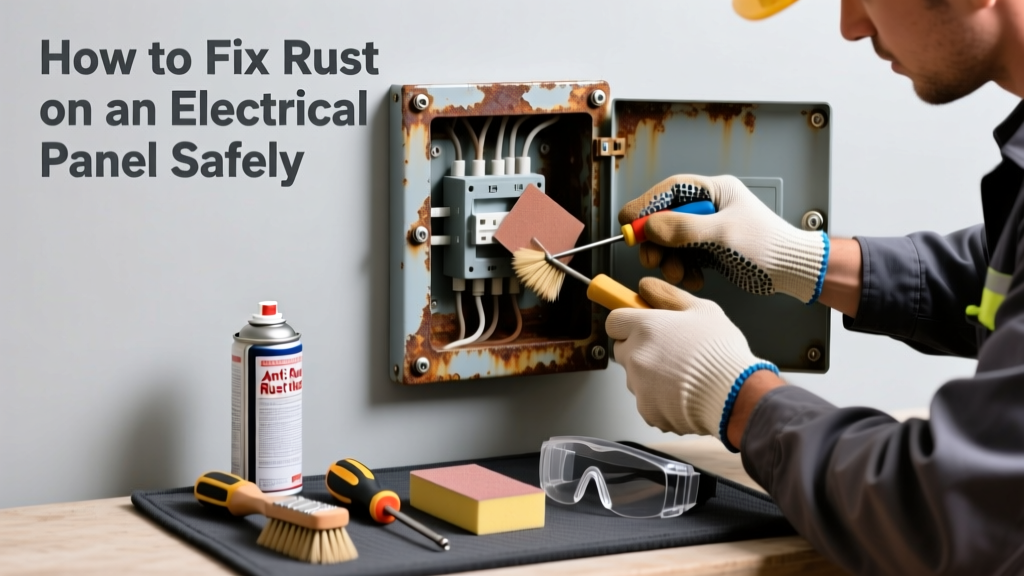
Rust on your electrical panel isn’t just ugly—it’s a red flag for moisture intrusion, corrosion, and potential fire risk. Even light surface rust can compromise grounding paths and loosen connections over time. If you spot orange flecks, flaking metal, or dampness near your panel, act fast—but never rush into repairs without shutting off power first.
Quick Diagnosis
Rust forms where moisture meets exposed steel. Common culprits include:
- Leaky roof or wall above the panel (especially in garages or basements)
- Poor ventilation in enclosed utility closets
- Condensation from HVAC ducts routed too close to the panel
- Undetected plumbing leaks behind drywall near the panel location
- Outdoor panels lacking proper NEMA 3R-rated enclosures
Tools & Materials Needed
| Item | Purpose | Estimated Cost |
|---|---|---|
| Non-contact voltage tester | Verifies power is fully off before opening panel | $15–$30 |
| Fine steel wool (0000 grade) | Gently removes surface rust without damaging bus bars | $4–$8 |
| Zinc-rich cold galvanizing compound | Restores protective zinc layer; UL-listed for electrical use | $22–$35 |
| Dielectric grease | Seals screw threads and lugs against future moisture | $6–$12 |
| NEMA 3R outdoor-rated panel cover (if applicable) | Replaces damaged or non-rated enclosure for exterior panels | $85–$220 |
Step-by-Step Fix
- Shut off main power at the utility meter or disconnect switch—not just the main breaker—and verify zero voltage with a non-contact tester at every bus bar and terminal.
- Remove rust mechanically: Use 0000 steel wool only—never wire brushes or sandpaper—to avoid embedding conductive particles or scratching bus bar plating.
- Apply cold galvanizing compound with a clean brush to all bare steel surfaces (not bus bars, breakers, or insulation). Let cure per manufacturer specs (usually 2–4 hours).
- Re-torque all lugs and ground screws to NEC-specified values using a calibrated torque screwdriver—loose connections cause heat buildup and accelerate corrosion.
- Seal entry points: Caulk conduit knockouts and wall penetrations with silicone-based sealant rated for electrical use (e.g., GE Silicones RTV615).
When to Call a Pro
Stop immediately and contact a licensed electrician if you observe any of these:
- Rust penetrating deeper than 0.005" into the panel’s steel frame (visible pitting or holes)
- Corrosion on aluminum bus bars or neutral/ground bars (requires specialized cleaning and anti-oxidant paste)
- Brittle, cracked, or discolored insulation on wires entering the panel
- Panel is a Federal Pacific, Zinsco, or Sylvania—these are known fire hazards and should be replaced, not repaired
- Your home has knob-and-tube wiring feeding into the panel
Prevention Tips
Rust prevention is cheaper and safer than repair. Start here:
- Install a dehumidifier in damp utility rooms (keep relative humidity below 50%)
- Add drip loops to all incoming service conductors to prevent water tracking down cables
- Check attic and roof flashing annually—especially near dormer walls where panels sit
- Replace standard panel covers with NEMA 3R-rated versions in garages, sheds, or exterior walls
- Use vapor-barrier paint (e.g., Rust-Oleum Stops Rust Protective Enamel) on interior drywall behind panels
Can I use bleach on this?
No—bleach accelerates corrosion on steel and damages insulation. It also reacts dangerously with copper and aluminum components. Stick to mechanical removal and zinc-based coatings approved for electrical use.
Is rust inside the panel door normal?
Light surface rust on the inner door skin may be acceptable if the main enclosure and bus bars are unaffected—but it signals high humidity. Wipe with dry cloth, apply dielectric grease to hinges, and investigate air sealing.
Will rust cause my breakers to trip more often?
Not directly—but rust-induced poor grounding or loose neutral connections can cause nuisance tripping, especially on AFCI/GFCI breakers. According to the National Fire Protection Association’s 2023 Electrical Equipment Fire Report, 12% of residential arc-fault incidents involved compromised grounding due to corrosion.
Can I paint over rusted areas?
Only with UL-listed, electrically conductive or non-conductive coatings specifically designed for panels—standard spray paint insulates critical grounding paths and violates NEC 110.3(B). Never paint bus bars, lugs, or grounding electrodes.
How often should I inspect my panel for rust?
Twice yearly: once before humid summer months and again after winter heating season. Focus on bottom edges, hinge areas, and conduit entries—these collect condensation fastest.
Does rust void my panel’s warranty?
Yes—in most cases. Square D, Siemens, and Eaton warranties require installation per NEC and manufacturer specs, including proper enclosure rating and environmental protection. Moisture-related rust is typically excluded from coverage.
"Surface rust on the enclosure is fixable, but once corrosion reaches the neutral bar or main bonding jumper, replacement is the only safe option." — Mike O’Connor, Master Electrician and NEC Code Trainer, 2022
Fixing rust early keeps your panel reliable and avoids cascading issues like arcing faults or failed inspections during resale. Most minor cases take under two hours with the right prep—but never skip verifying power is off, or assume 'a little rust' won't get worse. For long-term peace of mind, pair your repair with a panel inspection checklist and consider upgrading to a modern AFCI/GFCI panel if yours is over 25 years old. And if you're unsure whether the rust is cosmetic or structural, that's exactly when a pro earns their fee—replacement costs start around $1,800, but fire damage averages $47,000 (Insurance Institute for Business & Home Safety, 2023).