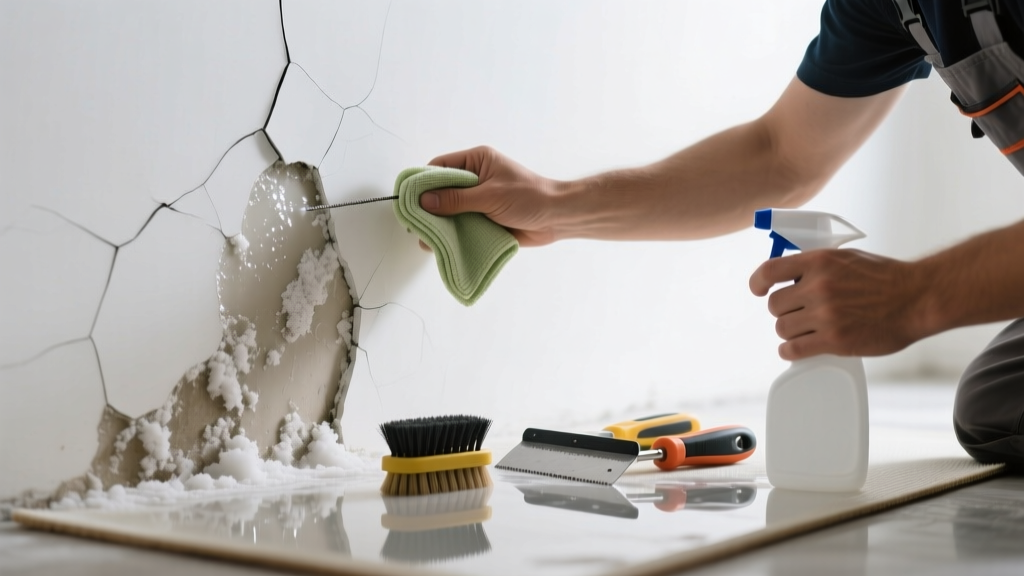
You scrub, rinse, and repeat—but that white, chalky crust keeps reappearing on your basement or foundation walls. Efflorescence isn’t just cosmetic; it’s a red flag signaling ongoing moisture intrusion that DIY cleaners often miss.
Quick Diagnosis
Efflorescence that won’t stay gone usually means the root cause hasn’t been addressed. Here are the most common culprits:
- Hydrostatic pressure pushing groundwater through porous masonry
- Cracked or missing weep holes in retaining walls or foundations
- Improper grading—soil sloping toward the house instead of away
- Clogged or absent gutters and downspouts dumping water near the foundation
- Interior humidity combined with cold wall surfaces (condensation mimicking efflorescence)
Tools & Materials Needed
| Item | Purpose | Estimated Cost |
|---|---|---|
| Wire brush (stiff nylon or stainless steel) | Removes surface crystals without damaging mortar joints | $8–$15 |
| pH test strips (0–14 range) | Confirms alkalinity of residue—true efflorescence reads pH 10–13 | $6–$12 |
| Dehumidifier (50+ pint/day capacity) | Lowers ambient humidity to rule out condensation as the source | $180–$320 |
| Waterproofing sealer (silane/siloxane-based) | Penetrates masonry to block water vapor without trapping moisture | $35–$65 per gallon |
| Moisture meter (pin-type with depth probe) | Measures internal wall moisture content—readings above 18% indicate active intrusion | $75–$140 |
Step-by-Step Fix
Don’t just clean—interrupt the cycle. Try these methods in order, confirming results before moving on:
- Verify it’s real efflorescence: Dampen a small area with distilled water. If the residue dissolves and leaves no stain, it’s likely soluble salts—not mold or paint failure.
- Dry-brush first: Use a stiff nylon brush (never wire on historic brick) to remove loose deposits. Vacuum dust thoroughly—don’t blow it into air vents.
- Apply diluted vinegar (1:1 with water): Spray, wait 5 minutes, then scrub gently. Rinse with low-pressure water. Vinegar neutralizes alkaline salts better than bleach (which can worsen salt migration).
- Seal only after confirming dryness: Use a silane/siloxane sealer like Prosoco Joint & Seam Sealer. Apply at 60–85°F with <70% humidity. Two coats, 4 hours apart. Never use film-forming acrylics—they trap vapor behind them.
- Monitor for 3 weeks: Check daily with moisture meter. If readings rise >16%, stop sealing and investigate exterior drainage.
When to Call a Pro
DIY stops where structural integrity or health risks begin. Call a certified waterproofing contractor if you observe any of these:
- Efflorescence appearing on interior drywall (not just masonry)—indicates bulk water intrusion
- Horizontal cracks wider than 1/8 inch in foundation walls, especially near corners or windows
- Musty odors + visible mold growth behind baseboards or under flooring
- Efflorescence returning within 72 hours of cleaning—even after sealing and dehumidifying
According to the Insurance Institute for Business & Home Safety's 2023 report, 68% of foundation repairs initiated after persistent efflorescence required excavation and exterior membrane installation—work beyond safe DIY scope.
Prevention Tips
Long-term control hinges on redirecting water—not masking symptoms. Focus on these high-impact actions:
- Extend downspouts at least 5 feet from the foundation using rigid aluminum extensions (flexible ones collapse and clog)
- Re-grade soil so it slopes 6 inches over 10 feet away from the house—use a level and string line to verify
- Install a French drain along the footing if soil is clay-heavy or yard is flat (see our French drain installation guide)
- Run a dehumidifier year-round in basements—maintain 30–50% RH to prevent condensation-driven salt migration
- Inspect mortar joints annually; repoint crumbling areas with Type N mortar (not cement-rich Type S) to allow vapor escape
Can I use bleach on this?
No. Bleach (sodium hypochlorite) reacts with calcium salts to form insoluble compounds that embed deeper into pores. It also accelerates corrosion of embedded metal lath or fasteners. Stick to pH-neutral or mildly acidic cleaners like diluted white vinegar or specialized masonry descalers.
Why does efflorescence keep coming back after I seal the wall?
Because sealing the interior surface traps moisture behind the barrier—forcing dissolved salts to migrate *through* the sealer or find new exit points. True prevention requires eliminating the water source first. As masonry restoration specialist Dr. Robert F. Young notes in his 2021 book Masonry Moisture Management: “A sealer is never a substitute for drainage—it’s the last line of defense, not the first.”
Is efflorescence dangerous to my family’s health?
The salts themselves (calcium carbonate, sodium sulfate) aren’t toxic, but their presence signals chronic dampness—a breeding ground for hidden mold and dust mites. The U.S. EPA estimates that 14% of household water usage is from leaks, many undetected until efflorescence appears. Address the moisture, not just the powder.
Can I paint over efflorescence to hide it?
Only after full remediation—and even then, use breathable mineral paints like limewash or silicate-based coatings. Standard latex or acrylic paints will blister and peel as trapped moisture pushes outward. For more on compatible finishes, see our masonry paint vs. sealer guide.
How long should I wait after fixing drainage before cleaning efflorescence?
Wait at least 4–6 weeks after correcting grading, gutters, or installing drainage. This allows the wall to dry from the inside out. Rushing cleaning or sealing leads to premature failure. Use your moisture meter to confirm readings stabilize below 12% before proceeding.
Does efflorescence mean my foundation is failing?
Not necessarily—but it’s a serious warning sign. Efflorescence alone doesn’t indicate structural failure, but it confirms water is moving through your masonry under pressure. Left unaddressed, that same water can freeze-thaw cycle, spalling brick or cracking mortar. Get a licensed structural engineer involved if you spot accompanying signs like stair-step cracks or inward bowing.
Efflorescence isn’t stubborn—it’s persistent because it’s telling you something deeper is wrong. Treat the symptom without fixing the source, and you’ll be scrubbing the same wall for years. Start outside, check your grade and gutters, then work inward. When the white dust stops returning, you’ll know the system is finally balanced—not just cleaned.