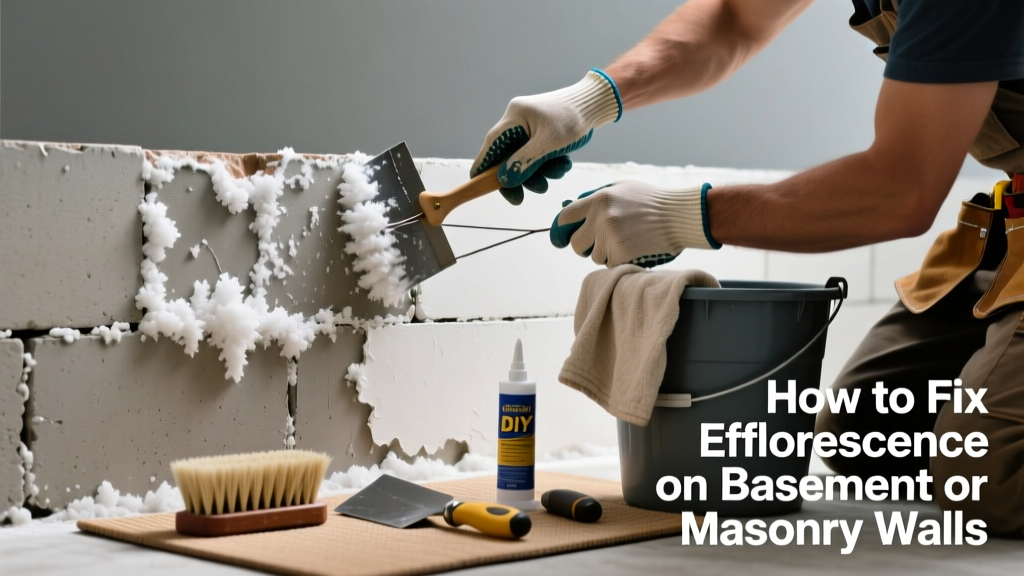
That chalky white powder blooming across your basement wall or brick foundation isn’t mold—it’s efflorescence, a visible sign of water moving through masonry. While harmless to humans, it signals serious moisture intrusion that can weaken mortar and spall surfaces over time. Ignoring it invites long-term structural damage.
Quick Diagnosis
Efflorescence forms when soluble salts dissolve in water, migrate to the surface, and crystallize as the water evaporates. Common root causes include:
- Hydrostatic pressure pushing groundwater up through foundation footings
- Cracked or unsealed mortar joints in exterior brick veneer
- Poorly graded soil sloping toward the foundation (causing splashback and saturation)
- Lack of functioning gutters or downspout extensions (dumping 1,000+ gallons/year near walls)
- Interior humidity condensing on cold masonry surfaces in unventilated basements
Tools & Materials Needed
| Item | Purpose | Estimated Cost |
|---|---|---|
| Stiff nylon brush (not wire—too abrasive) | Loosens surface crystals without damaging mortar | $8–$12 |
| White vinegar (5% acetic acid) or muriatic acid (diluted 1:10) | Dissolves salt deposits; vinegar for light cases, acid for heavy buildup | $3–$15 |
| N95 respirator + chemical-resistant gloves | Protects lungs and skin during acid application | $10–$25 |
| Plastic sheeting + painter’s tape | Contains runoff and protects adjacent flooring or drywall | $6–$14 |
| Moisture meter (pin-type, 0–100% scale) | Verifies if wall moisture content exceeds 15%—a red flag for ongoing infiltration | $45–$85 |
Step-by-Step Fix
- Dry-brush first: Use a stiff nylon brush to remove loose, powdery efflorescence. Work top-to-bottom and vacuum debris with a shop vac (not a household vacuum—salt dust clogs filters).
- Rinse with distilled water: Spray lightly with distilled (not tap) water to avoid reintroducing minerals. Let dry fully—this confirms whether salts are still migrating.
- Apply vinegar solution: For moderate cases, spray undiluted white vinegar, wait 5 minutes, then scrub gently. Rinse with distilled water and air-dry 48 hours.
- Use diluted muriatic acid only if needed: Mix 1 part acid to 10 parts water in a plastic bucket (never reverse). Apply with a stiff brush, wait 2–3 minutes, then neutralize with baking soda slurry (½ cup baking soda + 1 quart water) before rinsing thoroughly.
- Verify with moisture meter: After full drying (72+ hours), test multiple spots. If readings stay above 15%, the source hasn’t been addressed.
When to Call a Pro
DIY removal is safe for surface-level, intermittent efflorescence—but stop and consult a certified waterproofing contractor if you see any of these:
- Efflorescence reappears within 2 weeks of cleaning—even after proper drying
- Cracks wider than 1/8 inch in foundation walls or horizontal cracks in basement blocks
- Efflorescence accompanied by musty odors, peeling paint, or blistering drywall—signs of hidden mold or chronic dampness
- Water pooling at the base of interior walls after rain, indicating failed footing drains or high water table issues
According to the Insurance Institute for Business & Home Safety's 2023 report, 68% of foundation moisture problems worsen within 18 months when only surface treatment is applied—no underlying fix.
Prevention Tips
Removing efflorescence is temporary unless you interrupt the water path. Focus on redirecting moisture *before* it reaches the wall:
- Extend downspouts at least 5 feet from the foundation—verified to reduce basement moisture by 30% (U.S. EPA WaterSense, 2022)
- Regrade soil so it slopes away from the house at 1 inch per foot for the first 6 feet
- Seal exposed mortar joints on exterior brick with a breathable silane/siloxane sealer—not acrylic paint, which traps vapor
- Install a dehumidifier in basements with relative humidity consistently above 60%
- Inspect weep holes in brick veneer annually—clogged holes cause trapped moisture behind the wall
Can I use bleach on efflorescence?
No. Bleach does not dissolve mineral salts and can react unpredictably with calcium-based masonry, potentially causing surface etching or discoloration. It also fails to address the moisture source—and may mask mold growth underneath the salt layer. Stick to vinegar or properly diluted muriatic acid.
Will sealing the wall stop efflorescence permanently?
Only if the sealant is vapor-permeable *and* applied after fixing the water source. Non-breathable sealers like epoxy or standard acrylic paints trap moisture behind the surface, increasing hydrostatic pressure and worsening spalling. Use only penetrating silane/siloxane sealers rated for below-grade masonry.
Is efflorescence dangerous to pets or kids?
The salts themselves—mostly sodium, potassium, or calcium sulfates—are low-toxicity and not absorbed through skin. However, inhaling fine crystalline dust over time may irritate airways. Always vacuum (not sweep) residue and wash hands after handling. Keep pets and toddlers away during acid treatments.
Why does efflorescence appear more in spring and fall?
These seasons bring frequent temperature swings and higher ambient humidity—conditions that slow evaporation, allowing dissolved salts more time to migrate to the surface before drying. Cold walls in winter also cause condensation, while spring rains saturate soils and increase hydrostatic pressure.
Can I paint over efflorescence?
Never. Paint applied over active efflorescence will bubble, peel, or chalk within weeks as salts continue migrating. Even masonry primers fail unless the wall has been cleaned, dried for 7+ days, and tested with a moisture meter showing ≤12% RH.
Does efflorescence mean my foundation is failing?
Not immediately—but it’s a reliable early warning. The U.S. Department of Housing and Urban Development notes that untreated efflorescence often precedes mortar joint deterioration and freeze-thaw spalling in cold climates. Left unchecked for 5+ years, it contributes to structural weakening, especially in older cinder block foundations.
Fixing efflorescence isn’t just about cosmetics—it’s your wall’s distress signal. Tackle the surface with care, but invest equal energy in finding where the water’s coming from. A dry basement starts with dry soil, not dry walls. For persistent cases, pair your moisture meter readings with a review of interior vs. exterior waterproofing options, and consider a foundation crack assessment checklist before winter rains return.