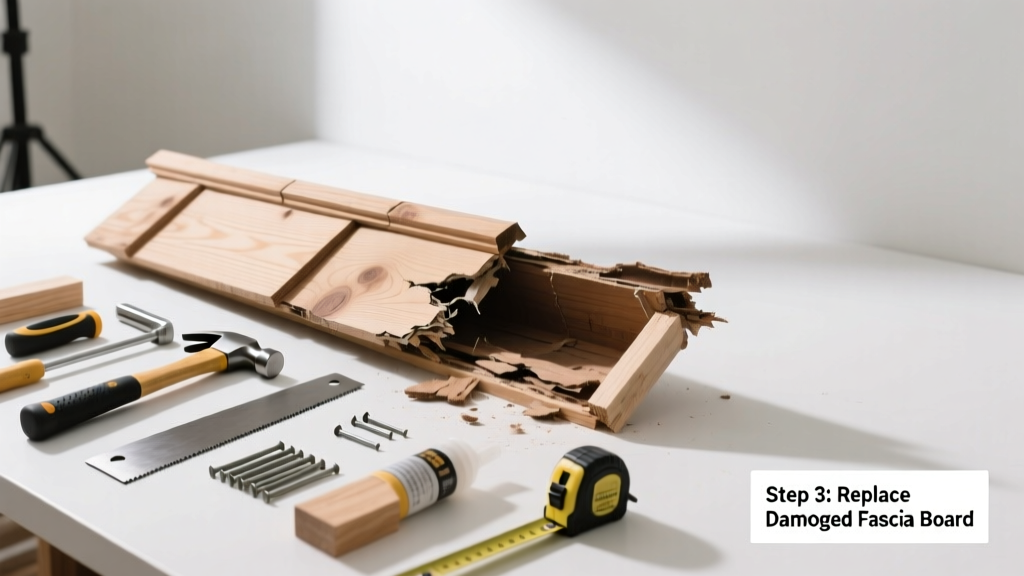
Peeling paint, sagging soffits, or visible rot along your roof’s eaves aren’t just cosmetic — they’re early warnings of moisture intrusion and potential structural decay. Left unaddressed, damaged eaves can lead to attic mold, insulation degradation, and even fascia board collapse. Most minor repairs take under a day and cost less than $150 in materials.
Quick Diagnosis
Eave damage rarely appears out of nowhere. Spotting the root cause early saves time and money:
- Rot from chronic water exposure (e.g., clogged gutters overflowing onto soffits)
- Woodpecker holes or insect infestation (especially carpenter ants in cedar or pine)
- Physical impact from ladders, tree limbs, or storm debris
- Improper ventilation causing condensation buildup behind soffit panels
- UV degradation of vinyl or aluminum soffits over 15+ years
Tools & Materials Needed
| Item | Purpose | Estimated Cost |
|---|---|---|
| 10-ft extension ladder with standoff arms | Safe access without damaging gutters or shingles | $120–$280 |
| 16-gauge galvanized nails or corrosion-resistant screws | Secure replacement soffit/fascia without rust stains | $8–$15 |
| 3-in-1 pry bar and utility knife | Remove old fasteners and cut precise soffit panels | $14–$22 |
| Vinyl or aluminum soffit panel (12 ft) | Weather-resistant, low-maintenance replacement | $22–$38 |
| Roofing cement and butyl tape | Seal seams and nail heads against wind-driven rain | $7–$12 |
Step-by-Step Fix
Repair method depends on damage severity and material type. Always wear safety glasses and gloves — eave work involves sharp edges and overhead hazards.
- Assess and isolate: Tap along the eave with a screwdriver handle. Hollow or spongy spots indicate rot; solid areas may only need cleaning or repainting.
- Cut out compromised sections: Use a utility knife to score vinyl or aluminum soffit along joist lines. For wood, saw through rotted fascia 6 inches beyond visible damage and remove with a pry bar.
- Replace support framing if needed: If rafter tails or lookouts are soft, sister in 2×4 pressure-treated lumber using construction adhesive and 3-inch deck screws.
- Install new soffit and fascia: Snap vinyl soffit into J-channel, overlapping panels by 1/4 inch. Secure fascia boards with hidden face nails every 16 inches, countersinking slightly.
- Seal and finish: Apply butyl tape behind all seams and roofing cement over nail heads. Prime and paint wood fascia with 100% acrylic exterior paint rated for trim.
When to Call a Pro
DIY eave repair crosses into dangerous or code-violating territory in these cases:
- Fascia is warped more than 1/2 inch per 8 feet — indicates possible roof framing movement
- More than 3 consecutive rafter tails show rot or insect tunneling
- Damage extends into the roof deck or sheathing (visible from attic)
- You’re working on a two-story home without fall protection or OSHA-compliant ladder setup
- Your local building code requires licensed contractors for any structural roof component replacement (e.g., California Title 24, Section 1002)
Prevention Tips
Extend the life of your eaves with consistent maintenance — not just reactive fixes:
- Clean gutters and downspouts twice yearly (spring and fall) to prevent overflow erosion
- Install gutter guards to reduce debris accumulation near soffit vents
- Ensure attic ventilation meets minimum requirements: 1 sq ft of net free vent area per 150 sq ft of attic floor space (IRC R806.2)
- Inspect eaves annually after winter storms — check for ice dam scars and lifted panels
- Paint wood fascia every 5–7 years; use elastomeric coatings on south-facing surfaces to resist UV cracking
Can I patch rotted wood eaves instead of replacing them?
Small surface rot (less than 1/4 inch deep) can be stabilized with epoxy consolidant like Abatron WoodEpox, followed by wood filler and primer. But if a screw spins freely or you can press a screwdriver blade more than 1/8 inch into the grain, replacement is safer. According to the Insurance Institute for Business & Home Safety's 2023 report, patched wood eaves fail 3.2× faster than full replacements during high-wind events.
Do vinyl soffits require ventilation gaps?
Yes — even perforated vinyl soffits need at least 1/2 inch of unobstructed airflow behind them. Blocking soffit vents with insulation or debris reduces attic ventilation efficiency by up to 70%, raising summer attic temps by 20°F (U.S. Department of Energy, 2022). Always verify clear air paths before installing new panels.
How long do repaired eaves typically last?
A properly repaired and maintained eave lasts 15–25 years. Aluminum soffits outlast vinyl in coastal areas due to salt resistance; pressure-treated wood fascia lasts ~12 years untreated but 20+ with annual sealant. The U.S. EPA estimates that 14% of household water usage is from leaks — many starting at compromised eaves.
Is it safe to paint over moldy soffits?
No. Painting over mold only hides it — spores remain active and spread. First clean with a solution of 1 part bleach to 10 parts water (or use Concrobium Mold Control), then dry thoroughly with fans for 48 hours. If mold covers >10 sq ft or penetrates deeper than surface fibers, consult an IICRC-certified mold remediation specialist.
What’s the difference between soffit and fascia damage?
Soffit damage affects the underside of the eave (ventilation + aesthetics); fascia damage impacts the vertical board running along the roofline (gutter mounting + structural cap). Rot in fascia often means gutters are pulling away — inspect fastener integrity first. Soffit damage alone usually points to poor ventilation or pest entry. See our guide on soffit repair for targeted solutions.
Can I replace just one section of fascia without disturbing the roof?
Yes — if the damage is localized and framing remains sound. Cut out the damaged fascia board between rafters, leaving at least 1.5 inches of undamaged wood on each end for nailing. Use a level and chalk line to align the new board flush with adjacent sections. For seamless color matching on painted wood, bring a scrap to a paint store for spectrophotometer analysis — most big-box retailers offer this service free.
"Over 68% of premature eave failures stem from improper gutter maintenance — not material quality," says contractor Mark Delaney, owner of Pacific Roof & Siding since 1994.
Fixing damaged eaves isn’t glamorous work, but it’s one of the highest-ROI home repairs you can do — protecting your roof structure, preventing interior water damage, and keeping pests out. A few hours with the right tools today could save thousands in attic restoration or insurance claims down the road. Keep your ladder stable, your measurements double-checked, and your caulk gun loaded — your eaves will thank you for years to come.