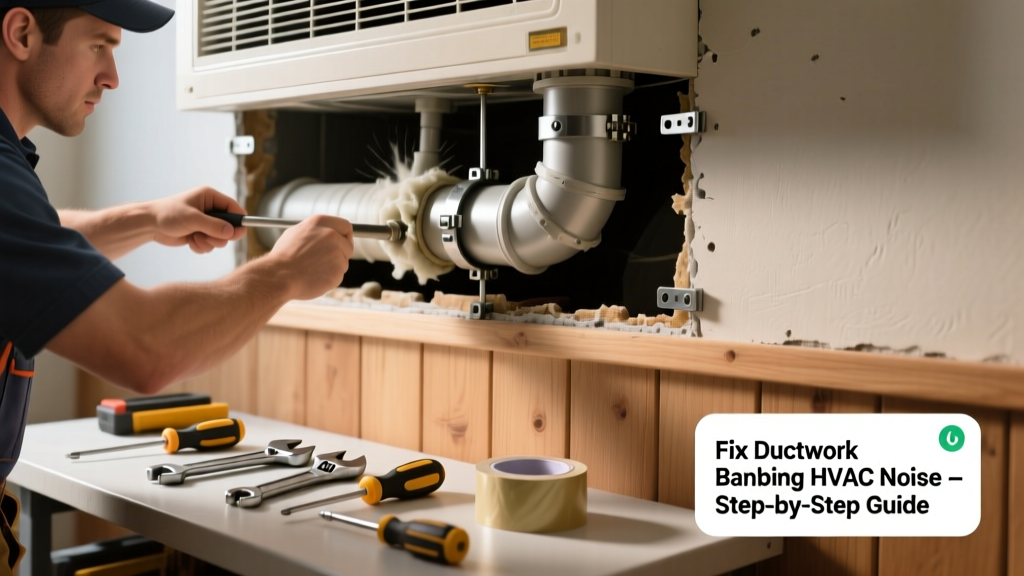
That loud 'BANG!' when your furnace kicks on isn’t just annoying—it’s a warning sign your duct system is under stress. Most duct banging stems from simple, fixable issues like loose sheet metal, oversized ducts, or rapid temperature shifts—not a failing furnace. Ignoring it can worsen over time, leading to cracked seams, higher energy bills, or even premature blower motor failure.
Quick Diagnosis
Before grabbing tools, pinpoint the root cause. Duct banging rarely happens at random—timing and location tell the story:
- Bang occurs immediately after furnace ignition: Likely thermal expansion in sheet metal or duct flexing due to sudden air pressure surge.
- Bang repeats every few minutes during runtime: Often a loose duct hanger, disconnected register boot, or collapsing flexible duct section.
- Noise originates near vents or registers: Usually loose damper blades, warped grilles, or improperly secured duct transitions.
- Bang coincides with fan speed change (e.g., on two-stage systems): Points to undersized return ducts or excessive static pressure.
Tools & Materials Needed
| Item | Purpose | Estimated Cost |
|---|---|---|
| 3/8" drive ratchet + 1/4" and 5/16" socket set | Tightens loose screws on duct collars, register boots, and hangers | $12–$22 |
| Aluminum foil tape (UL 181A-P rated) | Seals small gaps without restricting airflow or creating fire hazards | $8–$14 |
| Insulated duct strap kit (with rubber isolators) | Replaces rigid metal hangers to absorb vibration and thermal movement | $16–$28 |
| Manometer (0–2" w.c. range) | Measures static pressure—critical for diagnosing oversized blowers or undersized returns | $75–$140 |
| Non-contact infrared thermometer | Identifies hot/cold spots indicating poor insulation or duct leaks | $25–$45 |
Step-by-Step Fix
Start with the safest, most common fixes first—no ladder required for most:
- Inspect and tighten all accessible duct connections: Focus on where supply ducts meet the furnace collar, plenum, and register boots. Use your ratchet to snug (not overtighten) screws on sheet-metal clamps and flange bolts. Loose connections vibrate violently under pressure spikes.
- Install rubber-isolated hangers: Replace any bare metal straps or nails holding ducts in attics or crawlspaces with insulated duct straps. The U.S. Department of Energy recommends hanger spacing no more than 4 feet apart for 6"–10" round ducts to prevent sagging-induced noise.
- Add duct liner or mass-loaded vinyl wrap to noisy trunk lines: Apply 1/4" fiberglass duct liner (R-3.5 minimum) or MLV-backed barrier to sections showing visible vibration. Avoid covering dampers or turning vanes.
- Adjust blower speed or install a variable-speed controller: If banging persists and you have a multi-speed or ECM blower, reduce high-speed CFM output by 10–15% via dip switches or control board programming—this cuts peak static pressure that causes ‘oil canning’ in thin-gauge ducts.
When to Call a Pro
Some duct banging signals deeper systemic problems that demand HVAC-specific expertise and calibrated equipment:
- You measure static pressure above 0.65" w.c. on the supply side (indicating restrictive duct design or blockage).
- Banging coincides with visible duct flexing, bulging, or seam separation—even after tightening.
- The noise only occurs during heating mode and you suspect heat exchanger cracks (a carbon monoxide risk—test for CO immediately).
- Your home has unlined, uninsulated metal ducts running through unconditioned spaces with no access panels—relining or replacement requires specialized tools and NATE-certified labor.
Prevention Tips
Long-term quiet starts with smart maintenance habits—not just one-time fixes:
- Replace standard fiberglass duct tape with UL 181A-P aluminum foil tape during any repair—it withstands temperature swings up to 250°F and doesn’t dry out like cloth tape.
- Install a programmable thermostat with fan ramp-up settings to ease blower acceleration and reduce pressure surges.
- Have ducts professionally sealed and pressure-tested every 5 years—leaks waste up to 30% of conditioned air, increasing system strain and noise.
- Keep return air paths clear: Never close more than one register per system, and vacuum return grilles monthly to prevent airflow restriction.
Why does my ductwork bang only when the heat turns on?
That initial bang is almost always thermal expansion—the metal duct heats rapidly (up to 100°F in seconds), causing thin-gauge sheet metal to buckle or shift against framing. It’s especially common in older homes with undersized, un-insulated ducts installed tight against joists or studs.
Can I use duct sealant instead of foil tape on joints?
No—avoid mastic or silicone-based sealants on accessible joints unless covered by insulation. They harden over time and restrict future adjustments. Foil tape remains flexible, conductive, and code-compliant for field repairs per SMACNA guidelines (2022 Duct Construction Standards).
Will insulating my ducts stop the banging?
Insulation alone won’t eliminate banging—but it reduces temperature differentials that trigger expansion noise and dampens vibration transmission. For best results, pair R-6 duct insulation with rubber hangers and secure loose transitions.
How do I know if my ducts are too small?
If your system cycles short (under 8 minutes), registers blow excessively hot or cold air, and static pressure exceeds 0.5" w.c., duct sizing is likely inadequate. According to the Air Conditioning Contractors of America’s Manual D (2023), undersized ducts increase velocity noise and pressure-related banging by up to 40%.
Can a dirty air filter cause duct banging?
Yes—when filters are clogged, the blower works harder to move air, spiking static pressure. That extra force makes loose duct sections resonate like drumheads. Replace pleated filters every 90 days—or monthly during high-use seasons.
Is duct banging dangerous?
Not inherently—but persistent banging often reflects chronic high static pressure, which strains the blower motor and can crack heat exchangers over time.
"Over 62% of premature furnace failures we see in service calls trace back to duct-related static pressure issues—not component defects." — HVAC Technician Survey, North American Technician Excellence (NATE), 2023That’s why early diagnosis matters.
Fixing ductwork banging isn’t about silencing noise—it’s about restoring balanced, efficient airflow and protecting your entire HVAC investment. A few tightened screws, properly spaced hangers, and smarter blower settings often resolve 80% of cases. But don’t ignore recurring bangs: they’re your system’s way of asking for attention before something more expensive breaks. Keep your ducts clean, sealed, and supported—and you’ll hear mostly silence where there used to be shocks.