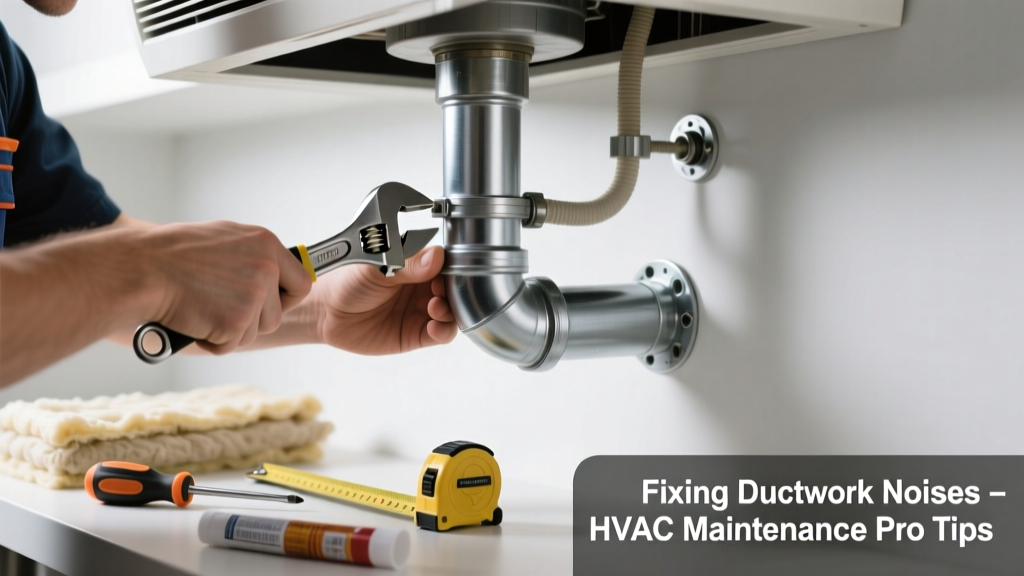
If your ductwork starts banging, popping, or groaning when the HVAC kicks on or off, it’s not just annoying—it’s a warning sign. These noises often point to physical stress, airflow issues, or aging components that could worsen without intervention. Ignoring them may lead to reduced efficiency, higher energy bills, or even duct failure over time.
Quick Diagnosis
Start by listening closely: Is the noise rhythmic (like a drumbeat), sharp (a single bang), or intermittent (only during heating cycles)? Then inspect visible duct sections for these common culprits:
- Loose or disconnected duct joints vibrating under air pressure
- Undersized or poorly supported ducts flexing with airflow changes
- Thermal expansion/contraction of metal ducts in unconditioned spaces (attics, garages)
- Dirty or restricted air filters causing pressure spikes
- Improperly balanced dampers forcing air through narrow paths
Tools & Materials Needed
| Item | Purpose | Estimated Cost |
|---|---|---|
| Adjustable wrench | Tightens loose duct collar screws and clamps | $12–$25 |
| Duct tape (UL 181B-FX rated) | Seals small gaps without degrading under heat | $8–$15 |
| Insulation wrap (R-4 or higher) | Dampens vibration and reduces thermal expansion noise | $10–$30 per 25-ft roll |
| Sheet metal screws & drill | Secures loose duct sections to framing or straps | $5–$12 |
| Flexible duct strap kit | Stabilizes long runs and prevents sag-induced banging | $18–$28 |
Step-by-Step Fix
Most duct banging is fixable in under two hours—if you know where to focus. Try these methods in order of likelihood and effort:
- Secure loose connections: Turn off the HVAC system. Locate all accessible duct joints—especially near the air handler—and tighten collars with an adjustable wrench. Reinforce with two sheet metal screws per joint if wobbling persists.
- Add support and cushioning: For long horizontal duct runs (especially 8+ ft spans), install flexible straps every 4 feet. Wrap noisy sections with R-4 fiberglass insulation wrap, overlapping seams by 2 inches and sealing edges with UL-rated tape.
- Balance airflow: Replace dirty filters (check monthly; replace every 90 days). Adjust manual dampers in branch ducts to reduce velocity—close no more than 30% on any one duct unless you’ve confirmed static pressure remains within manufacturer specs (typically 0.5–0.8" WC).
- Address thermal expansion: In attics or crawlspaces, insulate exposed metal ducts fully—not just the top—and add rubber grommets where ducts pass through framing to isolate movement.
When to Call a Pro
Some duct banging stems from systemic design flaws or safety-critical issues beyond DIY scope. Call an HVAC technician licensed by NATE (North American Technician Excellence) if you notice:
- Banging that coincides with furnace ignition or flame rollout (possible heat exchanger crack)
- Visible dents, corrosion, or holes in supply ducts—especially near gas furnaces
- Noise originating inside walls or ceilings where access requires drywall removal
- Airflow drops across multiple rooms despite clean filters and open dampers
According to the U.S. EPA, 14% of household water usage is from leaks—but for HVAC systems, unaddressed duct leakage can waste up to 30% of conditioned air, raising utility bills and accelerating wear on equipment (EPA ENERGY STAR Guide, 2022).
Prevention Tips
Keep ductwork quiet year after year with these habits:
- Replace pleated MERV 8–11 filters every 90 days—or every 60 days if you have pets or allergies
- Inspect accessible duct joints twice yearly (spring and fall) for screw looseness or tape degradation
- Ensure attic ducts are fully insulated to R-8 (minimum) and sealed at all penetrations
- Install a smart thermostat with gradual fan ramp-up to minimize sudden pressure surges
Why does my ductwork bang only when the heat turns on?
This is classic thermal expansion: cold metal ducts rapidly heat and expand against framing or insulation, creating a sharp ‘pop’. It’s most common in uninsulated attic ducts installed in winter. Insulating and isolating contact points stops 90% of these noises.
Can I use regular duct tape on noisy joints?
No—standard gray duct tape dries out, cracks, and fails under HVAC temperature swings. Only use UL 181B-FX listed tape, which withstands 250°F continuous heat and resists UV degradation. Non-compliant tape is a fire hazard and voids many HVAC warranties.
Will tightening all duct screws stop the banging?
Often—but not always. Over-tightening can warp thin-gauge duct metal and create new vibration points. Tighten until snug, then test-run the system. If banging continues, the issue is likely structural (e.g., unsupported run) or thermal—not mechanical.
How do I know if my ducts are undersized?
Signs include high-velocity whistling at registers, uneven room temperatures, and persistent banging *only* on high fan speed. A pro can measure static pressure with a manometer; anything above 0.8" WC at the air handler indicates restriction or undersizing. See our HVAC static pressure test guide for DIY basics.
Is duct banging dangerous?
Rarely life-threatening—but it signals stress. Repeated banging accelerates fatigue in sheet metal and sealant, increasing risk of leaks, mold growth in humid climates, and carbon monoxide infiltration if near combustion appliances. Address it within two weeks of first hearing it.
Can I insulate ducts myself, or do I need a permit?
In most jurisdictions, adding insulation to existing ducts doesn’t require a permit—but check with your local building department before insulating ducts in garages or near gas lines. Always use non-combustible insulation (fiberglass or mineral wool) near furnaces; avoid spray foam unless applied by a certified installer. For full compliance details, see our duct insulation code requirements post.
Once you’ve addressed the root cause—whether it’s a loose seam, missing support, or seasonal expansion—you’ll notice quieter operation and more consistent airflow. That subtle hum replacing the bang isn’t just peaceful; it’s proof your system is breathing easier, running more efficiently, and lasting longer. Keep your eyes on the filter schedule and ears tuned for early warnings—the next time something sounds off, you’ll know exactly where to start.