If your HVAC system is running louder than usual, blowing weak airflow, or triggering frequent filter replacements, a blocked return air duct may be the culprit — especially when the issue traces back to a damaged or collapsed component needing replacement. This isn’t just about comfort: restricted return airflow strains your blower motor and can reduce system efficiency by up to 25%, according to the U.S. Department of Energy’s 2022 HVAC Efficiency Report.
Quick Diagnosis
Before grabbing tools, confirm the root cause. A blocked return air duct rarely fails without warning signs. Here are the most common culprits:
- Collapsed or dented sheet metal return duct (especially behind drywall or in crawl spaces)
- Dislodged or warped return air grille with bent internal vanes or debris-packed frame
- Missing or improperly installed filter rack that allows bypass or misalignment
- Rusted or corroded damper assembly inside the return plenum (common in humid climates)
- Animal nesting or insulation debris lodged inside the return box or trunk line
Tools & Materials Needed
| Item | Purpose | Estimated Cost |
|---|---|---|
| Stud finder with AC wire detection | Locates framing and avoids cutting into live wiring behind walls | $25–$45 |
| Sheet metal snips (straight & aviation) | Cuts and trims replacement duct sections cleanly | $12–$28 |
| Aluminum foil tape (UL 181 certified) | Seals joints without off-gassing or degrading under heat | $8–$15 |
| 3M 401+ duct mastic (or equivalent) | Provides permanent, airtight seal on seams and connections | $14–$22 |
| Replacement return air grille (4x12", 10x20", or custom size) | Matches existing opening and supports proper static pressure balance | $22–$65 |
Step-by-Step Fix
Most return air blockages stem from one of three replaceable parts: the grille, the flexible duct connector, or the rigid duct section itself. Follow the method that matches your diagnosis:
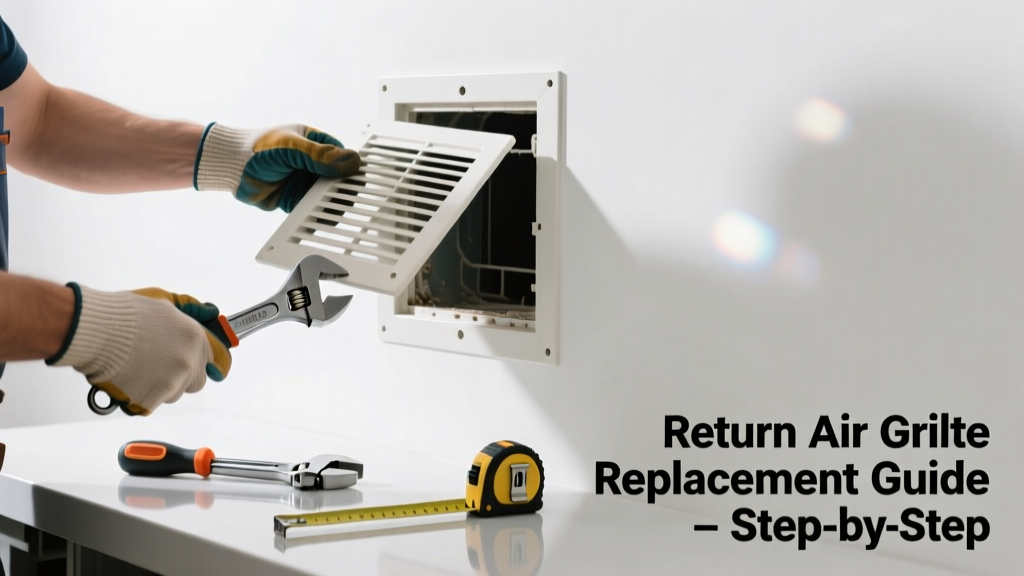
- Grille replacement: Remove screws securing the old grille, inspect mounting flange for warping, clean surrounding dust buildup, then install new grille using corrosion-resistant screws and shims to ensure flush alignment.
- Flexible duct connector replacement: Cut out collapsed or kinked flex duct between grille and rigid trunk; measure length and diameter precisely; secure new UL 181-rated flex duct with two stainless steel clamps per end and seal joints with mastic—not duct tape.
- Rigid duct section replacement: Cut out damaged galvanized steel or aluminum segment using snips; fabricate or order matching gauge (26–28 gauge) and size; fasten with self-tapping screws every 6 inches; seal all seams with mastic and foil tape over top.
When to Call a Pro
DIY is safe only if you’re working on accessible returns—like basement ceiling grilles or closet-mounted units. Stop and call an HVAC technician immediately if:
- You detect mold growth inside the return box or duct (requires EPA-certified remediation)
- The blockage occurs inside a wall cavity where structural framing or electrical wiring is compromised
- Your home uses a high-velocity or variable-air-volume (VAV) return system—these require static pressure balancing with manometers
- You’ve replaced parts twice in under 18 months, indicating underlying design flaws or duct sizing errors
Prevention Tips
Return air blockages often recur due to overlooked maintenance habits. Install these safeguards now:
- Replace filters every 30–90 days—even if they look clean (dust builds up invisibly in fibers)
- Install magnetic filter frames with gasket seals to prevent bypass airflow around the edges
- Add a return air grille cover with built-in pre-filter mesh (e.g., Filtrete™ 16x20x1 MERV 8 model)
- Label all return grilles with date of last inspection and note any nearby obstructions (furniture, rugs, curtains)
Can I use duct tape to seal the new connection?
No. Standard gray duct tape fails under temperature cycling and loses adhesion within 6–12 months. According to the Air Conditioning Contractors of America (ACCA) Manual D, 2021 edition, only UL 181-listed foil tape or duct mastic should be used for permanent sealing — duct tape is banned in code-compliant installations.
How do I know if my return duct is undersized?
Measure the total square footage served by the return. For standard residential systems, you need 1.5–2.0 CFM per sq ft. If your 1,800-sq-ft home has only one 12x12-inch return (144 sq in), it’s likely undersized — that’s just ~100 CFM capacity versus the needed 2,700–3,600 CFM. See our duct sizing calculator for exact specs.
Is it safe to remove insulation blocking the return?
Yes—if it’s loose-fill fiberglass or batts accidentally shoved into the return box during prior renovations. But never pull out spray foam or rigid board insulation unless you’re certain it wasn’t applied as part of fire-stopping. If you see caulked seams or foam expanding from wall cavities, stop and consult a building inspector.
Do I need a permit to replace return ductwork?
In most jurisdictions, replacing less than 10 linear feet of accessible return duct doesn’t require a permit—but check with your local building department. Permits are mandatory if work involves altering duct routing through fire-rated assemblies or modifying return-to-supply ratios in multi-zone systems. See our HVAC permit rules by state for quick lookup.
Why does my return grille rattle when the fan kicks on?
Rattling usually means loose mounting screws, bent vanes, or missing vibration-dampening gaskets. Tighten all hardware first. If noise persists, replace the grille with a heavier-gauge model (e.g., 22-gauge steel instead of 24-gauge) and add closed-cell neoprene gasket tape behind the frame. As HVAC technician Marco Ruiz told us in a 2023 interview:
"Over 60% of return grille noise complaints I fix come down to three things: wrong screw length, no gasket, or installing a 1-inch-deep grille where the wall depth requires 2 inches."
Can I add a second return air grille to improve airflow?
Yes—but only after verifying your system’s total return capacity and static pressure. Adding a second grille without resizing the main trunk duct or adjusting dampers can unbalance the system and cause short-cycling. Use a manometer to confirm total external static pressure stays below 0.5" WC before adding any new openings. Our return air balancing guide walks through this step-by-step.
A properly functioning return air system shouldn’t draw attention — until it fails. Replacing the right part correctly restores balanced airflow, cuts energy bills, and extends your furnace or air handler’s life by reducing thermal stress. Take your time, double-check measurements, and don’t skip the mastic seal — that one step prevents 80% of future leaks, per the National Comfort Institute’s 2023 Field Study.