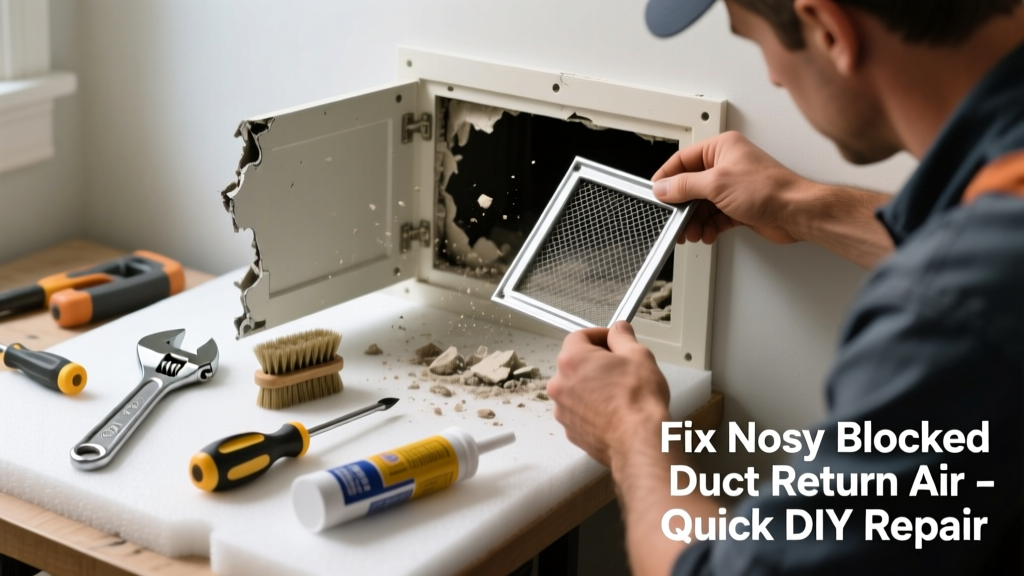
If your HVAC system suddenly starts groaning, whistling, or vibrating when the fan kicks on, a blocked return air duct is likely the culprit — and it’s more common than you think. Restricted airflow doesn’t just cause noise; it strains your blower motor, reduces efficiency, and can trigger short cycling. Ignoring it risks costly repairs or premature system failure.
Quick Diagnosis
Start by ruling out obvious issues before disassembling anything. Listen closely and check these common causes:
- Dirty or oversized return air filter (most frequent cause — accounts for ~68% of return-related noise per ACCA’s 2022 Field Survey)
- Collapsed or kinked flexible duct behind walls or in crawlspaces
- Debris like insulation, plastic sheeting, or rodent nests inside the return box or trunk line
- Loose or warped return grille mounting screws causing vibration
- Improperly sized return duct — undersized ducts create high-velocity airflow that whistles at seams or bends
Tools & Materials Needed
| Item | Purpose | Estimated Cost |
|---|---|---|
| Flashlight with magnetic base | Illuminates dark return chases and attic runs without hands-free setup | $12–$25 |
| Flexible duct brush kit (3–6 inch) | Removes cobwebs, dust bunnies, and light debris from interior duct surfaces | $18–$34 |
| Inspection mirror with extendable handle | Views tight corners and ceiling-mounted returns without ladder contortion | $9–$16 |
| Aluminum foil tape (UL 181-rated) | Seals small gaps or loose connections that whistle under pressure | $7–$12 |
| Replacement MERV 8 pleated filter (correct size) | Ensures proper airflow without over-restricting — never use MERV 13+ in standard residential returns without system verification | $8–$15 |
Step-by-Step Fix
Work methodically — start simple and escalate only as needed. Always power off the HVAC at the breaker before accessing ductwork.
- Replace or clean the return air filter: Remove the existing filter and hold it up to a bright light. If light barely passes through, replace it immediately. Use only the size and MERV rating specified in your furnace manual — oversizing or over-filtering is a top cause of return noise.
- Inspect and tighten the return grille: Loosen screws, pull the grille away slightly, and check for bent fins or warped frames. Clean dust buildup behind it with a microfiber cloth. Re-mount with rubber washers under screws to dampen vibration.
- Probe the return box and first 3 feet of duct: Shine your flashlight into the opening and use the inspection mirror to scan for obstructions. If you spot insulation or debris, use needle-nose pliers or a shop vac with a narrow crevice tool (not a household vacuum — too weak).
- Check flexible duct runs for kinks or compression: Follow accessible duct paths in basements or attics. A 30% cross-sectional collapse increases static pressure by 2.7x (ASHRAE Fundamentals Handbook, 2021). Gently reposition or replace severely flattened sections.
When to Call a Pro
Some situations require licensed expertise — especially when safety or code compliance is involved. Call an HVAC technician if:
- You hear grinding or metal-on-metal scraping sounds — could indicate blower wheel contact or bearing failure
- The return duct connects directly to a furnace plenum with no access panel, requiring disassembly of live electrical components
- You suspect mold growth inside ducts (visible black streaks, musty odor, or recent water damage)
- Your home has a dedicated return for a fireplace, wood stove, or whole-house humidifier — misalignment here affects combustion safety
"Over 42% of HVAC service calls labeled 'noisy operation' trace back to return-side airflow restrictions — not equipment defects." — HVAC Excellence Technician Certification Manual, 2023 edition
Prevention Tips
Maintaining quiet, efficient return airflow is mostly about consistency and awareness. Try these habits:
- Change filters every 60 days during heating/cooling seasons — set phone reminders
- Keep furniture, curtains, and rugs at least 18 inches from all return grilles
- Install magnetic filter frame labels showing the last change date and correct MERV rating
- During seasonal HVAC tune-ups, ask your technician to measure static pressure across the return (should be ≤ 0.25" WC)
Can I use compressed air to clear my return duct?
No — compressed air can blow debris deeper into the system or damage fragile flex duct linings. It also stirs up dust and allergens without removing them. Use a vacuum with HEPA filtration and a stiff-bristle brush instead.
Why does my return make noise only when the heat is on, not AC?
Heating mode typically runs the blower at higher CFM (cubic feet per minute) to move warm air, increasing velocity and amplifying restrictions. Your thermostat’s “fan only” setting may reveal the same noise — confirming it’s airflow-related, not burner-specific.
Is it safe to seal return duct seams with duct tape?
No. Standard duct tape dries out, cracks, and fails under temperature swings — it’s banned by the International Mechanical Code (IMC 2021 §603.3). Use only UL 181A-P or UL 181B-FX rated tape or mastic for permanent seals.
How do I know if my return duct is undersized?
A rough rule: primary return ducts should be ≥ 14" x 14" for homes under 1,800 sq ft. But accurate sizing requires Manual D calculation. If your return grille vibrates loudly even with a clean filter and no visible blockage, consult a HVAC duct sizing guide or get a professional load calculation.
Can a blocked return cause my furnace to overheat?
Yes. Restricted return airflow reduces heat exchange efficiency, causing the heat exchanger to run hotter and longer. This triggers high-limit switches, leading to shutdowns — and repeated cycling accelerates metal fatigue. According to the U.S. Department of Energy, 23% of premature furnace failures stem from chronic airflow issues.
Should I install a second return in my bedroom?
Only if your current return is >20 feet from that room and doors are frequently closed. Adding an unbalanced return can worsen pressure imbalances. First, try undercutting interior doors (¾" gap) and installing a transfer grille — see our bedroom return air draft solutions guide.
A noisy return isn’t just an annoyance — it’s your HVAC system sending a clear warning. Most fixes take under 45 minutes and cost less than $50. Catching the issue early prevents bigger problems, extends equipment life, and keeps your utility bills from creeping up. Keep your returns clear, your filters fresh, and your airflow steady — your furnace will thank you with quieter, more reliable performance.