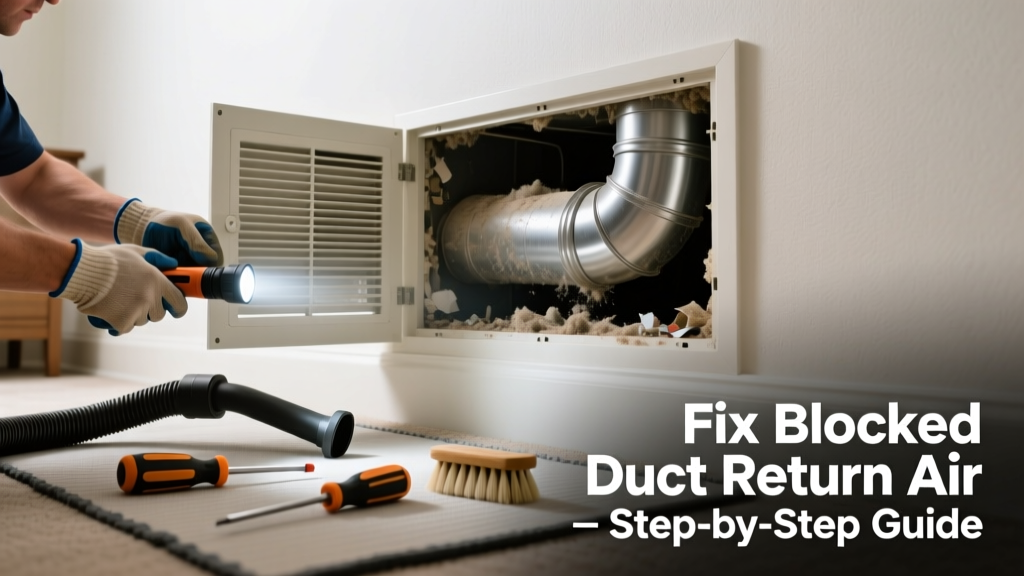
If your HVAC system is running constantly but your home feels stuffy or unevenly heated or cooled, a blocked return air duct could be the culprit. Restricted return airflow strains your blower motor, reduces efficiency, and can even trigger freeze-ups on your evaporator coil. This isn’t just uncomfortable—it’s costly and potentially damaging.
Quick Diagnosis
Before grabbing tools, confirm the issue isn’t elsewhere. A blocked return duct often mimics other problems—but key signs point directly to return airflow restriction:
- Weak or no airflow at one or more return grilles (especially if others are fine)
- Visible dust buildup around return grilles or inside the grille frame
- Whistling, hissing, or sucking noises near return vents when the system runs
- Return grille feels cool (not room-temp) during heating mode—or warm during cooling
- Thermostat reads higher humidity or slower temperature recovery than usual
Tools & Materials Needed
| Item | Purpose | Estimated Cost |
|---|---|---|
| Flashlight with flexible neck | Inspect deep inside ducts and behind grilles without disassembly | $12–$25 |
| Microfiber cloths & soft-bristle brush | Safely remove dust and debris from grille and duct opening | $8–$15 |
| 4-in-1 screwdriver | Remove grille screws (often Phillips or flat-head) | $6–$14 |
| Shop vacuum with crevice tool | Extract loose debris up to 2 feet into accessible duct sections | $45–$90 |
| Flexible duct inspection mirror | See bends and obstructions beyond line-of-sight in sheet metal ducts | $18–$32 |
Step-by-Step Fix
Most blockages occur within 12–24 inches of the return grille—making them reachable without cutting ductwork. Follow these methods in order:
- Remove and clean the return grille: Unscrew the grille, wipe all surfaces with a damp microfiber cloth, and vacuum the backside and surrounding wall cavity edge.
- Vacuum the first 18 inches of duct: Insert the crevice tool fully and slowly withdraw while triggering suction—repeat 2–3 times. Listen for debris dislodging.
- Check for internal obstructions: Shine your flashlight and mirror down the duct. Look for collapsed insulation, rodent nests, or disconnected flex duct ends. If visible and reachable, use needle-nose pliers to retrieve.
- Test airflow with a tissue: Hold a single-ply tissue 2 inches from the grille opening while the fan runs. It should pull firmly and evenly across the entire surface—if not, recheck steps 1–3.
When to Call a Pro
Some blockages aren’t DIY-safe or accessible without specialized equipment. Call an HVAC technician immediately if you encounter any of these:
- A strong odor of mold, mildew, or decay coming from the return (may indicate microbial growth deeper in the system)
- Signs of rodent entry (droppings, gnaw marks, nesting material) beyond the first 2 feet
- Duct sections that require cutting into drywall, ceiling tiles, or floor joists to access
- Return ducts connected to crawlspaces or attics with suspected asbestos-wrapped ducts (pre-1980 homes)
- System freezing up repeatedly—even after cleaning—suggesting chronic low airflow or refrigerant issues
Prevention Tips
Preventing return blockage saves money and extends HVAC life. The U.S. EPA estimates that 14% of household water usage is from leaks—but airflow loss from dirty returns wastes nearly as much energy. Replace or clean filters every 30–90 days depending on pets, allergies, and season. Keep furniture, curtains, and rugs at least 18 inches from all return grilles. Install magnetic filter frames behind grilles for easy monthly checks. Seal gaps between grille and drywall with painter’s caulk—not duct tape—to stop bypass air and dust infiltration.
"A return air restriction of just 0.2 inches of water column (wc) pressure drop cuts system airflow by ~15% and increases blower energy use by 22%—per ASHRAE’s 2022 HVAC Applications Handbook."
Can I use bleach to clean my return duct?
No—bleach is corrosive to galvanized duct metal and dangerous when aerosolized. It also fails to remove organic matter like pet dander or skin cells that feed mold. Use only HEPA-filtered vacuums and damp microfiber cloths for surface cleaning. For confirmed mold, contact an HVAC mold specialist.
Why does my return grille rattle when the fan kicks on?
Rattling usually means the grille is loose, warped, or installed over a partially collapsed duct liner. Tighten mounting screws first. If it persists, inspect the duct collar behind the grille—loose connections or damaged insulation can vibrate at fan speeds. A quick fix: add rubber gasket tape between grille and wall.
Will a blocked return cause my AC to freeze up?
Yes—low return airflow reduces coil temperature below freezing. Moisture condenses and freezes on the evaporator. This is among the top three causes of residential AC freeze-ups, according to the Air Conditioning Contractors of America’s 2023 Service Call Report. Don’t run the system in cooling mode until airflow is restored.
How often should I inspect return ducts?
At minimum, inspect and clean grilles every 3 months—and anytime you notice reduced airflow, musty smells, or increased dust on furniture. Homes with shedding pets or located near construction zones benefit from monthly checks. Pair this with regular filter changes and consider installing a smart airflow sensor for early alerts.
Can I install a larger return grille myself?
You can—but only if the underlying duct trunk is sized to handle it. Oversizing without matching duct capacity creates turbulence and noise, not better flow. Measure your existing duct cross-section (e.g., 14” × 8”) and consult Manual D load calculations before upgrading. Most standard 16×20 grilles max out at ~400 CFM; exceeding that requires professional duct redesign.
Is duct tape okay for sealing return duct joints?
No—duct tape degrades under temperature swings and loses adhesion within 1–2 years. Use UL 181-approved mastic or aluminum foil tape rated for HVAC use. Mastic provides the best long-term seal for rigid metal ducts; foil tape works well for flex duct connections. See our full guide on proper duct sealing materials.
A clear return air path keeps your system breathing easy—and your utility bills lower. Most blockages take under 20 minutes to resolve once you know where to look. But don’t ignore recurring issues: persistent clogs may signal undersized ductwork, poor system design, or hidden contamination needing expert assessment. Stay proactive, stay comfortable, and keep that air moving freely.