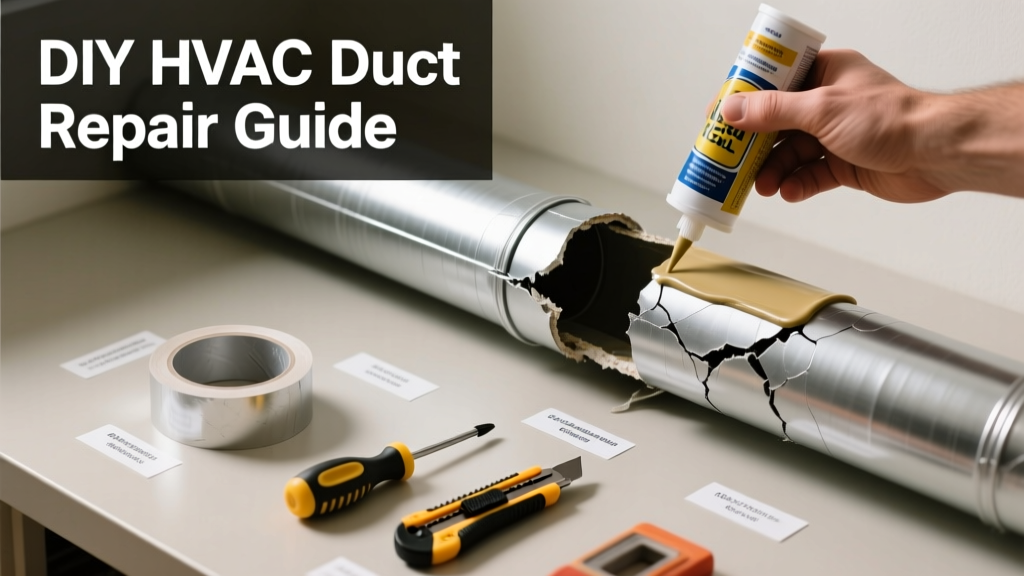
Leaking ducts silently waste up to 30% of your heated or cooled air—driving up utility bills and making rooms unevenly comfortable. If you hear whistling near vents, feel drafts around duct joints, or notice dust buildup near registers, you likely have leaks that demand attention. The good news? Most small leaks are simple to seal yourself in under an hour.
Quick Diagnosis
Before grabbing tools, identify the source. Common causes include:
- Disconnected or loose flex duct connections at registers, plenums, or trunk lines
- Deteriorated or cracked foil-faced tape (often mistaken for proper duct sealant)
- Corrosion or punctures in sheet metal ducts from nails, screws, or rodent activity
- Poorly sealed seams where fiberglass ductboard meets metal fittings
- Aging duct insulation pulling away, exposing gaps underneath
Tools & Materials Needed
| Item | Purpose | Estimated Cost |
|---|---|---|
| Mastic sealant (water-based, UL 181A-P rated) | Creates permanent, flexible, airtight bond on metal, fiberglass, and flex duct | $12–$22 |
| Butyl rubber tape (UL 181B-FX rated) | Self-adhesive, pressure-sensitive tape for clean, quick sealing of small joints | $8–$15 |
| Stiff-bristle brush & damp rag | Cleans dust, grease, and old tape residue for proper adhesion | $3–$7 |
| Utility knife & scissors | Cuts tape, trims insulation, and removes damaged sections | $5–$12 |
| Flashlight & mirror on a stick | Reveals hidden joints in attics, crawlspaces, and behind walls | $10–$25 |
Step-by-Step Fix
Choose the method based on leak size, location, and duct type:
- Clean the joint first: Wipe away dust, cobwebs, and crumbling tape with a damp rag and stiff brush. Let dry fully—mastic won’t stick to damp or dirty surfaces.
- Seal small gaps (<¼") with UL 181B-FX butyl tape: Press firmly into place, overlapping edges by 1 inch. Avoid standard HVAC tape—it dries out and fails within 1–2 years.
- Fill larger gaps or disconnected flex duct with mastic: Use a disposable brush to apply a ⅛"-thick layer over the seam and 2 inches beyond each side. Let cure 24 hours before running HVAC.
- Reconnect sagging flex duct: Tighten support straps, then wrap the entire joint with mastic-coated fiberglass mesh tape for reinforcement.
When to Call a Pro
DIY is unsafe or ineffective in these scenarios:
- Leaks inside insulated walls or ceilings where access requires drywall removal
- Multiple leaks across a duct system (>10 visible joints) — indicates systemic installation flaws
- Carbon monoxide detection near gas furnace ductwork (immediate danger; shut off system and call HVAC technician)
- Sheet metal ducts with rust-through holes larger than ½" or structural warping
- Confirmed mold growth inside ducts — requires EPA-certified remediation per mold-in-air-ducts
Prevention Tips
Extend duct life and reduce future leaks with these habits:
- Inspect accessible ductwork every 18 months—especially after attic renovations or pest activity
- Replace all factory-installed duct tape with UL 181A-P mastic or UL 181B-FX tape during any repair
- Ensure duct supports are spaced no more than 4 feet apart for flex duct, 6 feet for rigid metal
- Install a whole-house dehumidifier if relative humidity consistently exceeds 60%—moisture accelerates tape degradation
- Upgrade to R-6 or higher insulated flex duct in unconditioned spaces to reduce condensation stress
Can I use duct tape to fix a leak?
No—standard gray duct tape is not rated for HVAC use. It dries out, cracks, and loses adhesion in temperature swings. According to the U.S. Department of Energy’s 2022 Home Energy Score guidelines, duct tape fails 90% of the time within 18 months. Always use UL 181A-P mastic or UL 181B-FX tape instead.
How do I know if my duct leak is affecting indoor air quality?
Yes—leaks in return ducts pull in unfiltered attic, crawlspace, or garage air, introducing dust, insulation fibers, radon, or vehicle exhaust. A 2023 study by the American Lung Association found homes with unsealed return ducts had 2.3× higher particulate matter (PM2.5) levels indoors than sealed counterparts.
Will sealing ducts lower my energy bill?
"Sealing ducts in unconditioned spaces can reduce heating and cooling energy use by 15–30%, according to the U.S. EPA's ENERGY STAR program (2023)."Yes—especially if leaks are in attics, garages, or crawlspaces. You’ll notice faster temperature recovery and steadier airflow at registers.
Do I need to turn off the HVAC system before repairing?
Yes—always shut off power at the breaker and furnace switch before accessing ductwork. Running the blower while applying mastic creates airborne particles and risks inhaling fumes. Wait until sealant fully cures before restoring power.
Can I seal ducts from the inside using aerosol sealants?
Only certified professionals should use aerosol-based internal sealants like Aeroseal. These require specialized equipment, pressure testing, and post-seal verification. DIY kits sold online lack EPA certification and often clog coils or registers. Stick to exterior sealing methods unless working with a certified HVAC contractor.
How long does duct sealant last?
UL 181A-P mastic lasts 20+ years when applied correctly on clean, dry surfaces. UL 181B-FX butyl tape lasts 10–15 years in stable environments—but degrades faster in high-humidity or high-temperature zones like attics over dark roofs.
Fixing duct leaks isn’t glamorous—but it’s one of the highest-ROI home repairs you can make. You’ll gain comfort, cut energy waste, and extend the life of your HVAC system. Just remember: when in doubt about access, safety, or scope, reach out to a NATE-certified technician. And if you’re tackling other airflow issues, check out our guides on dirty air filter symptoms and balancing your HVAC system.