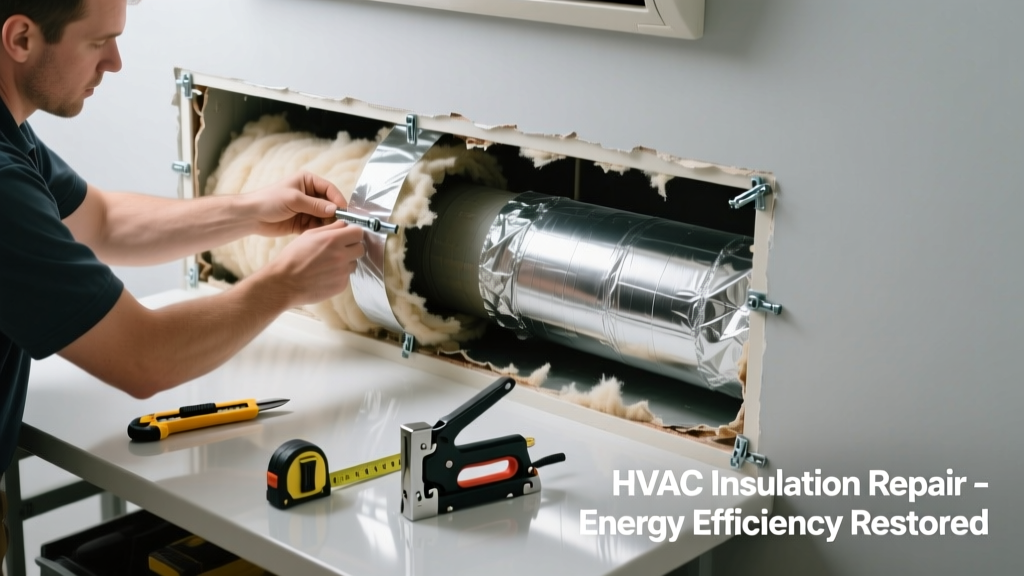
If your home feels drafty, your HVAC runs constantly, or your energy bills spiked without explanation, damaged duct insulation could be the hidden culprit. Unlike visible leaks or noisy fans, compromised insulation works silently—robbing efficiency while letting conditioned air escape into unconditioned spaces like attics or crawlspaces. This guide walks you through real-world fixes, not theory.
Quick Diagnosis
Before grabbing tools, confirm the issue isn’t something else. Start here:
- Visible gaps, tears, or compression in fiberglass wrap (especially near joints, seams, or where ducts pass through walls)
- Moisture stains or mold growth on insulation surface—signaling condensation from cold ducts in humid spaces
- Temperature differences >10°F between supply duct surface and room air (use an IR thermometer)
- Insulation missing entirely on sections of metal ductwork—common in older homes or after DIY modifications
- Insulation covered in dust or rodent nesting material, reducing R-value by up to 40% (ASHRAE Handbook, 2022)
Tools & Materials Needed
| Item | Purpose | Estimated Cost |
|---|---|---|
| Fiberglass duct wrap (R-6 or R-8) | Replaces degraded insulation; meets minimum IECC 2021 requirements for ducts outside conditioned space | $18–$32 per 50-ft roll |
| Aluminum foil tape (UL 181A-P rated) | Seals seams and joints; withstands HVAC temperature swings without drying out or cracking | $12–$20 per 2-in x 60-yd roll |
| Utility knife + spare blades | Cuts insulation cleanly without fraying fiberglass; essential for tight-fitting wraps | $8–$15 |
| Measuring tape & marker | Ensures accurate length and overlap—critical for full coverage and avoiding thermal bridging | $5–$12 |
| Work gloves & N95 mask | Protects against fiberglass skin irritation and airborne particles during removal and installation | $10–$25 |
Step-by-Step Fix
Repair depends on damage severity. Use the method that matches your situation:
- Minor tears or gaps (under 2 in.): Clean area thoroughly, then seal with UL 181A-P foil tape—press firmly and smooth edges to prevent peeling.
- Compressed or water-damaged insulation: Cut out affected section using utility knife. Wrap new R-8 duct wrap snugly around duct, overlapping seams by 2 inches. Seal all edges with foil tape—not duct tape.
- Missing insulation on straight duct runs: Measure circumference and length. Cut wrap to size, wrap tightly (no gaps), secure with foil tape at both ends and center seam. Use a strap clamp if needed for tension.
- Insulation with mold or rodent contamination: Remove and discard entire section wearing PPE. Clean duct surface with HEPA vacuum and 70% isopropyl alcohol (not bleach—per EPA Mold Remediation Guidelines, 2021). Re-wrap with new insulation.
When to Call a Pro
DIY has limits—especially when safety or code compliance is at stake:
- Ducts located inside walls, ceilings, or floors where access requires drywall removal or structural modification
- Damage coincides with carbon monoxide detector alarms or persistent musty odors—possible combustion air or flue gas infiltration
- More than 30% of total duct surface area needs replacement, especially in return ducts serving multiple zones
- Your system uses flexible duct ("flex duct") with kinks, crushing, or internal liner separation—these require certified HVAC techs per ACCA Manual D guidelines
Prevention Tips
Extend insulation life and avoid repeat repairs with these habits:
- Inspect duct insulation annually—especially before winter and after attic/crawlspace work
- Keep attic vents clear and humidity below 50% to reduce condensation risk on cold duct surfaces
- Install rigid foam board or spray foam over exposed ducts in unconditioned garages (R-11 minimum per IECC Table C403.2.3)
- Label repaired sections with date and R-value using permanent marker on foil tape—helps future inspections
- Avoid storing boxes or insulation debris directly against ducts; pressure degrades fiberglass over time
Can I use duct tape to fix torn insulation?
No—standard duct tape fails under HVAC temperature cycles and leaves sticky residue that attracts dust and reduces airflow. UL 181A-P foil tape is the only approved adhesive for sealing duct insulation seams. According to the U.S. Department of Energy’s 2022 Home Energy Score Technical Guide, improper tape use contributes to 12% of residential duct leakage cases.
How do I know if my duct insulation meets current R-value standards?
Check local building codes—but as baseline: ducts in unconditioned spaces need minimum R-6 (IECC 2021), R-8 recommended for colder climates (zones 5–8). Measure thickness: standard R-6 fiberglass wrap is ~1.5 inches thick; R-8 is ~2 inches. If yours is thinner or compressed, it’s likely underperforming.
Will fixing duct insulation lower my energy bill?
Yes—leaky, uninsulated ducts can waste 20–30% of heated or cooled air (U.S. EPA ENERGY STAR, 2023). A properly insulated and sealed duct system typically delivers 10–15% HVAC energy savings within one season—verified via whole-house blower door testing.
Can I insulate ducts myself if they’re in the attic?
Yes—attic ducts are the safest and most accessible location for DIY insulation repair. Just wear full PPE, work during cooler hours to avoid heat stress, and never step directly on ducts (use plywood planks over joists). For ducts above drop ceilings, attic duct sealing techniques apply similarly.
What’s the difference between duct wrap and duct liner?
Duct wrap goes outside round or rectangular metal ducts to prevent heat loss/gain. Duct liner is installed inside sheet metal ducts to reduce noise and improve airflow—but requires professional installation due to fire rating and airflow restrictions. Never substitute one for the other.
Does damaged insulation affect indoor air quality?
Yes—especially if moisture or mold is present. Fiberglass particles released from degraded insulation can circulate through the system. The American Lung Association notes that poorly maintained duct insulation contributes to elevated particulate levels in 17% of homes tested in its 2022 Indoor Air Quality Survey.
"Duct insulation failure is rarely about the material failing—it’s almost always about improper installation, physical damage, or moisture exposure. Fix the cause, not just the symptom." — James L. Wilson, HVAC Field Service Manager, Trane Residential, 2023
Once repaired, test your system by running it for 15 minutes and checking for consistent vent temperatures across rooms. If you still notice wide variances—or hear rattling, hissing, or airflow drops—your issue may extend beyond insulation. Consider pairing this fix with a duct leak test or upgrading to a mastic-sealed duct system for lasting performance.