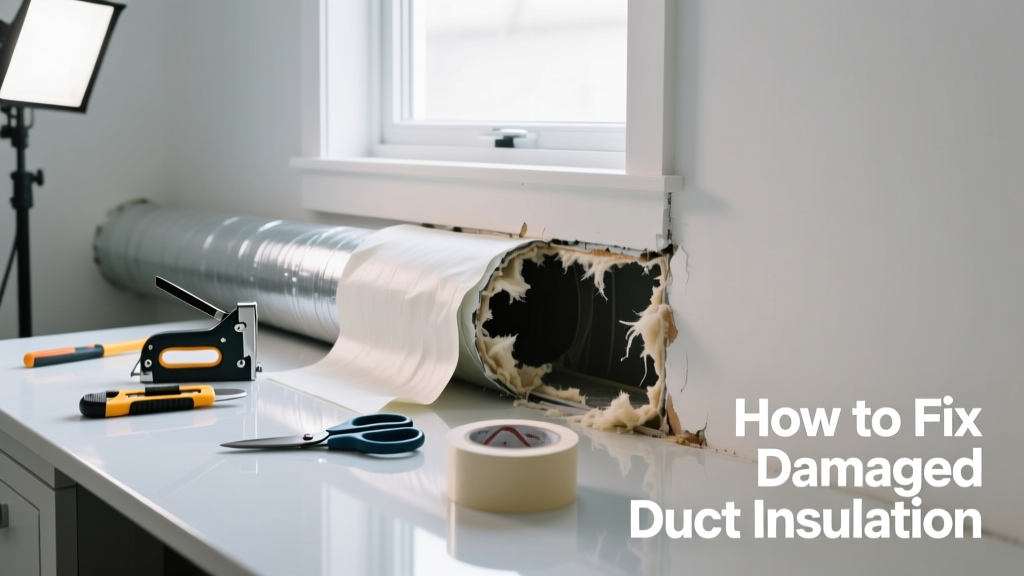
If you’ve spotted torn, compressed, or missing insulation on your HVAC ducts—especially in the attic, crawlspace, or basement—you’re likely losing 20–30% of your heating or cooling output. That inefficiency adds up fast: the U.S. EPA estimates duct leaks and poor insulation account for $150–$300 in annual energy waste per home.
Quick Diagnosis
Duct insulation damage rarely happens in isolation. Here are the most common root causes:
- Physical impact from storage, rodents, or maintenance work
- Mold or moisture saturation (often from condensation or roof leaks)
- UV degradation in attics where foil-faced wrap is exposed to sunlight
- Aging—fiberglass batts lose R-value after 15+ years, especially if compressed
- Poor initial installation (gaps, seams not sealed, tape failing)
Tools & Materials Needed
| Item | Purpose | Estimated Cost |
|---|---|---|
| Fiberglass duct insulation (R-6 or R-8, foil-faced) | Replaces damaged sections with proper thermal resistance | $12–$24 per 25-ft roll |
| UL 181-approved foil tape | Seals seams and joints; regular duct tape fails in HVAC temps | $8–$15 per roll |
| Insulation support wire or nylon straps | Holds insulation snugly around round or rectangular ducts | $5–$10 per pack |
| Utility knife & straightedge | Cuts insulation cleanly without fraying or compressing fibers | $3–$7 |
| N95 respirator & gloves | Protects against fiberglass particles and potential mold spores | $10–$20 |
Step-by-Step Fix
Repair method depends on damage severity and duct type. Use one (or combine) these approaches:
- Small tears or gaps (under 6 inches): Clean the area with a dry cloth, apply UL 181 foil tape over the tear, then reinforce with a 2-inch overlap on each side. Press firmly—no air pockets.
- Missing or water-damaged batts (rectangular ducts): Cut new R-6 batt to match duct dimensions. Wrap snugly, overlapping seams by 2 inches. Secure with insulation support wire every 12 inches. Seal all edges with foil tape—not duct tape.
- Rounded ducts with sagging insulation: Remove compromised wrap. Measure circumference and length. Cut foil-faced blanket to size + 1 inch extra for overlap. Wrap tightly, staple at 6-inch intervals along seam, then seal entire seam with foil tape.
- Mold-contaminated insulation: Do not disturb. Bag and discard in heavy-duty plastic. Wear N95 and gloves. After removal, clean duct surface with HEPA vacuum only—no bleach (it doesn’t kill mold roots). Then reinstall new insulation.
When to Call a Pro
Some situations demand licensed expertise—not DIY:
- Insulation damage covers >25% of total duct surface area
- You find black, fuzzy mold growth *inside* the ductwork (not just on insulation)
- Damage coincides with visible duct corrosion, rust-through, or holes larger than ½ inch
- Your home has asbestos-wrapped ducts (common in homes built before 1980)—disturbing it is illegal and hazardous
- You’re uncomfortable working in confined, hot, or poorly ventilated spaces like crawlspaces or attics
"Over 60% of duct insulation repairs fail within 2 years when non-UL 181 tape or improper compression is used," says HVAC technician Marcus Lee in the ASHRAE Journal, 2022.
Prevention Tips
Extend insulation life and avoid repeat issues:
- Inspect ducts annually—especially after winter storms or attic renovations
- Keep attic access hatches sealed and insulated to reduce temperature swings
- Install rodent deterrents (steel wool, metal mesh) near duct entry points
- Ensure bathroom and kitchen exhaust fans vent *outside*, not into the attic—moisture is insulation’s top enemy
- Add radiant barrier foil under roof decking to cut attic temps by up to 30°F, slowing UV degradation
Can I use regular duct tape to fix insulation seams?
No. Standard gray duct tape dries out, cracks, and loses adhesion above 120°F—common near supply ducts. UL 181 foil tape is rated for 250°F and resists UV and humidity. Using the wrong tape voids HVAC warranties and risks fire-rated code violations.
How do I know if my duct insulation contains asbestos?
If your home was built before 1980 and ducts have a thick, grayish-white, fibrous wrap (often wrapped with cloth or paper tape), assume it’s asbestos until tested. Contact an EPA-certified asbestos inspector—do not sample or sand it yourself. Learn more in our asbestos detection guide.
Will fixing duct insulation lower my energy bill?
Yes—if ducts run through unconditioned spaces (attic, garage, crawlspace), sealing and reinsulating can reduce HVAC runtime by 15–25%. The DOE confirms properly sealed/insulated ducts improve system efficiency by up to 20%, cutting monthly bills by $20–$45 depending on climate and usage.
Can I insulate ducts myself if they’re behind drywall?
Not safely or effectively. Access requires cutting drywall, which introduces dust, risk of electrical/plumbing damage, and may trigger building code inspections. This job belongs to a licensed HVAC contractor who can assess duct integrity, reroute if needed, and restore wall finishes. See our duct access panel installation tips for future serviceability.
Do I need to clean ducts before re-insulating?
Only if debris, dust bunnies, or visible mold are present on the duct surface. Use a HEPA-filter vacuum with a soft brush attachment—never a leaf blower or compressed air (spreads contaminants). Skip chemical cleaners; the EPA advises against biocides in residential ducts due to unproven benefits and potential VOC exposure.
Is spray foam a good alternative to fiberglass duct insulation?
Open-cell spray foam is not approved for duct insulation—it off-gasses VOCs and lacks fire rating. Closed-cell spray foam *can* be used but requires professional application, fire-blocking coatings, and strict adherence to ICC-ES AC377 standards. For most homeowners, foil-faced fiberglass remains safer, code-compliant, and easier to inspect later.
Fixing damaged duct insulation isn’t glamorous—but it’s one of the highest-ROI repairs you’ll make this year. You’ll feel warmer air faster in winter, cooler air quicker in summer, and hear your HVAC cycle less often. Just remember: when in doubt about mold, asbestos, or structural duct damage, pause and call a certified technician. Your comfort—and your air quality—depend on it. For related help, check our duct leak sealing guide and attic ventilation checklist.