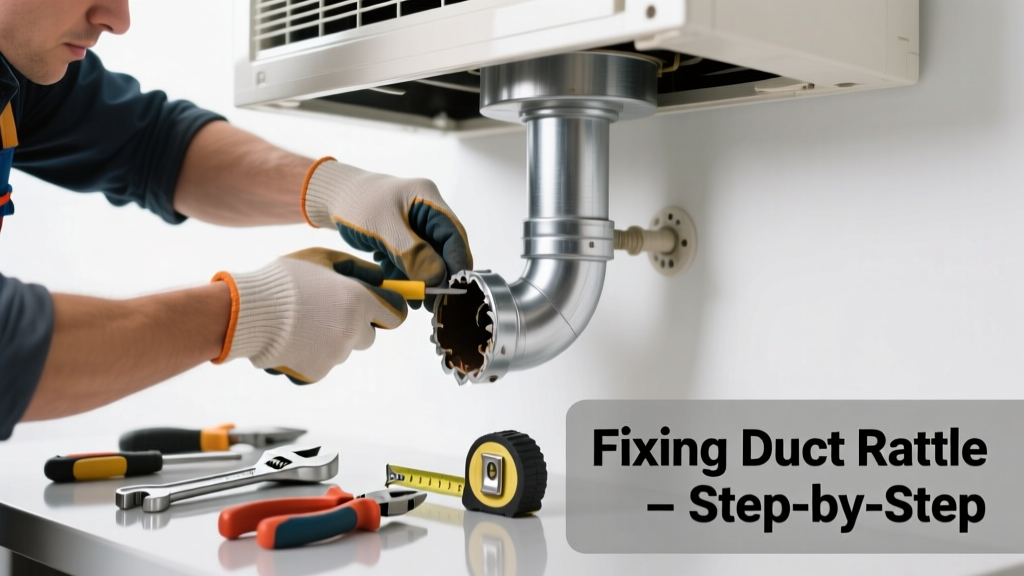
If your HVAC system suddenly starts rattling, whistling, or flapping like a loose sail when the fan kicks on, a disconnected duct is the most likely culprit — especially near registers, plenums, or where flexible duct meets rigid metal. This isn’t just annoying: it wastes energy, stresses your blower motor, and can degrade indoor air quality. The good news? Most cases are fixable in under an hour with basic tools.
Quick Diagnosis
Before grabbing tools, confirm the noise source:
- Rattling or banging near vents or ceiling registers — often indicates loose or detached flex duct ends
- High-pitched whistling from supply grilles — usually caused by air escaping through a gap at a duct-to-plenum connection
- Fluttering or whooshing sound behind walls or in attics — suggests a collapsed or fully separated section of flexible duct
- Intermittent noise only during fan startup/shutdown — points to thermal expansion shifting a poorly secured joint
Tools & Materials Needed
| Item | Purpose | Estimated Cost |
|---|---|---|
| Heavy-duty foil tape (UL 181A-P rated) | Seals joints permanently; withstands HVAC temperatures and airflow pressure | $8–$12 |
| 3/4" metal duct strap or hose clamp | Secures loose flex duct ends to rigid collar or plenum box | $3–$7 |
| Insulated flex duct connector kit | Replaces damaged or stretched connectors; includes inner wire helix and outer jacket | $15–$25 |
| Flashlight + ladder (6-ft minimum) | Accesses attic, crawl space, or ceiling plenums safely | $0–$45 (if renting or borrowing) |
Step-by-Step Fix
Follow these methods in order of likelihood and complexity:
- Inspect accessible duct runs: Turn off HVAC power at the breaker. Pull ceiling or wall registers and check for visible gaps between flex duct and register boots — look for daylight or feel airflow with your hand while system runs briefly.
- Resecure loose flex duct ends: Slide the flex duct back onto the rigid collar until the inner wire helix sits flush against the lip. Tighten a metal duct strap or worm-drive hose clamp over the overlapping layers — snug, not crushing.
- Seal gaps with UL-rated foil tape: Clean dust and debris from both surfaces with a dry rag. Apply 2-inch-wide UL 181A-P foil tape over the entire seam, pressing firmly to eliminate wrinkles or air pockets.
- Replace severely damaged connectors: If the inner liner is torn or the outer jacket is frayed, cut out the compromised 12–18" section and install a new insulated flex duct connector using two clamps per end and foil tape over seams.
When to Call a Pro
DIY stops where safety and code compliance begin:
- You hear grinding or screeching from the furnace itself — could indicate blower wheel imbalance or bearing failure
- The disconnected duct is inside a sealed wall cavity without access panels (cutting drywall risks electrical or plumbing)
- You detect a strong odor of burning plastic or insulation — possible overheating or electrical fault upstream
- Your home has a heat pump with refrigerant lines running through the same duct chase — improper reconnection risks refrigerant leaks
"Over 62% of HVAC efficiency losses in existing homes stem from duct leakage — and disconnected joints account for nearly half of those cases." — U.S. Department of Energy, Residential Duct Systems Report, 2022
Prevention Tips
Stop repeat failures before they start:
- Inspect all duct connections annually — especially after seasonal temperature swings that cause metal expansion/contraction
- Use metal straps instead of zip ties or duct tape (which dries out and fails within 1–2 years)
- Install vibration-dampening rubber grommets where ducts pass through floor joists or wall plates
- Label each register and its corresponding trunk line in your attic with permanent marker — speeds future troubleshooting
Can I use regular duct tape to fix a disconnected duct?
No — standard gray duct tape degrades rapidly under HVAC temperature cycles and airflow pressure. It loses adhesion in as little as 6 months and can leave sticky residue that blocks airflow. Always use UL 181A-P certified foil tape, which is tested for continuous service up to 250°F and maintains integrity for 10+ years. For more on proper sealing materials, see our guide to HVAC duct sealing materials.
Why does the noise only happen when the AC runs, not the furnace?
AC mode typically runs the blower at higher CFM (cubic feet per minute) than heating mode — especially in systems with multi-stage or variable-speed blowers. That increased airflow amplifies turbulence at loose joints. Also, cold, dense air contracts metal components slightly, widening existing gaps. Check connections near the evaporator coil cabinet first — that’s where most AC-specific leaks occur.
Is it safe to run the system with a disconnected duct temporarily?
Short-term operation (under 24 hours) is low-risk if no burning smells or unusual vibrations occur — but avoid it if you have asthma, allergies, or pets. A disconnected duct pulls unconditioned, dusty attic or crawlspace air into your living space. According to the EPA, this can increase airborne particulate levels by up to 40% indoors. Turn off the system and seal the gap before resuming use.
How do I know if the duct is disconnected inside a wall?
Look for telltale signs: a cool spot on interior drywall near a register during AC operation, excessive dust buildup around that vent, or audible hissing when holding your ear close to the wall. You can also use an infrared thermometer to scan for temperature differentials — a 5°F+ drop across drywall near a duct path strongly suggests a breach. For non-invasive inspection, try a borescope camera inserted through a register grille. See our HVAC borescope inspection guide for tips.
Will fixing this lower my energy bill?
Yes — significantly. The U.S. EPA estimates that sealing duct leaks can reduce heating and cooling costs by 15–30%, depending on duct location and system age. A single ½-inch gap in a supply duct can leak up to 40 CFM — equivalent to running a small window fan full-time. Reconnecting and sealing that joint pays for itself in energy savings within one to two cooling seasons.
Can disconnected ducts cause carbon monoxide buildup?
Not directly — CO comes from incomplete combustion in gas furnaces or water heaters, not duct disconnections. However, a severely disconnected return duct in a tightly sealed home can create negative pressure that draws combustion gases back down a chimney or flue. If you have gas appliances and notice soot, stale air, or flu-like symptoms, install a CO detector immediately and contact an HVAC technician for a combustion safety test.
A disconnected duct doesn’t need to mean a costly service call or weeks of noisy frustration. With methodical inspection, the right UL-rated materials, and attention to secure mechanical fastening — not just tape — you’ll restore quiet, efficient airflow and extend your system’s life. And if you’ve tackled this repair, consider checking your air filter replacement schedule next: a clogged filter increases static pressure and accelerates duct joint fatigue.