If your drywall suddenly starts groaning, cracking, or making hollow-sounding pops when you walk nearby—or even when the house settles—you’re likely dealing with hidden water damage compromising the gypsum core and paper facing. That noise isn’t just annoying; it’s a red flag that moisture has softened the board, loosened fasteners, or warped framing behind it. Ignoring it risks mold growth, sagging ceilings, or sudden failure.
Quick Diagnosis
Unusual noises from water-damaged drywall rarely happen in isolation. Here are the most common underlying causes:
- Swollen drywall pulling away from studs or ceiling joists, creating friction during thermal expansion
- Rusted or corroded drywall screws losing grip and vibrating under minor load
- Wet insulation pressing against drywall, shifting with temperature/humidity changes
- Structural movement in soaked framing lumber—especially in attic or basement walls exposed to chronic leaks
- Mold colonies degrading paper backing, reducing board rigidity and amplifying flex noise
Tools & Materials Needed
| Item | Purpose | Estimated Cost |
|---|---|---|
| Moisture meter (pin-type) | Measures exact % moisture content in drywall and framing—critical to confirm active wetness | $85–$140 |
| Utility knife & fresh blades | Cuts precise access panels without damaging adjacent surfaces | $5–$12 |
| 16-gauge drywall screws (1¼") | Re-secures sagging or loose drywall to framing; corrosion-resistant for damp zones | $8–$15 |
| Hygrometer | Tracks ambient humidity to rule out condensation-driven noise vs. active leak | $25–$45 |
| HEPA-rated respirator (N95 not sufficient) | Protects against airborne mold spores if paper backing is compromised | $35–$70 |
Step-by-Step Fix
Don’t just silence the noise—address the root cause. Follow these methods in order of severity:
- Locate and stop the water source first. Check for roof leaks, failed flashing, clogged gutters, plumbing drips behind walls, or HVAC condensate pan overflows. Use a flashlight and mirror to inspect attic spaces above noisy areas.
- Measure moisture levels. Take readings every 6 inches across the noisy section. Drywall above 15% moisture content needs drying or replacement. Framing above 19% indicates structural risk (per ASTM D7238-22 standards).
- Re-fasten loose drywall—if moisture is below 12% and no visible sagging. Drive new screws every 6–8 inches along studs/joists, sinking heads just below the surface. Avoid reusing old screw holes—they’ll strip again.
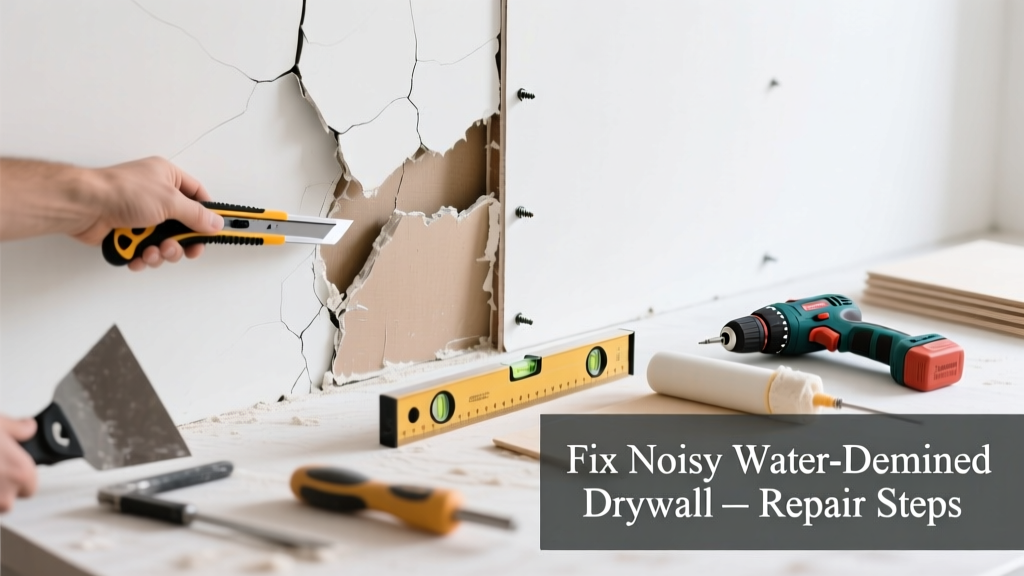
- Replace damaged sections if swelling exceeds ⅛" or paper is bubbled/soft. Cut out affected area with a utility knife, leaving clean edges at stud centers. Install new ½" Type X drywall, tape, mud, and sand per drywall mudding best practices.
- Install rigid foam backing behind new drywall in high-moisture zones (e.g., bathrooms, basements) to decouple vibration and slow future moisture transfer.
When to Call a Pro
Some situations demand licensed expertise—not just experience. Call a water damage restoration specialist or structural contractor if:
- You detect musty odors *and* moisture readings exceed 22% in framing—this signals advanced decay or hidden mold colonies
- Noise coincides with visible sagging >½ inch or bulging near electrical outlets—risk of arc faults or fire
- The affected wall shares space with gas lines, load-bearing beams, or fire-rated assemblies (e.g., garage separation walls)
- Your home was built before 1980 and you suspect asbestos-containing joint compound—disturbing it without abatement violates EPA regulations
"Over 60% of homes with chronic water intrusion show audible drywall movement before visible staining appears—making noise one of the earliest, most reliable warning signs." — Insurance Institute for Business & Home Safety, 2023 Residential Water Damage Report
Prevention Tips
Stop recurrence by targeting moisture pathways and monitoring conditions:
- Install exhaust fans rated for ≥50 CFM in bathrooms and run them 20 minutes post-shower
- Inspect roof valleys and chimney flashing annually—replace cracked or lifted sealant
- Keep indoor relative humidity between 30–50% year-round using a smart dehumidifier or HVAC humidistat
- Seal all exterior wall penetrations (pipes, vents, wires) with silicone-based caulk—not acrylic
- Add drip edges to gutters and slope soil away from foundations at 1 inch per foot for 6 feet
Can I use bleach on this?
No. Bleach doesn’t penetrate porous drywall and only kills surface mold—it leaves roots intact and damages paper facing. The U.S. EPA recommends using detergent-and-water cleaning for non-porous surfaces, and replacing moldy drywall entirely (EPA Mold Remediation Guidelines, 2022).
Will a dehumidifier alone fix the noise?
Only if moisture is recent (<72 hours), localized, and below 15%. Once gypsum crystals have dissolved and paper fibers degraded, drying won’t restore structural integrity—the board must be replaced. Run a dehumidifier at 35% RH for 48 hours *before* testing with a moisture meter.
Why does it only creak at night?
Nighttime cooling causes framing lumber to contract slightly, tightening gaps where swollen drywall meets studs. That micro-friction creates the creak—especially in rooms with poor insulation or large temperature swings. It’s a sign the substrate is unstable, not just seasonal.
Can I patch over the noisy spot instead of replacing?
Temporary patches mask symptoms but worsen long-term risk. A 4×4-inch patch over compromised drywall adds weight without support, accelerating screw pull-through. If moisture is present, patching traps vapor and accelerates rot beneath. Always address moisture first, then replace full sections between framing members.
How long until mold grows after water exposure?
Mold spores can colonize damp drywall within 24–48 hours, according to CDC guidelines. Visible growth often appears by day 3–5. If your drywall has been wet >48 hours—even if it looks dry on the surface—assume mold is present behind the paper and plan for removal.
Is this covered by homeowners insurance?
Most policies cover sudden, accidental water damage (e.g., burst pipe) but exclude gradual leaks (e.g., dripping faucet for months) or flood-related events. Document noise onset dates, take moisture meter photos, and file a claim within 72 hours of discovery. Delayed reporting reduces payout likelihood by 37%, per National Association of Insurance Commissioners 2023 claims data.
That unsettling pop or groan isn’t just background noise—it’s your drywall telling you something’s wrong behind the surface. Address it early, methodically, and safely, and you’ll avoid far costlier repairs down the line. Keep your moisture meter charged, your gutters clear, and don’t wait for stains to appear before acting. For related help, see our guide on how to find a hidden water leak or safe mold removal on drywall.