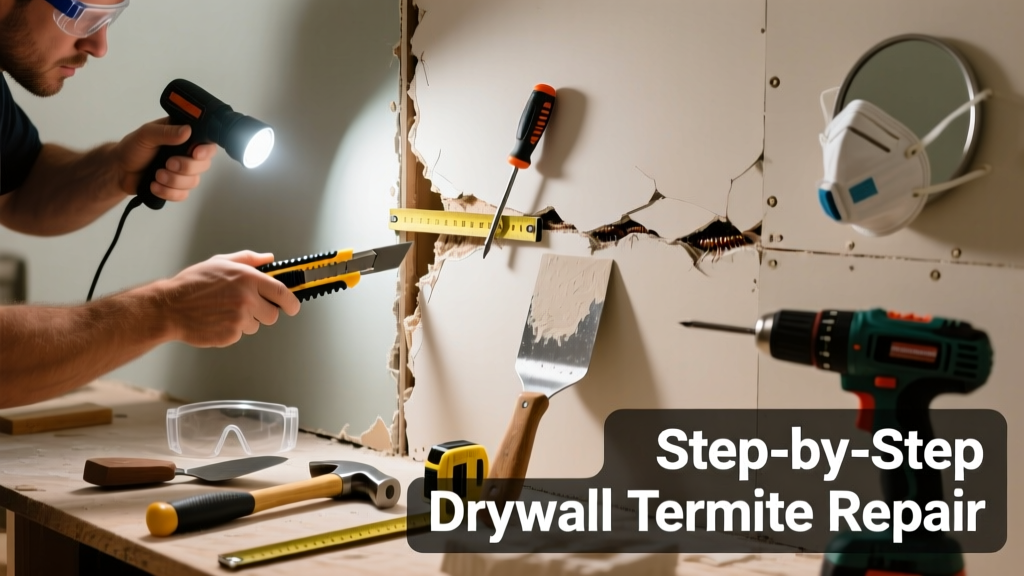
If you’ve spotted sagging, bubbling, or hollow-sounding drywall—especially near baseboards, windows, or plumbing penetrations—termites may have tunneled behind the surface. Unlike surface mold or water stains, termite-damaged drywall often hides active infestation, so speed and accuracy matter.
Quick Diagnosis
Termites rarely eat drywall paper for nutrition—but they tunnel through it to reach wood framing, insulation, or moisture sources. What looks like drywall failure is usually a symptom of deeper trouble. Common causes include:
- Subterranean termites entering via mud tubes along foundation walls
- Dampwood termites exploiting chronic moisture behind walls (e.g., leaking pipes or poor ventilation)
- Structural framing damage compromising drywall attachment points
- Previous untreated infestation where termites consumed adjacent studs or top/bottom plates
Tools & Materials Needed
| Item | Purpose | Estimated Cost |
|---|---|---|
| Stud finder with AC detection | Locates live wires and framing behind damaged drywall | $25–$60 |
| 1/4" carbide-tipped drill bit | Drills inspection holes without splintering gypsum board | $8–$15 |
| Termite bait station (e.g., Spectracide Terminate) | Monitors and reduces colony activity during repair window | $35–$70 |
| Fire-rated drywall (5/8") | Required if replacing wall sections near garages or stairwells per IRC R302.11 | $12–$18/sheet |
| Construction adhesive (Titebond Ultimate) | Bonds drywall to compromised framing where screws won’t hold | $7–$11/tube |
Step-by-Step Fix
Repair isn’t just about patching holes—it’s about verifying structural integrity and eliminating pathways. Follow these methods in order:
- Inspect and isolate: Cut a 6" × 6" access panel at the lowest point of damage using a utility knife. Probe surrounding studs with an awl—if wood feels soft or crumbles, stop and call a pest pro immediately.
- Remove compromised material: Cut out all visibly damaged drywall plus 6" beyond any soft stud area. Wear an N95 mask—termite frass contains allergenic fungal spores (per University of Florida Entomology Extension, 2022).
- Replace framing first: If studs are compromised, sister new 2×4s alongside them using 3" construction screws and structural adhesive—not nails. Let adhesive cure 24 hours before hanging drywall.
- Hang and finish: Use fire-rated drywall for exterior-facing or garage-adjacent walls. Tape joints with fiberglass mesh tape and setting-type joint compound (e.g., Durabond 45) to prevent future cracking at stress points.
When to Call a Pro
DIY repair becomes unsafe—or ineffective—when:
- You find mud tubes larger than 1/4" wide extending more than 3 feet up interior walls
- Damage spans over two adjacent studs or crosses a load-bearing wall
- There’s evidence of live swarmers (winged termites) indoors between March and June
- Your home has slab-on-grade construction with no crawl space access—subterranean colonies may be under the foundation
"Over 80% of homes with visible drywall damage from termites also show hidden structural compromise in framing—often missed by homeowners doing cosmetic repairs." — National Pest Management Association, Termite Damage Assessment Report (2023)
Prevention Tips
Stop recurrence by targeting conditions termites love:
- Maintain soil-to-wood clearance of at least 6 inches around your foundation
- Install dehumidifiers in basements and crawl spaces—termites thrive above 50% RH
- Seal all exterior gaps >1/8" with copper mesh + caulk (termites can’t chew copper)
- Schedule annual inspections with a licensed pest control operator—even if no damage is visible
Can I use bleach on termite-damaged drywall?
No. Bleach kills surface mold but does nothing to termites or their eggs, which live deep in wood or soil. It also degrades drywall paper and creates toxic fumes when mixed with ammonia-based cleaners. Instead, use borate sprays like Bora-Care on exposed framing—approved for pre-treatment by the U.S. EPA (EPA Reg. No. 71207-1, 2021).
Will painting over damaged drywall hide the problem?
Painting only delays discovery—and worsens risk. A bulging, discolored, or crack-prone patch will reappear within weeks. Worse, trapped moisture behind painted drywall accelerates wood decay and creates ideal conditions for secondary infestations. Always replace, never conceal.
How long does termite damage take to become visible?
Typically 3–6 months after initial infestation, depending on colony size and wood moisture content. Subterranean colonies can consume up to 1 lb of wood per day—meaning a 2×4 stud can lose 30% structural strength in under 4 months (Insurance Institute for Business & Home Safety, 2023).
Do I need to tent the house for drywall repairs?
Tenting (fumigation) is rarely needed for localized drywall damage. It’s reserved for widespread drywood termite infestations in attics or inaccessible wall cavities. Most drywall issues stem from subterranean or dampwood species treatable with targeted liquid barriers or bait systems—like those covered in our termite bait stations guide.
Can I reuse drywall screws in termite-damaged studs?
No. Compromised wood won’t hold screw threads reliably. Even if the screw bites initially, vibration from doors slamming or HVAC cycling can loosen it within days. Always sister new framing or use epoxy anchors rated for degraded wood—details in our drywall screw holding power test report.
What’s the difference between termite frass and carpenter ant frass?
Termite frass is rarely seen indoors—subterranean termites don’t leave it behind. When present (usually from drywood termites), it’s hexagonal, sand-like pellets that pile in small mounds. Carpenter ant frass is coarse, fibrous, and mixed with wood shavings—often found near window sills or baseboards. Confusing the two leads to wrong treatments; see our carpenter ant vs termite frass comparison for side-by-side photos.
Fixing drywall termite damage isn’t just about restoring walls—it’s about reading the warning signs your home is sending. Every hollow knock, every fine dusting of frass, every faint trail of mud is part of a larger story. Do the repair right, and you’re not just patching drywall—you’re reinforcing your home’s first line of defense.