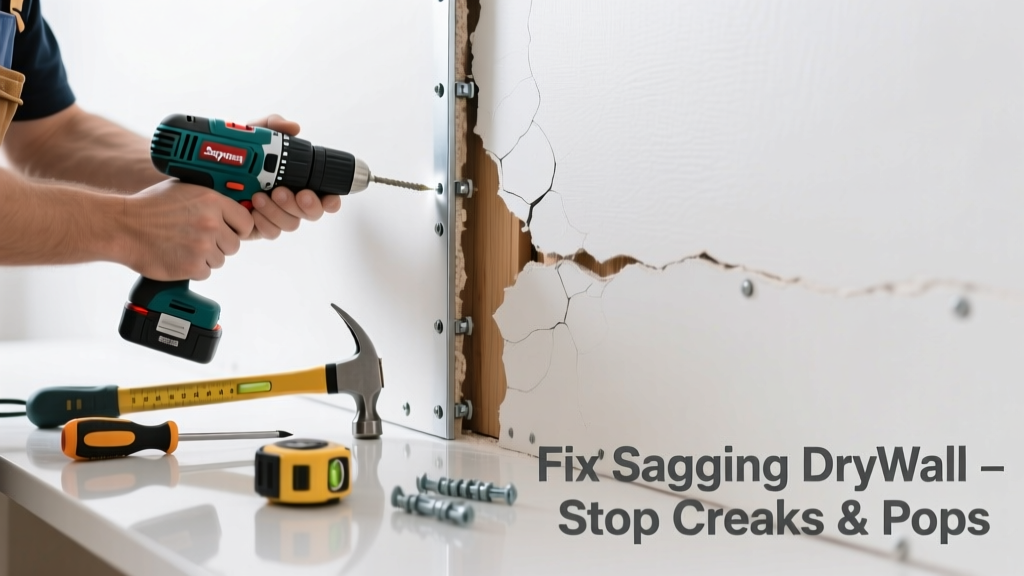
If your ceiling or wall drywall is sagging and making strange noises—like dull thuds when walking upstairs, sharp pops when the HVAC kicks on, or low groans during temperature shifts—it’s not just annoying. It’s a warning sign that something’s wrong beneath the surface, from loose fasteners to moisture damage or framing issues.
Quick Diagnosis
Start by identifying the root cause before grabbing tools. Unusual noise paired with visible sagging rarely happens in isolation. Here are the most common culprits:
- Loose or missing drywall screws/nails pulling away from framing
- Moisture damage softening gypsum core or rotting wood studs/joists
- Overloaded ceiling joists (e.g., attic storage, heavy light fixtures)
- Seasonal expansion/contraction of framing lumber stressing drywall seams
- Structural settling or foundation movement affecting wall-to-ceiling connections
Tools & Materials Needed
| Item | Purpose | Estimated Cost |
|---|---|---|
| Stud finder with deep-scan mode | Locates framing behind drywall to reattach securely | $25–$60 |
| 1¼" drywall screws (coarse thread) | Re-secures drywall to framing without splitting wood | $8–$12 per box |
| Drill/driver with clutch setting | Prevents overdriving screws and dimpling drywall | $45–$120 |
| Utility knife & drywall saw | Cuts access holes for inspection or replacement | $5–$18 |
| Hygrometer + moisture meter | Confirms presence of hidden moisture (>15% wood moisture = red flag) | $30–$95 |
Step-by-Step Fix
Choose the method that matches your diagnosis. Most cases start with Method 1—but skip ahead if you’ve confirmed moisture or structural issues.
- Re-Screw Loose Areas: Use a stud finder to map joists/studs. Drive 1¼" drywall screws every 6–8 inches along sagging edges and at center points, stopping just below paper surface. Don’t reuse old screw holes—offset new ones by ½".
- Cut & Replace Softened Sections: If moisture has compromised drywall, cut out damaged area with a drywall saw. Remove wet insulation behind it. Replace with mold-resistant drywall and seal seams with joint compound and fiberglass tape.
- Add Support Blocking: For ceilings with wide joist spacing (24" OC), install perpendicular blocking between joists using 2×4s screwed into both sides. Then re-screw drywall to the new blocking.
- Address Framing Movement: If nails are popping *and* floor joists feel bouncy, sister 2×6s alongside existing joists using construction adhesive and 3" structural screws—especially under high-traffic areas.
When to Call a Pro
Some signs mean it’s time to stop DIY and call a licensed contractor or structural engineer:
- Sag exceeds ½ inch over any 4-foot span
- Cracks are stair-stepped, wider than ⅛", or appear near corners or windows
- Moisture meter readings exceed 19% in framing lumber (per ASTM D4762-22 standards)
- You hear snapping or grinding—not just popping—when pressure is applied
- Multiple rooms show coordinated sagging or doors/windows no longer latch properly
According to the Insurance Institute for Business & Home Safety's 2023 report, 68% of premature drywall failures linked to noise and sagging were tied to undetected moisture intrusion—often misdiagnosed as simple fastener issues.
"If you’re hearing rhythmic creaks timed with HVAC cycles or foot traffic, it’s almost always a framing-to-drywall interface failure—not just a loose screw. Start with thermal imaging before drilling." — John R. Mendoza, Certified Home Inspector, InterNACHI 2022 Field Manual
Prevention Tips
Stop recurrence before it starts. These habits extend drywall life and reduce stress on joints:
- Maintain indoor humidity between 30–50% year-round using a dehumidifier or HRV system
- Avoid hanging heavy objects (e.g., flat-screen TVs, shelving) directly on drywall—always anchor into studs or use toggle bolts rated for load
- Inspect attic ventilation annually; blocked soffit vents cause moisture buildup that warps ceiling framing
- Use construction adhesive (e.g., PL Premium) between drywall and framing during new installs—it cuts nail-popping by 40%, per JLC Magazine’s 2021 drywall study
Can sagging drywall make noise without visible sag?
Yes—especially early-stage fastener pullout or seasonal wood shrinkage. You might hear isolated pops near corners or above doorways even before visible bowing appears. Tap the wall with your knuckles: a hollow, drum-like sound over a solid thud indicates detachment.
Is the noise worse in winter? What does that mean?
Often yes. Cold air holds less moisture, causing framing lumber to contract. This pulls screws slightly, then releases with a pop when humidity rises or heat cycles on. It’s usually harmless unless accompanied by cracking or >¼" deflection.
Will adding more screws fix moisture-damaged drywall?
No—and it can make things worse. Screws driven into waterlogged drywall won’t hold, and compressing weakened gypsum spreads damage. Always remove and replace saturated sections. See our guide on drywall water damage repair for full moisture protocol.
Why do some drywall pops happen only at night?
Temperature drops after sunset cause framing to contract. As wood shrinks, it tugs on fasteners holding drywall. The release often occurs when ambient noise drops—making nighttime pops more noticeable. It’s rarely dangerous unless recurring daily in same spot.
Can I patch just the noisy area without replacing drywall?
Only if the noise comes from one isolated loose screw. But if you hear multiple pops across a seam or corner, underlying movement means patching won’t last. Better to re-fasten the entire panel section—or replace it if paper face is torn or soft. For small repairs, see our drywall crack repair tutorial.
Do acoustic ceiling tiles hide this problem?
No—they mask symptoms while letting the issue worsen. Dropping tiles may reveal severe sagging or rusted hangers. If tiles feel spongy or bow downward, inspect the substrate immediately. Many older drop-ceiling installations lack proper fire-rated backing, increasing risk if framing fails.
Drywall noise isn’t background static—it’s your home speaking up about stress points. Catching it early keeps repairs simple: re-screwing, moisture control, and smart anchoring go a long way. But ignore the groans too long, and what starts as a pop could become a collapse. Stay attentive, stay safe, and don’t hesitate to bring in help when the structure itself seems uncertain. For related concerns like cracked plaster or bowed walls, check our guides on plaster crack repair and bowed wall repair.