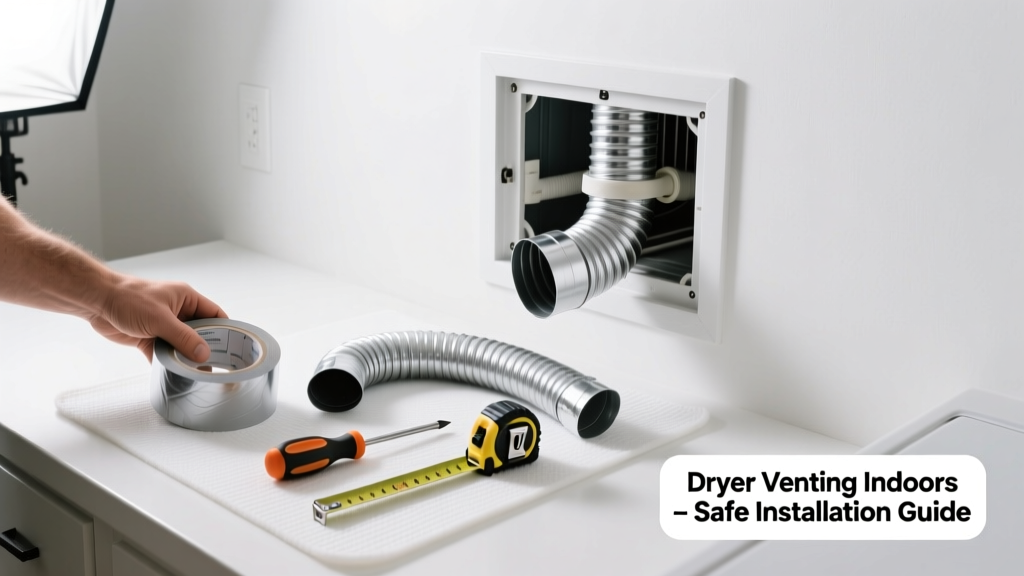
Venting your dryer indoors isn’t just inefficient—it’s a serious fire and mold hazard. Lint buildup, trapped moisture, and carbon monoxide risk (for gas dryers) make this one of the most urgent home repairs you’ll face. Most homeowners don’t realize their dryer is venting indoors until they spot condensation on windows, musty laundry room smells, or visible lint dust on baseboards.
Quick Diagnosis
Before grabbing tools, confirm the problem with these telltale signs:
- Warm, humid air blowing from the dryer cabinet or behind the unit
- Lint accumulating on the floor, walls, or ceiling near the dryer
- Mold spots or peeling paint on nearby drywall or trim
- A musty odor in the laundry room or adjacent hallway
- No external vent hood visible outside the house—or one that’s blocked, disconnected, or missing its damper flap
Tools & Materials Needed
| Item | Purpose | Estimated Cost |
|---|---|---|
| Flexible aluminum vent hose (4″ diameter) | Replaces plastic or foil ducts; resists crushing and meets code | $12–$18 |
| Heavy-duty dryer vent clamp set | Secures connections without tape or screws—prevents leaks and disconnection | $6–$10 |
| Drill with 1/8″ pilot bit | For mounting wall bracket and drilling vent hole through exterior sheathing | $0 (if owned) or $35–$70 |
| Exterior dryer vent hood (with backdraft damper) | Keeps rain, pests, and cold air out while allowing exhaust to escape | $15–$28 |
| Insulated duct sealant (UL 181B-FX rated) | Code-compliant sealant for joints—not duct tape, which fails under heat | $9–$14 |
Step-by-Step Fix
Follow these methods in order—start simple, escalate only if needed:
- Check the connection behind the dryer: Pull the dryer away (unplug first), inspect where the duct attaches to the rear. If it’s kinked, detached, or held with duct tape, reattach using clamps and replace any crushed or plastic duct with rigid or semi-rigid aluminum.
- Inspect the entire duct run: Follow the path to the exterior. Look for sagging sections (which trap lint), gaps at joints, or holes in the duct. Replace any section with visible tears or corrosion.
- Verify exterior vent operation: Go outside and feel for warm airflow during a cycle. If nothing blows—or if the damper flap doesn’t open—clean the hood or replace it. Remove nests, leaves, or bird debris with needle-nose pliers and a stiff brush.
- Install a new vent path (if no existing duct): Drill a 4¼″ hole through the exterior wall (avoiding studs and wiring), mount the vent hood with caulk and screws, then connect interior duct with minimal bends (max 25 ft total length, or 20 ft with each 90° bend subtracting 5 ft).
When to Call a Pro
Don’t risk it if any of these apply:
- Your dryer is gas-powered and you smell gas or suspect a CO leak—call a licensed HVAC technician immediately
- The duct runs through an attic, crawl space, or shared wall with neighbors (common in condos)—building code compliance requires inspection
- You hit electrical wiring, plumbing, or structural framing while drilling
- Moisture has already caused drywall delamination or subfloor softening—mold remediation may be needed before vent repair
Prevention Tips
Maintain safe, efficient venting year-round with these habits:
- Clean the lint trap before every load—and wipe the trap housing monthly with a damp cloth
- Vacuum the dryer’s internal blower housing annually (consult your manual for access)
- Inspect the full duct path and exterior hood every 6 months—especially after winter storms or nesting season
- Replace flexible ducts every 5 years—even if they look fine—since internal ridges trap lint over time
Can I use duct tape to fix a torn dryer vent?
No. Duct tape dries out, cracks, and fails under dryer heat—creating dangerous gaps. The International Residential Code (IRC M1502.4, 2021) prohibits tape for dryer duct connections. Use UL 181B-FX–rated mastic or metal clamps instead.
Is it safe to vent a dryer into a garage or basement?
No. Indoor venting violates building codes nationwide and creates serious hazards. According to the U.S. Consumer Product Safety Commission, improperly vented dryers contribute to over 15,000 home fires annually. Even ‘indoor vent kits’ marketed for apartments are unsafe and not code-compliant.
How far can a dryer vent run horizontally?
The maximum allowable length is 25 feet—but subtract 5 feet for each 45° bend and 10 feet for each 90° bend. Rigid metal ducts allow longer runs than flexible ones. Always prioritize shortest, straightest path possible.
Why does my dryer vent keep clogging even after cleaning?
Frequent clogs often point to undersized duct (less than 4″), excessive bends, or a long horizontal run with no slope. It could also mean your dryer’s blower wheel is damaged or the motor is weakening—both reduce airflow enough to stall lint mid-duct.
Do electric and gas dryers need different venting?
Both require identical exterior venting—but gas dryers add carbon monoxide risk if venting fails. A gas dryer venting indoors can produce lethal CO levels within minutes. Never bypass or disable the exhaust system on any gas appliance.
Can I clean my dryer vent myself with a leaf blower?
Not reliably—and it’s risky. Leaf blowers can force lint deeper into walls or rupture fragile ducts. The National Fire Protection Association recommends using a certified dryer vent cleaning brush kit (like this professional-grade set) with a drill attachment and flexible rods. For ducts longer than 15 feet, hire a technician who uses video inspection tools—see what a real inspection reveals.
"Over 90% of dryer fires involve improper venting—most due to lint accumulation in ducts that haven't been cleaned in over two years." — U.S. Fire Administration, Dryer Fire Safety Report, 2022
Fixing indoor dryer venting isn’t about convenience—it’s about preventing fire, protecting your air quality, and preserving your home’s structure. A properly vented dryer runs cooler, lasts longer, and cuts drying time by up to 25%. Once you’ve sealed that leak and restored outdoor exhaust, test it with a tissue taped over the exterior hood: it should flutter steadily during a full heat cycle. That gentle flutter? That’s safety, working as designed.