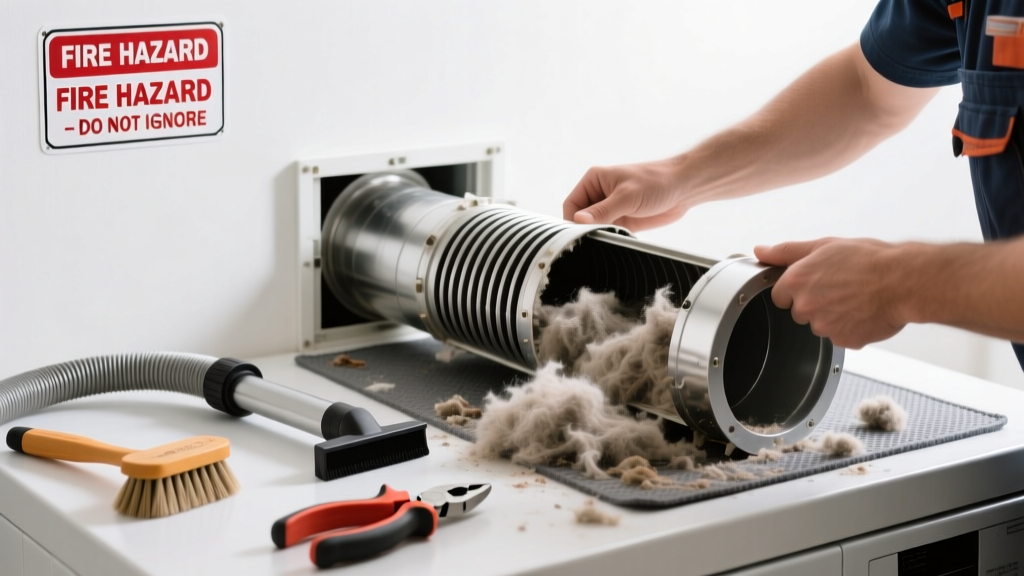
If your dryer runs hot but clothes stay damp—or it shuts off mid-cycle—your vent is likely choked with lint. A clogged dryer vent isn’t just inefficient; it’s the #1 cause of home clothes dryer fires, accounting for 2,900 U.S. fires annually (U.S. Fire Administration, 2022). Ignoring it risks damage to your appliance, higher energy bills, and serious safety hazards.
Quick Diagnosis
Before grabbing tools, confirm the issue isn’t something simpler:
- Dryer heats but takes 2+ cycles to dry a normal load
- Exterior vent flap doesn’t open or flaps weakly when dryer runs
- Lint buildup visible at the dryer’s rear exhaust port or outside vent hood
- Burning smell or excessive heat on the dryer’s top or back panel
- Condensation or moisture pooling near the dryer or vent path
Tools & Materials Needed
| Item | Purpose | Estimated Cost |
|---|---|---|
| Lint brush kit (flexible rod + brush head) | Reaches deep into rigid and flexible ducts to dislodge compacted lint | $12–$28 |
| Vacuum with hose attachment & crevice tool | Removes loosened debris from accessible ends and interior sections | $0 (if owned)–$150 |
| Microfiber cloths & white vinegar | Cleans residue from vent hood exterior and plastic components without corrosion | $5–$10 |
| Phillips & flathead screwdrivers | Removes dryer back panel and exterior vent cover safely | $6–$14 |
| Flashlight or headlamp | Inspects bends, wall cavities, and termination points where lint hides | $8–$35 |
Step-by-Step Fix
Clearing a clogged dryer vent requires methodical access—not brute force. Start at the easiest point and work outward:
- Unplug the dryer and pull it away from the wall (leave gas line connected if gas-powered; don’t move it).
- Disconnect the vent hose from the dryer’s exhaust port using pliers if clamps are tight. Inspect the short section for kinks, holes, or solid lint plugs—replace if damaged or foil accordion type (per NFPA 54/2023 code).
- Use the lint brush kit starting at the dryer end: feed the rod slowly through the duct, rotating as you go. Withdraw after every 2 feet to vacuum loosened lint. Repeat until resistance drops significantly.
- Clean the exterior vent hood: Remove screws, take off the cover, and scrub the flap and housing with vinegar-dampened cloth. Check for bird nests, paint overspray, or insect blockages—common culprits in older homes.
- Test airflow: Turn dryer on low heat (no clothes) and hold a tissue near the exterior vent. It should flutter steadily within 10 seconds. If not, repeat brushing or inspect wall cavity sections.
When to Call a Pro
Some clogs aren’t reachable without structural access—and some situations demand licensed expertise:
- You hear scraping or grinding while feeding the brush—likely hitting a nail, stud, or collapsed duct section
- Your vent runs through attic, crawl space, or over 25 linear feet with more than two 90° bends (per IRC M1502.4.3)
- You find mold, rodent droppings, or standing water inside the duct—indicating ventilation failure or roof leak intrusion
- The dryer’s thermal fuse has blown repeatedly (requires multimeter testing and replacement)
- Your home uses a rigid metal vent but the duct disappears behind drywall with no access panel
"A dryer vent should be cleaned professionally every 1–2 years—even if you DIY clean annually. Hidden bends and transitions trap 60% of lint beyond homeowner reach." — National Fire Protection Association, Dryer Vent Safety Bulletin, 2023
Prevention Tips
Consistent maintenance beats emergency fixes. Build these habits into your routine:
- Clean the lint screen before every load—and rinse it monthly with warm water and dish soap to remove fabric softener residue
- Inspect the exterior vent hood quarterly for obstructions, especially after storms or nesting season
- Replace plastic or foil accordion vents with rigid or semi-rigid aluminum ducts (max 4-inch diameter, smooth interior)
- Install a dryer vent monitoring sensor that alerts you when airflow drops below safe thresholds
- Keep the area behind the dryer clear—never push it flush against the wall; maintain 4–6 inches of clearance
Can I use compressed air to blow out the vent?
No—compressed air can force compacted lint deeper into wall cavities or behind insulation, worsening the blockage and creating hidden fire fuel. It also risks damaging flexible duct seams. Stick to mechanical brushing and vacuum extraction.
How often should I clean my dryer vent?
At minimum, once per year—but households with pets, long hair, or frequent towel/blanket loads need cleaning every 6 months. According to the U.S. Consumer Product Safety Commission, 34% of dryer fires involve failure to clean the vent system regularly.
Why does my dryer vent get clogged so fast?
Rapid lint buildup usually points to one or more root causes: using non-HE detergent (creates excess suds and residue), overloading the dryer, running too many consecutive loads without cleaning the screen, or having an excessively long or bent vent run. Also check if your dryer isn’t heating properly—low heat means wetter lint sticks harder.
Is a clogged dryer vent dangerous?
Yes—extremely. Lint is highly flammable, and trapped heat in a restricted duct can ignite at 150°F. The U.S. Fire Administration reports that 92% of dryer-related fires start in the machine or vent system, and 75% of those involve improper venting or maintenance.
Can I clean the vent without moving the dryer?
You can clear the exterior hood and partway down the duct, but you’ll miss the critical 3–6 feet between the dryer and first elbow—the most common clog zone. Moving the dryer is non-negotiable for full cleaning. Use furniture sliders or enlist help; never strain your back trying to lift or drag it alone.
What’s the best dryer vent material to prevent future clogs?
Rigid aluminum duct (not flexible foil or plastic) is the gold standard. Its smooth interior resists lint adhesion, and it won’t collapse under pressure. Per the International Residential Code, flexible transition ducts should be no longer than 8 feet and never concealed inside walls or floors.
A clogged dryer vent is rarely a ‘wait-and-see’ issue—it’s a ticking inefficiency and safety concern. With the right tools and 45 focused minutes, most homeowners can restore proper airflow and extend their dryer’s life by 3–5 years. And if you spot rust on the vent hood or feel excessive vibration during operation, pair your next cleaning with a check of your dryer belt and drum rollers—they’re often wearing in sync.