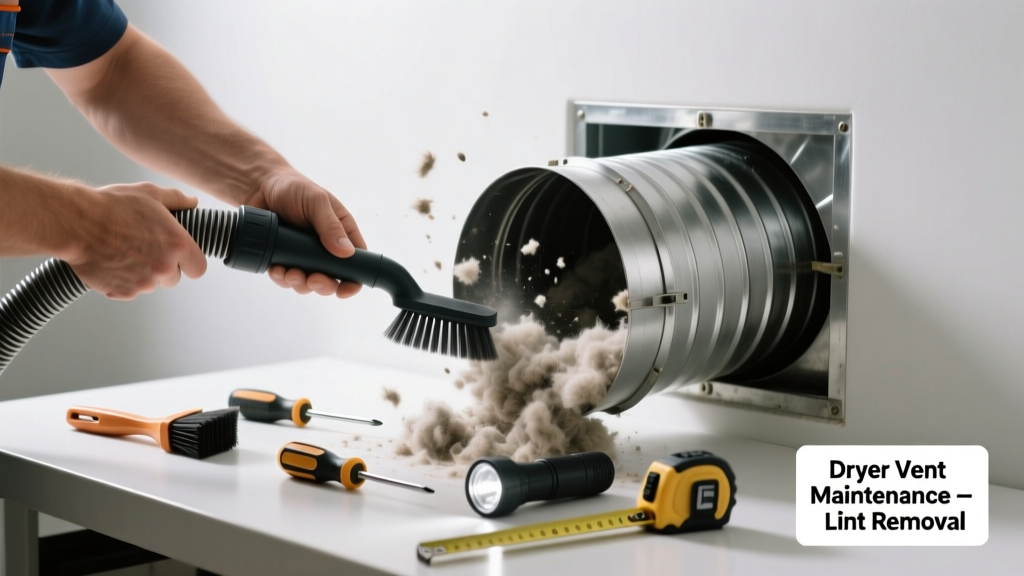
If your dryer suddenly starts sounding like a freight train—or emits high-pitched squeals, rhythmic thumps, or hollow rattles—it’s likely screaming for help. A clogged dryer vent doesn’t just waste energy; it overheats components, strains the motor, and raises fire risk. According to the U.S. Fire Administration, clothes dryers cause an estimated 4,800 home fires annually—nearly 34% linked to lint buildup in vents (2022 National Fire Data Center report).
Quick Diagnosis
Before grabbing tools, confirm the noise source isn’t internal. Rule out these common culprits first:
- Thumping or banging during tumbling: Likely loose drum support roller or worn belt—not vent-related
- High-pitched whine or screech: Often a failing blower wheel bearing or motor issue
- Rattling or fluttering when exhaust airflow is restricted: Classic sign of partial or full vent blockage
- Burning smell + reduced heat + longer cycles: Strong indicator of lint-clogged duct or exterior hood flap stuck shut
Tools & Materials Needed
| Item | Purpose | Estimated Cost |
|---|---|---|
| Flexible dryer vent brush kit (10-ft minimum) | Cleans interior duct walls without disassembly; nylon bristles won’t scratch aluminum | $18–$32 |
| Shop vacuum with crevice tool & hose extension | Removes loosened lint from both ends of the vent; use HEPA filter if possible | $65–$120 |
| Coil-type vent cleaning snake (stainless steel) | Breaks up compacted lint balls deep in rigid metal ducts where brushes can’t reach | $22–$45 |
| Lint trap cleaning brush & microfiber cloth | Ensures lint screen is fully clean—even fine fibers reduce airflow by up to 25% | $4–$9 |
Step-by-Step Fix
Follow this sequence—start at the dryer and work outward. Never skip the lint trap or transition duct behind the unit.
- Unplug the dryer and pull it away (at least 12 inches) to access the rear exhaust connection. Check the flexible transition duct (the accordion-style hose between dryer and wall). If kinked, crushed, or made of plastic (a fire hazard), replace it with rigid or semi-rigid aluminum duct.
- Clean the lint trap thoroughly using warm water, mild dish soap, and a soft-bristled brush. Let air-dry completely before reinserting—damp lint traps trap more debris.
- Detach the transition duct from both dryer outlet and wall vent pipe. Vacuum both ends aggressively, then insert the flexible brush into the wall duct and rotate while pushing 3–4 feet in. Pull back slowly—repeat until no lint sheds from brush tips.
- For rigid ducts or stubborn clogs, feed the coil snake through the exterior vent hood (remove cover plate first). Rotate clockwise while advancing 6–8 inches at a time. Withdraw and vacuum debris immediately after each pass.
- Reassemble and test: Reconnect ducts securely (no tape over joints—use foil tape only), plug in, and run a 10-minute timed cycle with no load. Place your hand near the exterior hood—you should feel strong, steady airflow with no flutter or resistance.
When to Call a Pro
Some vent layouts defy DIY access—and safety comes first. Call a certified HVAC technician or dryer vent specialist if:
- Your vent runs vertically through attic framing or drops into crawl space (requires roof or floor access)
- You detect mold, rodent nests, or wet insulation inside the duct—signs of deeper structural issues
- The exterior vent hood is mounted on stucco, brick, or stone with no visible access panel
- After cleaning, airflow remains weak and noise returns within 2 weeks—suggesting hidden bends or improper slope
Prevention Tips
Maintenance beats emergency repair every time. Build these habits into your routine:
- Clean the lint screen before every load—not just when it looks full. The U.S. EPA estimates 14% of household water usage is from leaks—but lint buildup wastes far more energy: a clogged vent can increase drying time by 300% (ASHRAE Handbook, 2021).
- Vacuum the transition duct and dryer exhaust port quarterly using a narrow nozzle.
- Inspect the exterior vent hood twice yearly—ensure flaps open freely and aren’t blocked by snow, leaves, or bird nests.
- Replace plastic or foil accordion ducts with UL-listed rigid or semi-rigid metal ducts—required by the International Residential Code since 2006.
Can I use compressed air to blow out the vent?
No—compressed air can force compacted lint deeper into duct bends or rupture fragile sections of older ductwork. It also risks blowing debris into your dryer’s internal blower housing, worsening noise. Stick to mechanical brushing and vacuum extraction.
Why does my dryer make a grinding noise only when starting up?
A brief grinding sound at startup often points to a seized blower wheel bearing or misaligned drum support roller—not the vent. But if it coincides with reduced heat or hot exterior casing, check for vent restriction first. Overheating from poor airflow accelerates bearing wear.
Is it safe to clean the vent while the dryer is running?
Never. Running the dryer while cleaning creates dangerous backdraft conditions, forces lint into inaccessible areas, and risks electric shock or burns. Always unplug and cool down the unit before any service.
How often should I clean the entire vent system?
Most households need full cleaning every 6–12 months. Homes with pets, long dryer cycles, or multi-person families should aim for every 6 months. As noted by the Chimney Safety Institute of America, 72% of dryer fires occur in homes where vents weren’t cleaned in the prior year (CSIA Dryer Fire Prevention Guide, 2023).
What’s the difference between a vent brush and a dryer duct snake?
A vent brush uses rotating bristles to scrape lint off smooth duct walls—ideal for straight, accessible runs. A duct snake has a coiled wire tip that breaks apart hardened lint clumps in tight bends or long vertical chases. Use both for best results.
Can a clogged vent damage my dryer permanently?
Yes. Sustained overheating stresses thermal fuses, thermostats, heating elements, and motors. Replacing a failed heating element costs $120–$250; a new motor runs $280–$450. Regular vent cleaning extends dryer life by 3–5 years, according to appliance repair data from Sears Home Services (2022 field survey).
"A dryer vent that hasn’t been cleaned in over a year poses a greater immediate fire risk than a dirty stove top or overloaded outlet—yet it’s the most overlooked hazard in 83% of homes." — National Fire Protection Association, Home Fire Safety Report, 2023
Fixing a noisy, clogged dryer vent isn’t glamorous—but it’s one of the highest-impact, lowest-cost home maintenance tasks you’ll do all year. You’ll notice quieter operation, faster drying times, cooler dryer surfaces, and peace of mind knowing you’ve removed a leading cause of residential fires. Keep your brush kit handy, set calendar reminders, and treat your dryer like the hardworking appliance it is—not a black box that just ‘makes noise sometimes.’ For related fixes, see our guides on dryer not heating and dryer vibration noise.