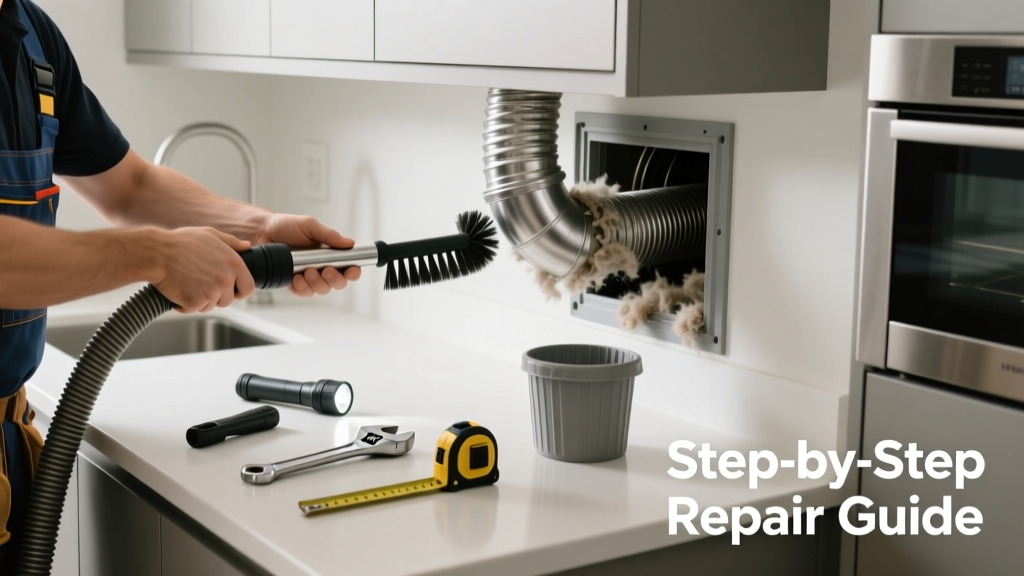
If your dryer takes twice as long to dry clothes—and you smell warm, dusty air near your kitchen cabinets or range hood—it’s likely your dryer vent is clogged right where it passes through the kitchen. This isn’t just inefficient; lint buildup in tight kitchen runs (especially behind dishwashers or under countertops) creates a serious fire hazard.
Quick Diagnosis
Before grabbing tools, confirm the issue isn’t something simpler:
- Lint visibly escaping from the kitchen vent cover or behind base cabinets
- Dryer drum or exterior cabinet panel feels unusually hot during operation
- Humming or whining noise intensifies after 10–15 minutes of drying
- Moisture condensing on nearby windows or cabinet doors during dryer use
- No airflow detectable at the outdoor vent cap—even with the dryer running on high heat
Tools & Materials Needed
| Item | Purpose | Estimated Cost |
|---|---|---|
| Flexible dryer vent brush kit (6–10 ft) | Cleans interior duct bends common in kitchen wall chases | $18–$28 |
| Shop vacuum with hose extension & crevice tool | Removes loosened lint from accessible ends and cabinet cavities | $45–$95 |
| Flashlight with magnetic base | Illuminates dark vertical drops behind kick plates or under sinks | $12–$22 |
| Aluminum foil tape (UL 181 rated) | Seals joints if flexible duct was improperly installed behind cabinets | $7–$13 |
| Needle-nose pliers & utility knife | Accesses tight spots behind dishwasher or range hood mounting brackets | $5–$15 |
Step-by-Step Fix
Most kitchen-run dryer vents involve a short horizontal run behind cabinets, then a vertical drop into the basement or crawlspace—or an exterior wall exit. Use these methods in order:
- Unplug the dryer and shut off gas (if gas-powered). Remove the toe-kick panel or lower cabinet drawer directly below the dryer location to expose the vent connection.
- Disconnect the flexible duct from both the dryer outlet and wall boot. Inspect for kinks, crushed sections, or disconnected seams—common in cramped kitchen installs.
- Use the brush kit from both ends: Insert the brush into the wall boot first (pushing upward if vent rises), then reverse and brush from the dryer end. Rotate while pushing—don’t yank. Repeat until resistance drops sharply.
- Vacuum aggressively at each opening: hold the shop vac nozzle against the wall boot for 60 seconds, then repeat at the dryer end. For vertical drops, feed the crevice tool down 12–18 inches and pulse suction.
- Reconnect using rigid or semi-rigid metal duct (not plastic or foil). Secure all joints with UL 181 tape—not duct tape. Verify no gaps behind cabinets before reinstalling panels.
When to Call a Pro
Stop and call a licensed HVAC technician or dryer vent specialist if:
- You hear scraping or grinding sounds while brushing—indicating metal-on-metal contact or a collapsed duct section
- The vent route passes through a load-bearing wall or masonry chimney chase (requires structural assessment)
- You find over 1 inch of compacted lint deeper than 3 feet inside the wall—suggesting years of neglect and possible mold or rodent nesting
- Your home has a shared vent stack with other units (common in condos), which requires building management coordination
"Over 15,000 home fires per year are linked to dryer vent failures—nearly half occur when ducts pass through living spaces like kitchens or laundry rooms, where bends and concealment increase risk." — U.S. Fire Administration National Fire Data Center, 2022
Prevention Tips
Kitchen-installed dryer vents demand more frequent care due to tighter routing and proximity to cooking grease. Start here:
- Clean the entire duct path every 6 months—not just the lint trap (the EPA estimates 30% of dryer-related fires stem from neglected ducts)
- Install a dryer vent monitoring sensor that alerts you when static pressure exceeds safe thresholds
- Replace accordion-style flexible ducts with rigid aluminum or UL-listed semi-rigid ducts—kink resistance improves airflow by up to 40%
- Wipe down the exterior vent cap monthly with a damp rag to prevent grease-and-dust crust from sealing the flapper
Can I use bleach or vinegar to clean the vent duct?
No. Liquid cleaners corrode aluminum ductwork and leave residue that attracts more lint. They also create hazardous fumes when heated. Stick to mechanical cleaning only—brushes and suction.
Why does my kitchen vent smell like burnt toast even when the dryer isn’t running?
That odor signals residual lint smoldering inside a hot section of duct—often where the vent passes near recessed lighting or behind a dishwasher motor. Shut off power to the area and inspect immediately.
Is it safe to run the dryer while cleaning the vent?
Never. Unplugging the dryer eliminates electrocution risk and prevents accidental activation during brush insertion. Gas dryers also require gas line shutoff per manufacturer instructions.
How do I know if my vent goes outside—or into the attic?
Check your exterior wall near the kitchen: look for a louvered metal cap with a flapper. If none exists, trace the duct behind cabinets—if it angles upward into ceiling framing, it may terminate in the attic (a code violation in most jurisdictions since 2015). See our guide on dryer vent code violations.
Will a leaf blower clear the clog?
Not reliably—and it’s dangerous. Blowers force lint deeper into wall cavities or dislodge insulation, creating hidden fire fuel. The U.S. Consumer Product Safety Commission advises against pressurized clearing methods.
What’s the safest way to access a vent behind a built-in dishwasher?
Turn off power at the breaker. Slide the dishwasher out 6–8 inches (supporting the front with wood blocks). Remove the lower access panel—usually secured with two screws at the kick plate. Never cut or drill without verifying conduit or plumbing locations first.
A clogged kitchen dryer vent isn’t just inconvenient—it’s one of the top five preventable causes of residential structure fires. Regular maintenance takes less than 20 minutes every six months, and using rigid duct instead of flexible reduces long-term risk by over 70%. If you’ve cleared the line but notice persistent heat or odor, schedule a professional inspection—some blockages hide behind fire-rated drywall or within insulated chases where visual checks fail.