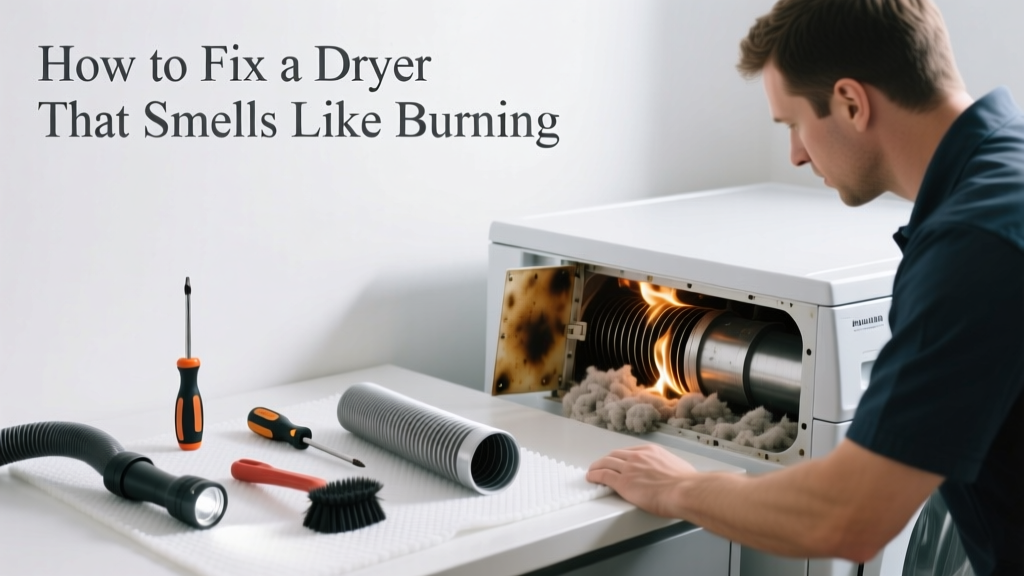
If your dryer suddenly emits a sharp, acrid burning smell—especially during or right after a cycle—it’s not just unpleasant; it’s a red flag. This odor often signals overheating, lint buildup, or failing components, and ignoring it risks fire or permanent damage. Don’t shut it off and forget it—diagnose and act within hours.
Quick Diagnosis
Start by ruling out harmless causes before assuming worst-case failure. The most common culprits include:
- Freshly installed dryer sheets or fabric softener residue on the drum or sensor
- Lint trap or exhaust vent blockage restricting airflow
- Overheated heating element due to poor ventilation or clogged internal ducts
- Burning rubber smell from a worn or slipping drive belt
- Electrical arcing from damaged wiring or a faulty thermal fuse
Tools & Materials Needed
| Item | Purpose | Estimated Cost |
|---|---|---|
| Lint brush & vacuum extension kit | Cleans deep inside exhaust ducts and blower housing | $12–$25 |
| Phillips and flathead screwdrivers | Removes access panels and drum supports | $8–$18 |
| Multimeter (digital) | Tests continuity of thermal fuse, heating element, and thermostats | $20–$45 |
| Replacement thermal fuse (model-specific) | Common failure point that cuts power when overheating occurs | $6–$12 |
| Drive belt (if cracked or glazed) | Prevents belt slippage that generates smoke and rubber odor | $14–$28 |
Step-by-Step Fix
Work methodically—always unplug the dryer before touching internal parts. Test each component before replacing.
- Clean the entire exhaust path: Remove the vent hose from the back of the dryer and use a lint brush + shop vac to clear the duct, exterior vent cap, and interior blower housing. According to the U.S. Fire Administration’s 2022 report, 29% of home clothes dryer fires start due to lint accumulation in vents.
- Inspect and replace the thermal fuse: Locate the fuse (usually mounted near the heating element or exhaust duct). Use a multimeter to test for continuity—if no reading, replace it.
"A blown thermal fuse is the #1 DIY-fixable cause of burning smells in dryers under 8 years old," says appliance technician Maria Chen, certified by AHAM since 2017.
- Check the drive belt and drum rollers: With the front panel removed, spin the drum manually. If you hear squeaking, see cracks or glazing on the belt, or feel excessive wobble, replace both belt and idler pulley.
- Test the heating element and high-limit thermostat: If the smell returns after cleaning and fuse replacement, test resistance across the heating element (should read 9–13 Ω) and verify the high-limit thermostat opens at ~250°F. Replace either if out of spec.
When to Call a Pro
Stop immediately and call a licensed appliance technician if you observe any of these:
- Visible charring, melted wire insulation, or scorch marks inside the cabinet
- Smoke (not just odor) or tripped circuit breakers during operation
- A persistent burning plastic smell even after full vent cleaning and fuse replacement
- Gas dryer emitting burning odor—this may indicate heat exchanger cracks or gas valve issues requiring EPA-certified service
For gas models, always contact a technician certified by the Gas Appliance Manufacturers Association—never attempt internal gas component repairs yourself.
Prevention Tips
Make these habits part of your routine to avoid repeat incidents:
- Clean the lint screen before every load—and wash it monthly with warm water and dish soap to remove fabric softener film
- Vacuum the lint trap housing and interior cabinet every 6 months using a narrow crevice tool
- Replace rigid metal vent ducting every 5 years—even if it looks clean (flexible plastic or foil ducts degrade faster and restrict airflow)
- Install a dryer vent monitor that alerts you when static pressure exceeds safe thresholds
Can I ignore a brief burning smell on the first run after installing new dryer sheets?
Yes—if the odor lasts less than 2 minutes and disappears completely after one cycle, it’s likely residual coating from scented sheets vaporizing. But if it lingers, recurs, or intensifies, stop use and inspect the drum sensor and exhaust.
Is a burning rubber smell always the drive belt?
No—while a glazed or cracked belt is common, also check the drum support rollers and idler pulley. A seized roller bearing can overheat and emit similar odors. Spin each roller by hand: they should rotate smoothly without grinding or resistance.
Why does my dryer smell like burning only on high heat?
This points directly to thermal protection components failing under load. The high-limit thermostat or cycling thermostat may be sticking closed, allowing the heating element to exceed safe temps. Test both with a multimeter while cold and hot.
Can a clogged dryer vent cause electrical damage?
Absolutely. Restricted airflow forces the heating element to run longer and hotter, accelerating wear on thermal fuses, thermostats, and wiring insulation. The Insurance Institute for Business & Home Safety’s 2023 report found clogged vents contributed to 41% of dryer-related component failures.
Do newer dryers have better overheating safeguards?
Yes—models built after 2015 often include dual thermal cutoffs, real-time temperature monitoring, and auto-shutdown if exhaust temps exceed 220°F for >30 seconds. But these systems still rely on clean airflow; they won’t prevent failure if the vent is blocked.
Should I replace the heating element if it tests within spec but the smell persists?
Not yet. Focus on airflow and mechanical friction first. A properly functioning heating element shouldn’t produce odor unless surrounded by lint, plastic debris, or melting insulation elsewhere. Trace the smell’s origin with your nose—not just a meter.
A burning dryer smell isn’t something to mask with air fresheners or power through. It’s your appliance’s distress signal—and responding quickly protects your home, your laundry, and your safety. Most cases resolve with thorough cleaning and one $10 part replacement, but never gamble with heat, electricity, or gas. When in doubt, reach out to a technician certified by the AHAM Appliance Service Certification Program.