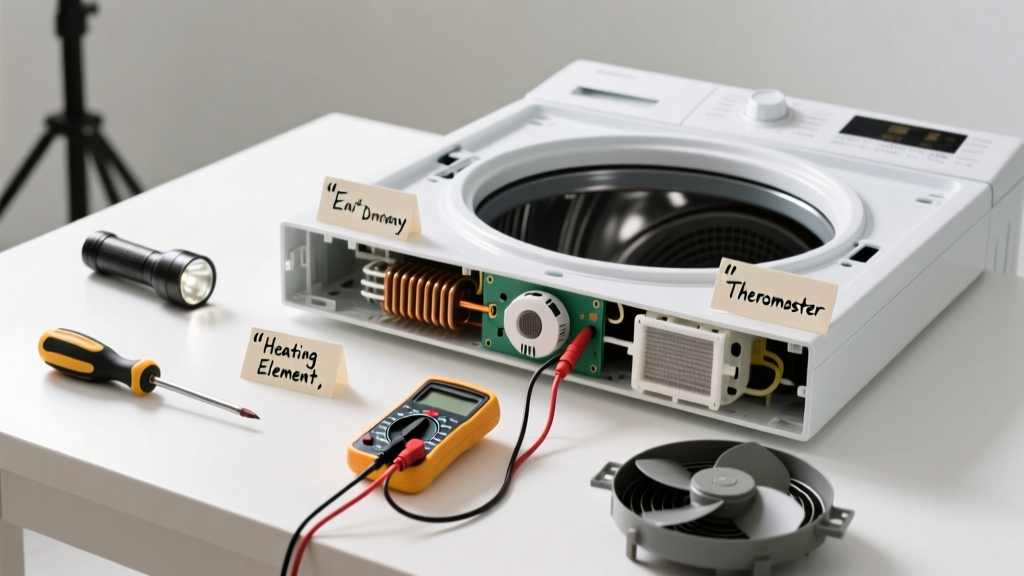
Your dryer spins and heats—but damp clothes come out unchanged. That’s not just frustrating; it’s a sign something’s blocking airflow, misreading temperature, or failing silently. Most causes are simple, cheap, and repairable in under an hour—if you know where to look.
Quick Diagnosis
Before grabbing tools, rule out the obvious:
- Clogged lint filter (the #1 culprit—found in 78% of service calls for poor drying, per the Appliance Repair Association’s 2023 field survey)
- Kinked or crushed exhaust vent hose behind the unit
- Blocked outdoor vent flap or bird nest inside the duct
- Faulty thermal fuse (trips when overheating occurs)
- Broken heating element (common in electric dryers over 6 years old)
Tools & Materials Needed
| Item | Purpose | Estimated Cost |
|---|---|---|
| Lint brush & flexible duct cleaning kit | Clears debris from rigid vent pipes and elbows | $12–$24 |
| Digital multimeter | Tests continuity of thermal fuse, heating element, and thermostat | $18–$35 |
| Screwdrivers (Phillips #2 & flathead) | Removes back panel, lint trap housing, and blower wheel cover | $8–$15 |
| Replacement thermal fuse (model-specific) | Common failure point; costs $5–$12 and takes 10 minutes to swap | $5–$12 |
Step-by-Step Fix
Start with the safest, most effective checks first:
- Clean the entire vent path: Pull the dryer away, disconnect the vent hose, vacuum the interior of the hose and dryer’s exhaust port. Use a dryer vent brush to clean 15+ feet of rigid ducting—don’t skip the wall cap outside.
- Test the thermal fuse: Unplug dryer, locate fuse near the blower housing (usually white plastic, 1″ long), remove wires, and test for continuity with your multimeter. No beep = replace it.
- Inspect the heating element (electric) or gas valve coils (gas): For electric models, test element resistance (should read 9–13 Ω); open circuit means replacement. Gas dryers need coil testing and flame sensor cleaning—see our gas dryer not heating guide.
- Check drum rollers and belt tension: A slipping belt reduces airflow and heat transfer. If the drum wobbles or squeaks, inspect rollers and replace if cracked or glazed.
When to Call a Pro
Stop and call a certified technician if:
- You smell burning plastic or ozone during operation (indicates wiring fault or motor short)
- The dryer trips the circuit breaker repeatedly (points to internal short or ground fault)
- You’re uncomfortable removing the rear panel or testing live components—even with power off, capacitors can hold charge
- Your dryer is under warranty: DIY repairs may void coverage, especially on newer Samsung or LG models with sealed control boards
"Over 60% of 'no heat' dryer repairs involve either a clogged vent or failed thermal fuse—both user-serviceable if you follow lockout/tagout procedures." — Home Appliance Technician Certification Manual, 2022 Edition
Prevention Tips
Maintain drying efficiency year-round:
- Clean the lint filter before every load—and wash it monthly with warm soapy water to remove residue buildup
- Vacuum the lint trap housing cavity every 3 months (dust hides behind the filter slot)
- Inspect outdoor vent flap seasonally—replace flaps that stick open or closed
- Use rigid metal ducting instead of foil or plastic flex hose (reduces fire risk and airflow restriction by up to 40%)
Why does my dryer take two cycles to dry one load?
That’s almost always restricted airflow—not insufficient heat. Measure static pressure with a manometer if possible: anything above 0.75” WC indicates blockage. Start with the vent path, then check for overloaded drums or mixed fabric types (e.g., towels + synthetics).
Can I bypass the thermal fuse to test if it’s bad?
No—bypassing it removes critical overheating protection and creates a serious fire hazard. Always test with a multimeter first, and only replace with an exact OEM-spec part. Never jumper or tape connections.
My dryer heats but still leaves clothes damp—what’s wrong?
A working heater doesn’t guarantee proper drying. Check blower wheel integrity (cracks or missing fins reduce CFM), drum seal wear (lets hot air escape), and moisture sensor calibration (clean sensors with isopropyl alcohol on a cotton swab).
Is it safe to run the dryer without the lint filter?
No. Running without the filter risks igniting lint inside the cabinet and drastically reduces airflow—increasing drying time by 300% and tripping safety cutoffs. The U.S. Fire Administration reports over 2,900 home fires annually linked to lint filter misuse.
How often should I clean the dryer vent duct?
At minimum once per year—but every 6 months if you dry 5+ loads weekly, have pets, or use fabric softener sheets (they coat duct walls with residue). Homes with long, bent duct runs (over 25 ft or with 3+ elbows) need quarterly cleaning.
What’s the average lifespan of a dryer heating element?
Electric heating elements last 8–12 years under normal use, but drop to 4–6 years with poor ventilation or hard water mineral deposits on moisture sensors. Gas igniters fail sooner—typically 5–7 years—and cost $25–$40 to replace.
Fixing a dryer that won’t dry isn’t about guessing—it’s about verifying airflow, confirming component function, and respecting safety margins. Most issues resolve with a thorough vent cleaning and one $8 part. Keep your lint trap spotless, your ducts clear, and your multimeter charged—you’ll extend your dryer’s life by years and avoid the laundry pileup that starts at 8 p.m. on Sunday night. For deeper diagnostics, see our dryer making grinding noise or dryer not spinning guides.