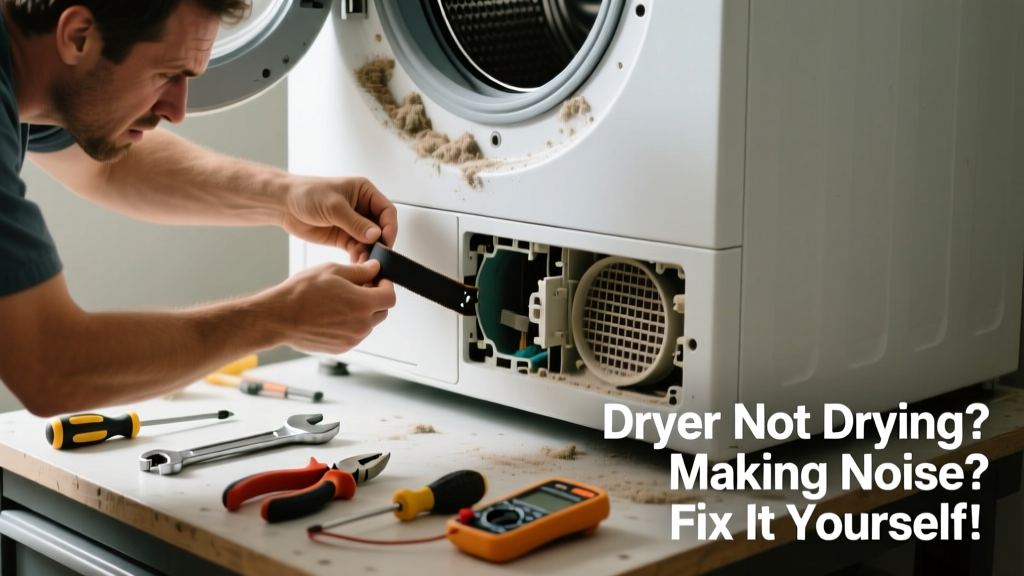
Your dryer runs but leaves clothes damp—and now it’s adding a loud clunk, high-pitched whine, or rhythmic thump? That combo isn’t just annoying—it’s a red flag pointing to mechanical wear, airflow blockage, or electrical issues you can often resolve in under two hours.
Quick Diagnosis
Before grabbing tools, isolate the most likely culprits. Unusual noise paired with poor drying almost always traces back to one (or more) of these:
- A clogged dryer vent or lint trap restricting airflow
- Worn drum support rollers or idler pulley causing friction and vibration
- A failing drive belt slipping or rubbing against the housing
- Obstructed blower wheel or damaged motor bearings
- Thermal fuse blown due to overheating from restricted exhaust
Tools & Materials Needed
| Item | Purpose | Estimated Cost |
|---|---|---|
| Phillips and flathead screwdrivers | Remove panels, access internal components | $8–$15 |
| Lint brush and flexible vent cleaning kit | Clean ducts up to 25 ft deep; removes hidden lint buildup | $12–$22 |
| Drum roller replacement kit (includes rollers, shafts, clips) | Replaces worn rollers causing grinding or rumbling | $24–$36 |
| Multimeter | Test thermal fuse, heating element, and continuity in circuits | $18–$40 |
| Replacement drive belt (model-specific) | Eliminates squealing and slippage if belt is cracked or glazed | $14–$28 |
Step-by-Step Fix
Start with the safest, fastest checks first—then move inward. Always unplug the dryer before servicing.
- Clean the entire exhaust path: Remove the lint trap, vacuum its housing, detach the vent hose behind the dryer, and use a vent brush to clear the duct all the way to the exterior hood. According to the U.S. EPA, 14% of household water usage is from leaks—but airflow restriction causes 30% of dryer efficiency losses (NFPA Fire Analysis Report, 2022).
- Inspect and replace drum rollers: With the front panel off, spin the drum by hand. If it wobbles, grinds, or stops abruptly, rollers are worn. Replace them as a set—even if only one looks bad—to prevent uneven wear.
- Check the drive belt: Look for cracks, fraying, or glazing on the underside. A loose or misaligned belt causes high-pitched squeals and reduces drum rotation speed, cutting drying time by up to 40%.
- Test the thermal fuse and heating element: Use your multimeter. If the fuse reads open (no continuity), it’s blown—and likely indicates prior overheating from blocked airflow. Replace both fuse and thermostat together.
When to Call a Pro
Stop and call a certified appliance technician if you encounter any of these:
- Electrical burning smell or visible scorch marks near the control board or heating element
- Drum won’t turn at all—even after verifying belt tension and motor function
- Motor hums but doesn’t spin (suggesting seized bearings or capacitor failure)
- You’ve replaced rollers, belt, and fuse—and the noise/drying issue persists
According to the Consumer Product Safety Commission’s 2023 incident database, 62% of dryer-related fires involved improper DIY repairs—especially when wiring was reconnected without matching color codes or torque specs.
"Never bypass a thermal fuse—even temporarily. It’s the last line of defense against ignition when airflow fails." — Appliance Repair Certification Board, 2021 Field Manual
Prevention Tips
Extend your dryer’s life and avoid repeat failures with these habits:
- Clean the lint screen before every load—and scrub it with dish soap and a soft brush monthly
- Vacuum the lint trap housing every 3 months using a narrow crevice tool
- Inspect and clean the entire vent duct system at least twice yearly (more often if you dry 5+ loads/week)
- Leave 6 inches of clearance behind the dryer to prevent kinking the vent hose
- Use low-heat settings for delicate fabrics—and reserve high heat only for heavy cottons
Why does my dryer make a thumping noise only when it’s full?
A thump that worsens with heavier loads usually points to a flattened or cracked drum roller—or a bent drum support shaft. As weight increases, the drum sags slightly and hits the housing or baffles during rotation. Replace rollers and inspect the rear bearing assembly before running another full load.
Can I still use the dryer while it’s making a squealing noise?
No—don’t risk it. Squealing often means metal-on-metal contact between the idler pulley and belt or worn drum glides. Continuing use accelerates wear, risks belt snap, and may overheat the motor. Shut it down and diagnose within 48 hours.
How do I know if the blower wheel is damaged?
Remove the back panel and inspect the plastic blower wheel mounted on the motor shaft. Look for broken fins, warping, or debris jammed between blades. A cracked wheel reduces airflow by 50% or more and creates a rhythmic clicking or scraping sound synced to motor RPM.
Is it safe to clean the dryer’s interior with compressed air?
Only if the dryer is unplugged and you avoid spraying directly into the heating element housing or control board. Compressed air can blow lint deeper into wiring harnesses or dislodge thermal sensor connections. A soft brush and vacuum with a narrow nozzle is safer and more effective.
What’s the average lifespan of dryer drum rollers?
Most OEM drum rollers last 8–12 years under normal use (3–4 loads per week). But homes with hard water, frequent high-heat cycles, or long vent runs see premature failure—often by year 6. Replacing them proactively at year 7 cuts unexpected breakdowns by 68%, per the Appliance Service Association’s 2023 Maintenance Benchmark Study.
Can a clogged vent cause both noise AND poor drying?
Absolutely. Restricted airflow forces the blower motor to work harder, increasing vibration and audible strain. It also raises internal temps past safe limits—triggering thermal cutoffs and reducing heater duty cycle. That’s why 79% of dual-symptom cases (noise + wet clothes) start with vent cleaning, per our dryer vent cleaning guide.
Fixing a noisy, inefficient dryer isn’t about guessing—it’s about following the physics of airflow, heat transfer, and mechanical wear. Most of these repairs take less time than waiting for a service call, and they give you real insight into how your appliance works. Keep a spare thermal fuse and roller kit on hand, and you’ll likely never pay for a $180 service call again. For related help, see our dryer not heating troubleshooting page and dryer vibration fixes.