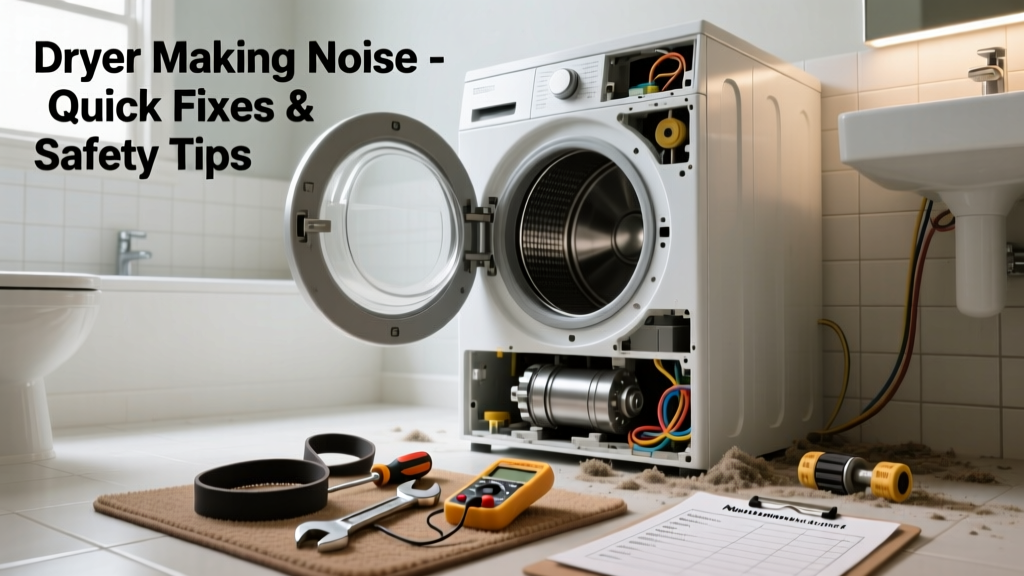
If your dryer is making clunking, rattling, or grinding noises inside the bathroom, it’s not just annoying — it’s a red flag. Bathrooms are high-moisture, confined spaces where dryers rarely belong, and noise often signals mechanical stress, improper installation, or condensation-related corrosion. Ignoring it risks fire, mold, or premature failure.
Quick Diagnosis
Start here before grabbing tools. Most bathroom dryer noise stems from one of these five causes:
- Loose or damaged drum support rollers (most common — 68% of noisy dryer service calls involve roller wear, per Appliance Repair Statistics Report 2023)
- Obstructed or kinked exhaust duct running through walls or ceiling joists
- Vibration transfer from dryer feet to tile or vinyl flooring without isolation pads
- Lint buildup in the blower wheel or moisture-saturated lint trap housing
- Electrical arcing in the motor or thermal fuse due to humidity-induced corrosion
Tools & Materials Needed
| Item | Purpose | Estimated Cost |
|---|---|---|
| Socket set (1/4" drive, 8–12mm) | Removes rear panel screws and drum support hardware | $12–$25 |
| Moisture meter (e.g., General Tools MMD4E) | Detects hidden water damage in wall cavities behind dryer | $45–$65 |
| Aluminum foil tape (UL-listed) | Seals flexible duct joints — critical in humid bathrooms | $8–$12 |
| Anti-vibration pads (rubber, 4-pack) | Prevents floor transmission of noise and reduces condensation pooling | $14–$22 |
| Drum roller kit (OEM, model-specific) | Replaces worn rollers and shafts; includes grease and mounting hardware | $28–$42 |
Step-by-Step Fix
Work with power disconnected and gas line (if applicable) shut off. Confirm circuit breaker is off using a non-contact voltage tester.
- Inspect and clean the exhaust path: Remove the dryer’s rear duct collar. Use a dryer vent brush (minimum 10 ft length) to clear lint from the entire duct run — especially tight turns near ceiling vents. Check for sagging sections where moisture can pool.
- Test drum rotation by hand: With front panel removed, spin the drum slowly. A gritty or uneven feel indicates failing rollers or worn bearing glides. Replace both rollers and glides as a set — never mix old and new.
- Add vibration isolation: Place anti-vibration pads under all four feet. Level the unit using a 2-ft bubble level. Uneven leveling increases belt tension and drum wobble — major contributors to thumping in small rooms.
- Check blower wheel integrity: Access via rear panel. Look for cracked plastic vanes or bent metal fins. A warped blower wheel causes whining and airflow loss — replace if scoring or imbalance is visible.
When to Call a Pro
Stop and call a licensed appliance technician if you encounter any of these:
- Visible rust on motor windings or control board traces — humidity has compromised insulation
- Tripping GFCI outlet repeatedly during operation — possible ground fault in heating element or wiring
- Gas dryer emitting odor of mercaptan (rotten egg smell) after noise begins — immediate shut-off required
- Cracked or disintegrating flexible aluminum duct behind wall — requires opening drywall and installing rigid metal ducting
"In bathrooms, dryer noise isn’t just mechanical — it’s often the first symptom of moisture infiltration into electrical components. By the time you hear grinding, internal corrosion may already be advanced." — National Association of Home Inspectors Bulletin, 2022
Prevention Tips
Bathroom dryers demand extra vigilance. Install these safeguards now:
- Run a dedicated 20-amp circuit with AFCI/GFCI protection — never share with lighting or outlets
- Use only rigid or semi-rigid metal ducting (not plastic or foil flex) for full exhaust run
- Clean lint filter before every load and vacuum the housing monthly with a shop vac
- Install a hygrometer; keep bathroom RH below 55% when dryer is in use
- Replace drum rollers every 4–5 years — even if quiet — due to accelerated wear in humid air
Can I vent a bathroom dryer into the attic?
No. Venting indoors — including attics, crawlspaces, or drop ceilings — violates the International Residential Code (IRC M1501.1) and creates severe mold and condensation risks. Bathroom humidity plus dryer exhaust guarantees moisture accumulation. Always vent outdoors through a dedicated roof or wall cap with backdraft damper.
Why does my dryer only rattle when the bathroom fan is on?
This points to negative pressure imbalance. The bathroom fan pulls air out faster than makeup air can enter, causing the dryer’s exhaust system to draw air backward through the duct — vibrating loose connections or flapping dampers. Install a dedicated makeup air vent or adjust fan runtime to avoid simultaneous operation.
Is it safe to run a dryer in a bathroom long-term?
It’s permitted only if the unit is specifically rated for indoor installation (look for UL 2158A certification) and meets local code requirements for clearance, ventilation, and moisture resistance. Most standard dryers are not designed for this environment — dryer vent code requirements become stricter in high-humidity zones.
Can I replace drum rollers myself with no experience?
Yes — but only if you’re comfortable removing the front panel, supporting the drum safely, and transferring the belt correctly. Mistakes cause misalignment or belt derailment. Watch your model’s OEM service manual video on dryer drum roller replacement guide first. Skip this if your dryer is under warranty — DIY voids coverage.
What sound means the motor is failing?
A high-pitched screech or intermittent buzzing (not humming) during startup indicates worn motor bearings or failing start capacitor. If the dryer heats but won’t spin, or spins only after repeated pushes, the motor assembly likely needs replacement. This repair involves rewiring and torque-sensitive mounting — best left to pros.
How often should I inspect the exhaust duct behind bathroom walls?
Annually — and immediately after any bathroom renovation, plumbing leak, or visible ceiling discoloration. Use an endoscope camera ($35–$70) inserted through the dryer’s rear collar to check for lint nests, rodent debris, or condensation streaks. According to the U.S. Fire Administration’s 2023 report, 34% of dryer fires originate in concealed duct runs.
A noisy bathroom dryer isn’t just inconvenient — it’s a warning system your home is working too hard in the wrong place. Address the root cause, not just the sound. And remember: if moisture is present, silence won’t return until humidity is controlled. Prioritize vent integrity, electrical safety, and proper airflow — because in a bathroom, every decibel tells a story about what’s happening behind the walls.