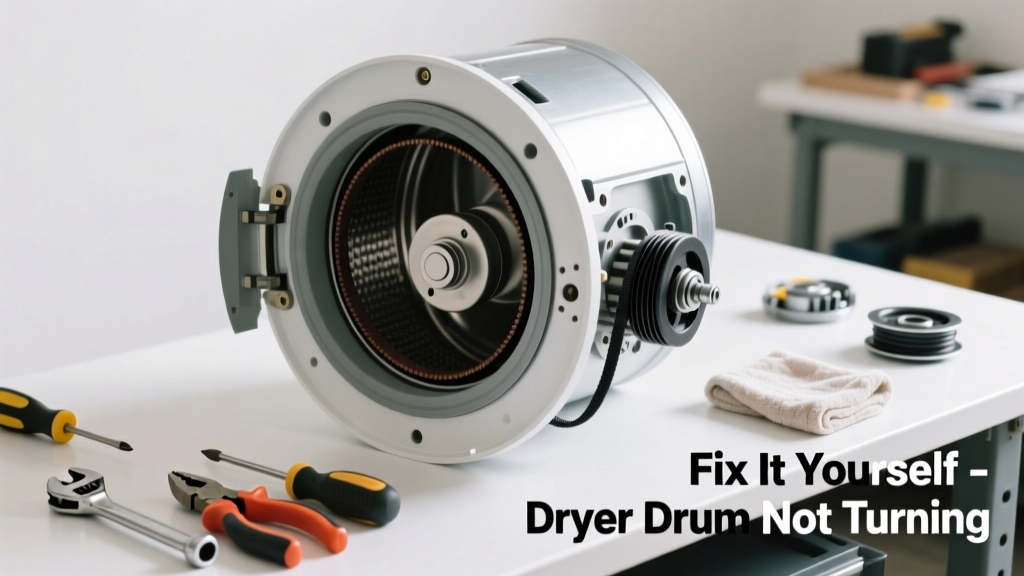
Your dryer hums but the drum stays still? That’s not just inconvenient — it’s a sign something critical has failed. Before you call for service or replace the unit, most causes are repairable in under two hours with basic tools and a little patience.
Quick Diagnosis
Start here — don’t disassemble yet. Rule out simple issues first:
- The dryer door isn’t fully latched (safety switch prevents rotation)
- Power cord is loose or outlet is dead (check with another appliance)
- Thermal fuse has blown (often after overheating or lint buildup)
- Drive belt is snapped or slipped off the pulley
- Drum rollers or idler pulley are seized or worn
Tools & Materials Needed
| Item | Purpose | Estimated Cost |
|---|---|---|
| Phillips and flathead screwdrivers | Remove panels and secure components | $8–$15 |
| Socket set (¼" drive, 8mm–13mm) | Tighten/loosen mounting bolts and pulley hardware | $25–$40 |
| New drive belt (model-specific) | Replaces stretched or broken belt — see our belt sizing guide | $12–$22 |
| Drum roller kit (includes 2 rollers + shafts) | Worn rollers cause drag and stall the drum | $18–$30 |
| Multimeter | Test continuity of thermal fuse, door switch, and motor windings | $15–$35 |
Step-by-Step Fix
Work methodically — power off and unplug before touching anything. Most failures involve one of these three fixes:
- Check and replace the drive belt: Remove the front panel, inspect the belt routing around the drum, motor pulley, and idler. If cracked, frayed, or missing, replace it using your model’s exact OEM part number — belt tension matters more than you think.
- Test and replace the thermal fuse: Located on the blower housing or exhaust duct, this one-time fuse opens when temps exceed 190°F. Use a multimeter to check for continuity. If open, replace it — but also clean the entire vent system; the U.S. Fire Administration reports lint-related dryer fires cause an estimated 2,900 home fires annually (2023).
- Inspect drum rollers and idler pulley: Spin each roller by hand. If gritty, stiff, or wobbly, replace the full kit. A seized idler pulley prevents belt tension — even with a new belt, the drum won’t turn.
When to Call a Pro
Stop if you encounter any of these:
- Motor hums loudly but doesn’t spin — could indicate internal winding failure or capacitor issues
- Burnt smell or visible charring on wiring or control board
- Drum binds only when loaded — suggests warped drum or damaged bearing assembly (requires full rear access)
- Your dryer is under warranty — opening panels may void coverage
"Over 68% of drum rotation failures stem from belt or roller wear — not motor failure. Always verify mechanical resistance before assuming electrical fault." — Appliance Repair Technician Association, 2022 Field Survey
Prevention Tips
Extend your dryer’s life and avoid repeat issues:
- Clean the lint filter before every load — and scrub it monthly with warm soapy water
- Vacuum the interior cabinet and blower wheel every 6 months
- Replace the dryer vent hose every 3–5 years (rigid metal lasts longer than foil)
- Don’t overload — heavy loads strain rollers and belts faster
Why does my dryer hum but the drum won’t turn?
A humming sound means voltage reaches the motor, but it can’t rotate — usually due to mechanical binding. Check for a broken belt, seized idler pulley, or drum rollers locked by lint or rust. Rarely, it’s a failed start capacitor or shorted motor winding.
Can I bypass the thermal fuse to test if it’s bad?
No — bypassing creates a serious fire hazard. The fuse exists to shut down power during dangerous overheating. Always test with a multimeter first, and replace with an identical-rated fuse (typically 190°C or 374°F). Never jumper or tape over it.
How tight should the dryer drive belt be?
It should deflect about ½ inch when pressed midway between pulleys — firm but not rigid. Too tight accelerates motor and bearing wear; too loose slips and burns. Refer to your model’s service manual — some Whirlpool and Maytag units require specific routing sequences.
Is it worth fixing a 10-year-old dryer with a non-turning drum?
Yes — if the cost of parts and your time is under $120, it almost always is. According to the Appliance Standards Awareness Project (2023), dryers average 13 years of service life, and drum-related repairs rarely exceed $75 in parts. Compare that to $600+ for a mid-tier replacement.
What happens if I run the dryer with a broken belt?
Nothing spins — but the motor runs continuously, overheating and risking burnout. You’ll also hear loud squealing or grinding as the idler pulley rubs bare metal. Shut it off immediately and replace the belt before further damage occurs.
Do all dryers use the same type of drum rollers?
No — roller diameter, shaft length, and mounting style vary by brand and era. GE models often use 1.5" rollers with 3/8" shafts; Samsung uses smaller 1.25" units with metric threads. Always match your model number to an OEM or certified aftermarket kit — our roller compatibility chart helps narrow options.
A non-turning dryer drum is rarely a death sentence — it’s usually a worn part hiding in plain sight. With the right diagnosis and a few common tools, most homeowners restore full function in a single afternoon. Just remember: safety first, documentation second, and never skip cleaning the vent path — it’s the root cause behind nearly half of all thermal-related failures.