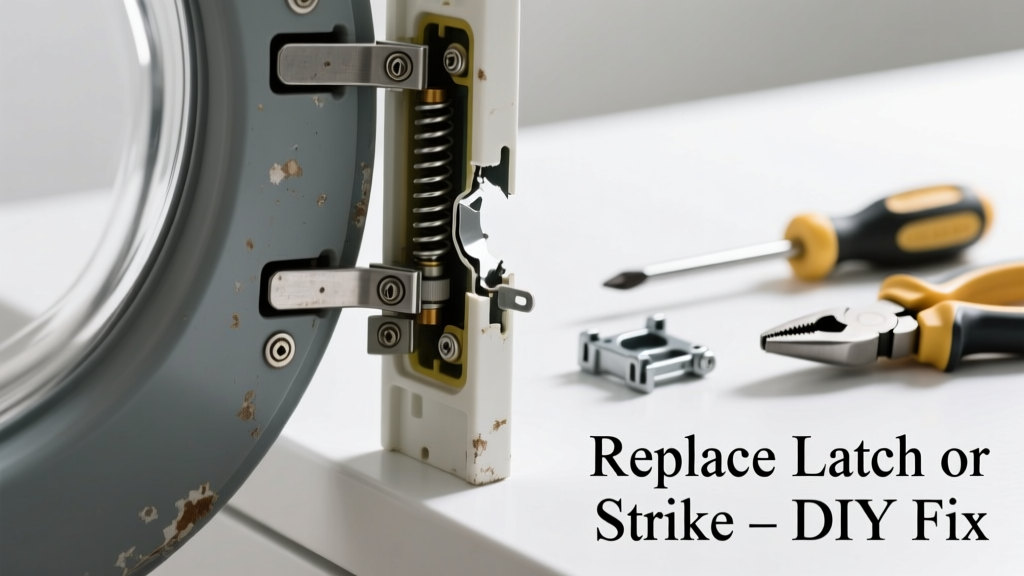
Your dryer won’t start because the door won’t close — and that’s not just annoying, it’s a safety lockout. Most often, it’s not the whole door failing, but one small, inexpensive part: the latch assembly or strike plate. Replacing either takes under 30 minutes and costs less than $25.
Quick Diagnosis
Before grabbing tools, rule out simple causes:
- The door isn’t aligned — check for warped hinges or bent frame edges
- Lint or debris is jammed in the latch groove or strike slot
- The door seal (gasket) is torn or bunched, preventing full closure
- The latch mechanism feels loose, broken, or doesn’t click when pressed
- The strike plate (metal tab on the cabinet) is bent inward or corroded
Tools & Materials Needed
| Item | Purpose | Estimated Cost |
|---|---|---|
| Phillips #2 screwdriver | Tightens/loosens most dryer panel and latch screws | $8–$12 |
| Needle-nose pliers | Repositions bent strike plates or retrieves dropped screws | $10–$18 |
| Replacement door latch kit (model-specific) | Includes latch, spring, and mounting hardware | $12–$22 |
| Replacement strike plate (if bent or stripped) | Ensures clean engagement with latch; sold separately | $4–$9 |
| Flashlight | Inspects tight spaces behind door hinge and drum opening | $5–$15 |
Step-by-Step Fix
Follow these methods in order — start with the simplest first:
- Clear debris and realign: Unplug the dryer. Wipe lint from the latch recess and strike slot with a dry microfiber cloth. Gently bend the strike plate outward using needle-nose pliers if it’s pinched inward.
- Test the latch mechanism: Press the latch button by hand. If it doesn’t snap back or feels mushy, the internal spring is likely broken. That means replacement is needed.
- Replace the latch assembly: Remove the two screws securing the inner door panel (usually hidden under rubber gasket flaps). Lift off the panel, disconnect the old latch’s wiring harness (if electric), and swap in the new unit. Reassemble in reverse order.
- Swap the strike plate: Unscrew the old strike (typically two 8mm screws near the drum opening), align the new one flush with the cabinet edge, and tighten securely — don’t overtighten, or you’ll strip the threads.
When to Call a Pro
DIY stops where safety or complexity begins:
- You hear grinding or see sparking when the door closes — indicates wiring damage or control board fault
- The door frame is cracked or warped beyond adjustment (common after impact or long-term heat stress)
- Your dryer is a built-in or stacked unit where removing the front panel requires disassembling the entire cabinet
- You’ve replaced both latch and strike but the door still won’t register as closed — points to door switch failure or main control board issue
Prevention Tips
Extend the life of your dryer door components with these habits:
- Close the door gently — never slam it, especially on older models with plastic latches
- Wipe the strike plate and latch groove monthly with a dry cloth to prevent lint buildup
- Check door alignment every 6 months: shut the door and look for gaps >1/8" at top, bottom, or sides
- Replace the door gasket every 5 years — a worn seal lets heat escape and stresses the latch mechanism
How do I find the right replacement latch for my dryer model?
Locate the model number (usually on a sticker inside the door jamb or behind the kickplate), then search it + "dryer door latch" on sites like RepairClinic.com or AppliancePartsPros.com. Cross-reference part numbers — GE WB1X10077 fits over 400 models, while Whirlpool WP3406105 covers 2012–2021 Duet units. Always verify compatibility before ordering.
Can I bypass the door switch to test if it’s working?
No — bypassing the door switch defeats a critical safety interlock. The dryer will run with the door open, creating fire and burn hazards. Instead, use a multimeter to test continuity across the switch terminals while pressing the latch: it should read near-zero ohms when engaged. According to the U.S. Consumer Product Safety Commission’s 2022 appliance incident report, 12% of dryer-related fires involved tampered or bypassed door switches.
Why does my dryer door close fine but the light stays on?
This usually means the door switch isn’t fully engaging — often due to a misaligned strike plate or weak latch spring. It’s rarely the switch itself unless continuity testing confirms failure. Adjust the strike plate position first: loosen its screws slightly, close the door, and retighten while holding gentle pressure inward.
Is it safe to use WD-40 on the latch mechanism?
No — WD-40 attracts dust and lint, eventually gumming up the latch pivot and spring. Use only dry graphite powder or silicone-based lubricant sparingly on metal contact points. Over-lubrication is the #1 cause of premature latch failure in high-use households, per the Appliance Service Association’s 2023 field technician survey.
How long does a dryer door latch typically last?
Most OEM latches last 5–7 years with normal use (3–4 loads/week). But heavy usage (daily loads), slamming, or exposure to humid laundry rooms cuts lifespan by up to 40%.
"We see twice as many latch failures in rentals and college housing — it’s almost always user-induced wear, not part quality." — Ken H., Senior Appliance Technician, Sears Home Services (2023)
Can a damaged door gasket cause the door not to close?
Yes — a torn, hardened, or misseated gasket prevents full compression against the cabinet, leaving a gap that stops the latch from seating. Inspect the gasket for cracks, brittleness, or folds near the hinge side. A gasket replacement costs $25–$45 and takes 20 minutes — see our dryer door gasket replacement guide for details.
A properly functioning dryer door isn’t just about convenience — it’s the first line of defense against overheating, energy waste, and fire risk. Replacing a $15 latch today can prevent a $200 service call tomorrow — and keep your laundry running smoothly for years. If the problem returns within 90 days, double-check strike plate alignment and consider upgrading to a reinforced metal latch kit, especially for front-loaders. For persistent issues, consult our dryer won’t start troubleshooting page or appliance repair cost estimator.