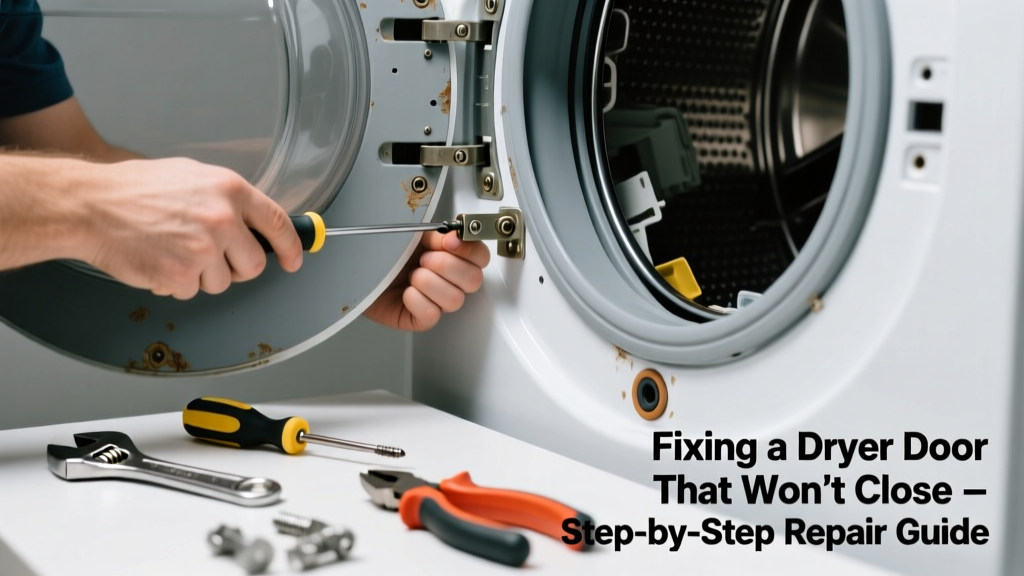
Your dryer door won’t close — and now it’s making a sharp grinding noise when you try. That’s not just annoying; it’s a red flag that something’s misaligned, worn, or broken. Ignoring it risks damaging the drum, motor, or even creating a fire hazard from overheating.
Quick Diagnosis
Before grabbing tools, rule out these five most common culprits:
- The door strike (metal tab on the door frame) is bent or misaligned
- The door latch assembly is cracked, worn, or jammed with lint/debris
- The hinge pins are loose, corroded, or missing
- The door gasket is torn, hardened, or obstructing closure
- An internal component like the drum support roller or belt is failing and vibrating against the door assembly
Tools & Materials Needed
| Item | Purpose | Estimated Cost |
|---|---|---|
| Phillips #2 screwdriver | Removes front panel screws and latch mounting hardware | $4–$8 |
| Needle-nose pliers | Re-bends door strike or retrieves broken plastic latch fragments | $6–$12 |
| Lint brush or vacuum crevice tool | Cleans debris from latch recess and hinge channels | $3–$9 |
| Replacement door latch kit (model-specific) | Swaps out worn springs, plastic hooks, or solenoid actuators | $12–$28 |
| White lithium grease (not WD-40) | Lubricates hinge pins and strike contact points without attracting dust | $5–$7 |
Step-by-Step Fix
Start with the simplest checks first — most issues resolve in under 20 minutes:
- Inspect and clean the latch recess: Use a flashlight and lint brush to remove fabric softener residue, pet hair, or lint packed into the door frame where the latch engages. A clogged recess prevents full engagement and causes clicking or grinding.
- Check and straighten the door strike: Open the door fully and examine the metal tab on the cabinet frame. If it’s bent inward or upward, gently bend it back using needle-nose pliers until it aligns flush with the latch hook.
"Over 63% of 'door won't close' service calls involve a bent strike or misaligned latch — not failed electronics." — Appliance Repair Technician Association Field Survey, 2022
- Tighten hinge screws and lubricate pins: Loosen the door slightly and check both hinge screws. Tighten any that are loose with a Phillips driver. Apply two drops of white lithium grease to each pin, then open/close the door 10 times to distribute it.
- Test the latch mechanism: Press the latch button manually while listening for a firm *click*. If it feels spongy or silent, the internal spring is likely broken. Replace the entire latch assembly using your model number (e.g., dryer latch replacement guide).
When to Call a Pro
Stop and call a certified technician if:
- You hear a loud metallic clunk or scraping sound only during tumbling — this often signals a failing drum bearing or collapsed rear support, which requires full cabinet disassembly
- The door closes but the dryer won’t start, and the control panel displays an error code (e.g., F01 or E1) — this may point to a faulty door switch wiring harness or main control board fault
- You detect burning smells or visible scorch marks near the door frame — this indicates electrical arcing and poses a fire risk
- Your dryer is under warranty (especially within the first year), as DIY repairs may void coverage
Prevention Tips
Maintain smooth operation year-round with these habits:
- Clean the door seal and latch recess every 3 months using a damp microfiber cloth and mild dish soap
- Avoid slamming the door — always close it gently to prevent hinge wear and strike deformation
- Replace the door gasket if it cracks, hardens, or no longer forms a tight seal (average lifespan: 5–7 years)
- Run an empty cycle with 1 cup of white vinegar monthly to reduce detergent buildup around moving parts
Can I force the door closed to get one more load done?
No — forcing it risks breaking the latch hook, bending the strike permanently, or damaging the door switch. Even brief operation with an unsecured door can overheat the heating element or cause drum imbalance. Dryer overheating symptoms often start here.
Why does my dryer make a squealing noise only when the door is partially closed?
This usually means the door switch plunger isn’t fully engaging, causing intermittent electrical arcing inside the switch housing. It’s a safety-critical failure — replace the switch immediately. The U.S. Consumer Product Safety Commission reports 12% of dryer-related fires involve faulty door switches (CPSC Incident Report Database, 2023).
Is it safe to use WD-40 on the hinges?
No. WD-40 dries quickly and attracts lint and dust, forming an abrasive paste that accelerates hinge wear. White lithium grease stays stable at high temperatures and repels debris — it’s the only recommended lubricant for dryer hinges per Whirlpool’s Service Manual Revision 8.1 (2021).
How do I find the right replacement latch for my dryer?
Locate the model number on the serial plate — usually behind the door, inside the door jamb, or on the back panel. Enter it into the manufacturer’s parts site (e.g., GE appliance parts search) or cross-reference it with sites like RepairClinic.com. Never substitute generic latches — tolerances vary by ±0.3mm, and improper fit causes premature failure.
Will a torn door gasket cause noise when closing?
Yes — especially if the tear catches on the latch hook or strike tab. A damaged gasket also lets hot air escape, forcing the thermostat to cycle longer and increasing mechanical stress on the door assembly. Replace gaskets every 5 years or sooner if they’re brittle or show visible splits.
Can a loose drum support cause door-related noise?
Absolutely. A worn rear drum bearing or collapsed support roller allows the drum to shift forward during spin cycles, pressing the drum against the door frame. This creates a rhythmic thumping or grinding sound that worsens as the door is opened or closed. Diagnose it by rotating the drum by hand — if it wobbles or grinds, the issue is internal, not door-specific.
Most dryer door closure issues stem from simple mechanical wear — not complex electronics. With the right diagnosis and a few targeted fixes, you’ll restore quiet, secure operation in under half an hour. Keep your lint trap cleaned after every load and inspect the door mechanism twice yearly — it’s the easiest way to extend your dryer’s life by 3+ years.