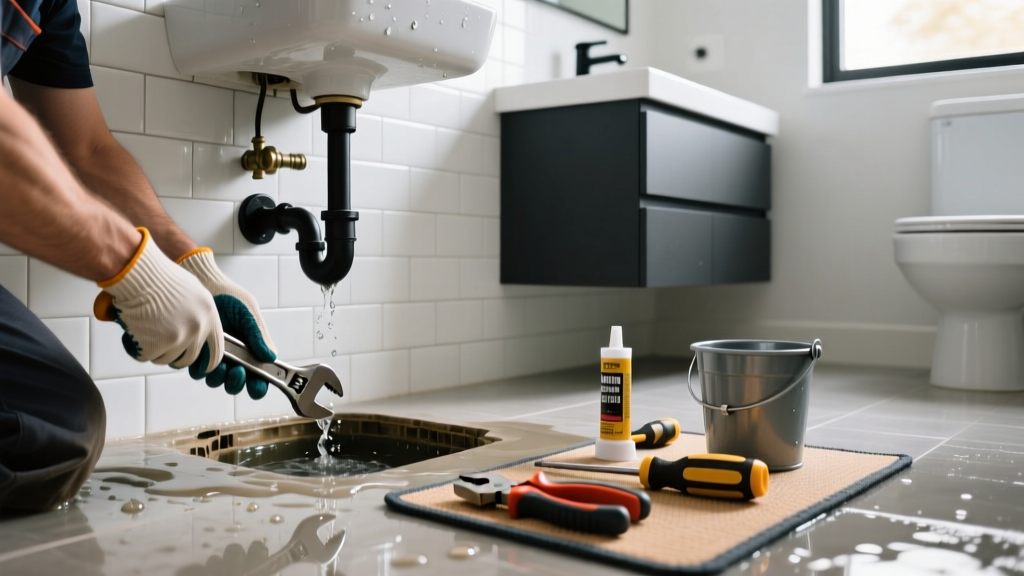
If your bathroom floor is pooling water after a shower or sink use—and you know your home uses a dry well instead of municipal sewer—you’re likely facing a failing or overloaded dry well. This isn’t just inconvenient; standing water breeds mold, damages subflooring, and can compromise structural integrity within days.
Quick Diagnosis
Start here before grabbing tools. A dry well overflow in the bathroom almost always points to one (or more) of these issues:
- Soil saturation from recent heavy rain or poor grading around the dry well outlet
- Clogged perforated pipe or gravel envelope around the dry well
- Collapsed or cracked dry well liner allowing silt buildup
- Insufficient dry well size for current household water load (e.g., added bathroom or high-flow fixtures)
- Root intrusion from nearby trees blocking infiltration
Tools & Materials Needed
| Item | Purpose | Estimated Cost |
|---|---|---|
| Shop vacuum with wet/dry capability | Remove standing water safely before inspection | $80–$150 |
| Drain snake (¼" cable, 50 ft) | Clear blockages in the discharge line leading to the dry well | $25–$45 |
| Shovel & contractor-grade gloves | Excavate soil above dry well access point (if accessible) | $15–$30 |
| Plumber’s test dye (non-toxic) | Confirm flow path and locate leaks or misdirected lines | $12–$20 |
| Gravel (¾" crushed stone) | Replace silted or compacted backfill around dry well perimeter | $45–$75 per ½ yard |
Step-by-Step Fix
Try these methods in order—starting with least invasive:
- Clear the discharge line: Insert a drain snake into the bathroom’s cleanout (usually near the floor drain or behind the toilet), feeding it toward the dry well. Rotate while pushing 15–20 ft. Flush with hot water and test flow.
- Test with dye: Run water in the bathroom while adding non-toxic test dye to the drain. Watch the dry well access point—if dye appears quickly but water pools, the well is likely saturated or collapsed.
- Inspect and refresh the dry well: If accessible, excavate ~2 ft down to the top of the dry well. Remove debris, check for cracks, and replace silted gravel with fresh ¾" crushed stone around the perimeter (minimum 6" layer).
- Add a secondary leach field: For chronic oversaturation, extend a second 20-ft perforated pipe run (with new gravel bed) at least 10 ft from the original well, sloped 1/8" per foot.
When to Call a Pro
DIY stops where safety or code compliance begins. Call a licensed septic/drainage contractor if:
- You smell hydrogen sulfide (rotten egg odor) near drains or outside—indicates anaerobic breakdown and possible septic crossover
- The dry well is deeper than 4 ft or located under a concrete patio or driveway
- Your local jurisdiction requires permits for dry well repairs (required in 32 states as of the EPA’s 2022 Onsite Wastewater Guidelines)
- Water backs up into multiple fixtures—not just the bathroom—suggesting main line or system-wide failure
Prevention Tips
Prevent recurrence with consistent maintenance and smart usage habits:
- Install low-flow showerheads (≤1.8 GPM) and faucet aerators—reduces daily dry well input by up to 35% (U.S. EPA WaterSense, 2023)
- Divert roof downspouts away from the dry well area—minimum 10 ft horizontal distance
- Have the dry well professionally jetted and inspected every 3 years
- Avoid flushing wipes, cotton swabs, or hair—even in bathrooms with dry wells—these clog pipes faster than expected
Can I use bleach to clear the line?
No. Bleach won’t dissolve organic clogs like hair or grease, and repeated use corrodes PVC and metal piping joints. It also kills beneficial microbes in surrounding soil that aid infiltration. Use enzymatic drain cleaners sparingly—or better yet, mechanical snaking.
How deep should my dry well be?
Most residential dry wells are 4–6 ft deep and 3–4 ft in diameter, installed below the frost line but above bedrock. Depth must comply with local codes—some counties require minimum 5-ft separation from groundwater tables (per 2021 International Private Sewage Disposal Code).
Will a sump pump fix this?
Not reliably. Sump pumps move water—but not wastewater. Installing one on a dry well violates most plumbing codes because it bypasses natural filtration and risks contaminating groundwater. Instead, address root cause: infiltration capacity or pipe integrity.
Can tree roots really reach my dry well?
Yes—especially willow, maple, and poplar. Roots seek moisture and can penetrate dry well walls or crack lateral pipes within 3–5 years. According to the National Association of Home Builders’ 2022 Drainage Report, root intrusion accounts for 28% of dry well failures in homes older than 12 years.
Is it safe to walk on a dry well cover?
Only if it’s rated for pedestrian load and undamaged. Many older concrete or fiberglass covers degrade over time.
"A compromised dry well lid poses both collapse and contamination risks—always verify load rating and inspect for hairline cracks before stepping near it." — Dr. Lena Cho, Environmental Engineer, EPA Onsite Wastewater Program, 2023
How do I know if my dry well is illegal?
In many municipalities—especially those with high water tables or clay soils—dry wells for graywater have been banned since 2010. Check with your county health department or building authority. If yours was installed pre-2005 without a permit, it may require upgrade or replacement with an approved graywater reuse system.
Fixing a dry well overflow isn’t about speed—it’s about understanding your system’s limits and respecting how water moves through soil. Most bathroom-specific overflows stem from simple, correctable blockages or seasonal saturation. But if the problem returns within two weeks of cleaning, treat it as a warning sign: your dry well has outlived its design life or no longer matches your household’s water footprint. Consider upgrading to a chamber-based infiltration system—it handles 3× the flow of traditional gravel-filled wells and lasts up to 40 years with minimal maintenance. For related guidance, see our how to replace a bathroom floor drain and septic vs. dry well differences.