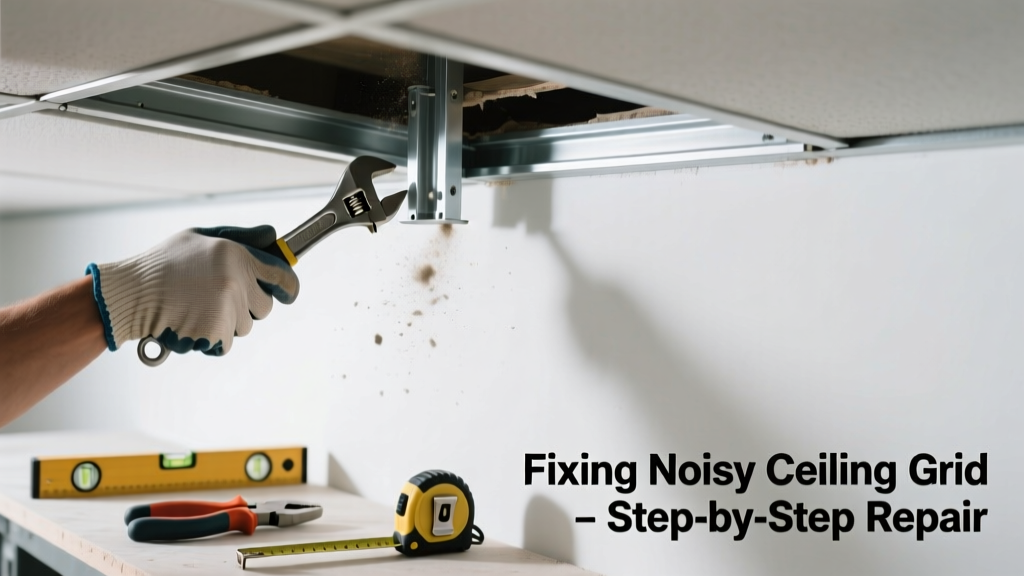
If your drop ceiling suddenly starts groaning, popping, or rattling when doors slam or HVAC kicks on, the culprit is often a subtly bent main or cross tee — not loose tiles or failing hangers. These bends create friction points that shift under thermal expansion or vibration, turning your ceiling into an unpredictable percussion section. The good news? Most cases are fixable in under an hour with basic tools and zero drywall mess.
Quick Diagnosis
Before grabbing tools, isolate the source:
- Listen closely while walking beneath the noise — does it correlate with footfall or HVAC cycles?
- Press gently upward on suspect grid sections; a faint 'ping' or resistance indicates localized bending.
- Shine a flashlight at a low angle across the grid — look for subtle kinks, uneven gaps between tees, or one cross tee sitting higher than its neighbors.
- Check for water stains or sagging tiles nearby — moisture can weaken metal and accelerate bending.
Tools & Materials Needed
| Item | Purpose | Estimated Cost |
|---|---|---|
| Needle-nose pliers (locking) | Grip and twist bent tees without slipping or marring finish | $8–$15 |
| 3-ft aluminum level | Verify alignment of main tees before and after adjustment | $12–$22 |
| 16-gauge galvanized wire (10 ft) | Reinforce weak joints or replace stretched suspension wires | $3–$6 |
| Utility knife with fresh blade | Cut away damaged tile backing or old adhesive if reseating tiles | $2–$5 |
| Drop ceiling tile lifter (optional but helpful) | Safely lift tiles without cracking edges or dislodging adjacent ones | $10–$18 |
Step-by-Step Fix
Start with the simplest, lowest-risk method first:
- Re-seat and realign cross tees: Remove the tile above the noisy section. Gently lift the cross tee at both ends using needle-nose pliers, then slide it fully out of the main tee slots. Inspect for dents or twists. Rotate 180° and reinsert — sometimes flipping reverses stress-induced warping.
- Twist-bend correction: For minor lateral bends in a main tee, grip the bent zone with locking pliers. Apply slow, steady counter-pressure — never jerk — until the tee lies flat against the level. Test by tapping lightly with a rubber mallet; no 'ring' means contact is restored.
- Reinforce junctions: At intersections where cross tees meet main tees, wrap two wraps of 16-gauge wire around both pieces and twist tight with pliers. This prevents micro-movement that causes squeaks over time.
- Replace compromised suspension wires: If hanger wires show kinks or corrosion near the grid connection point, cut and replace them with new galvanized wire, ensuring equal tension on all four corners of the affected panel.
When to Call a Pro
DIY stops where structural integrity or safety begins:
- The bend affects more than three consecutive main tees — this often signals roof deck movement or framing settlement.
- You find rusted or cracked hanger wires in multiple locations, especially near HVAC ducts or plumbing chases.
- Noise occurs only during high winds or rain — could indicate compromised roof-to-ceiling anchoring.
- Your building was constructed before 1980 and you suspect asbestos-containing ceiling tiles or mastic underneath.
According to the National Association of Home Builders’ 2022 Commercial Ceiling Installation Standards, grid misalignment exceeding 1/8 inch per 10 feet requires professional recalibration to maintain fire-rated assembly compliance.
Prevention Tips
Long-term quiet starts with smart maintenance:
- Inspect grids every 12 months — especially after HVAC system servicing or seasonal temperature swings.
- Avoid hanging anything heavier than 2 lbs from the grid (e.g., speakers, lights) without consulting manufacturer load specs.
- Keep humidity between 30–50% year-round; the U.S. EPA estimates that excessive moisture accelerates metal fatigue in suspended ceiling systems by up to 40%.
- Use drop ceiling tile lifters instead of screwdrivers to minimize accidental grid damage during tile replacement.
Can I use a heat gun to straighten a bent tee?
No. Aluminum grid tees lose tensile strength above 300°F and may warp unpredictably. Heat also degrades factory-applied corrosion-resistant coatings. Stick to mechanical correction only.
Will tightening the suspension wires stop the noise?
Only if the noise is caused by loose hangers — not grid bending. Over-tightening can distort the grid or pull anchors from concrete. Always check grid alignment first using a level before adjusting wires.
How do I know if the bend is in the main tee or cross tee?
Main tees run perpendicular to walls and support cross tees. Tap along each — a dull thud (vs. clear ring) and visible gap under a level usually indicate main tee bending. Cross tee bends cause localized tile rocking and uneven tile height.
Can I paint over a bent grid to hide it?
Painting won’t fix noise and may mask early signs of corrosion. If you must repaint, use aerosol aluminum primer followed by flat white acrylic — but only after correcting the bend. See our guide on painting drop ceiling grids for prep details.
Do acoustic ceiling tiles affect grid noise?
Yes — older mineral fiber tiles absorb vibration better than newer lightweight fiberglass or PET-based tiles. If noise worsened after tile replacement, consider adding mass-loaded vinyl strips behind tile edges at grid junctions.
Is this problem covered by my home warranty?
Rarely. Most home warranties exclude wear-and-tear items like ceiling grids unless failure results directly from covered component failure (e.g., leaking pipe causing rust). Review your home warranty ceiling repairs policy language carefully.
A bent grid doesn’t have to mean a full ceiling replacement — it’s often just a matter of restoring precision alignment and eliminating tiny friction points. Most homeowners resolve this in under 45 minutes once they know where to look and how much force is safe to apply. Keep your pliers handy, check your level regularly, and treat your ceiling grid like the engineered system it is — not just a frame for tiles.