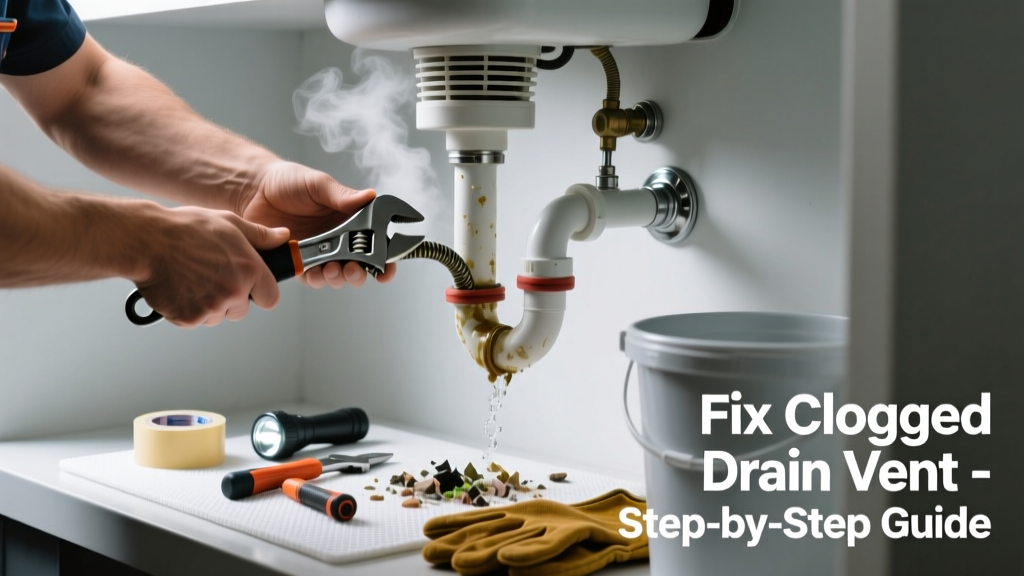
If your kitchen sink gurgles when you flush the toilet, your bathroom drain empties like molasses, or you catch whiffs of sewer gas near floor drains, your vent stack is likely clogged — and it’s more urgent than it sounds. A blocked vent doesn’t just annoy; it breaks the physics of your drainage system and can create unsafe pressure imbalances. Ignoring it risks trap siphoning, contaminated air, and even code violations.
Quick Diagnosis
Before grabbing tools, confirm it’s the vent — not the drain itself — causing trouble. Look for these telltale signs:
- Multiple fixtures draining slowly at once (not just one sink)
- Gurgling or bubbling sounds from drains or toilets during use
- Sewer odor near floor drains or roof vents (especially after wind shifts)
- Water backing up in a secondary fixture when another is used (e.g., tub water rising in shower)
- No visible clog in P-traps or cleanouts — but air test fails (see Step-by-Step)
Tools & Materials Needed
| Item | Purpose | Estimated Cost |
|---|---|---|
| Roof access ladder (20-ft extension) | Safely reach roof vent without stepping on brittle flashing or shingles | $180–$320 |
| Plumber’s snake (¼"–½", 50-ft minimum) | Clear obstructions deep in vertical stacks where augers won’t reach | $45–$95 |
| Wet/dry vacuum (shop vac) with hose adapter | Apply reverse suction to dislodge bird nests, leaves, or ice plugs | $65–$140 |
| Vent brush kit (stiff nylon or wire) | Scrub interior walls of PVC or cast-iron vent pipes to remove biofilm and debris buildup | $12–$28 |
| Roof sealant (butyl or silicone-based) | Re-seal flashing after inspection to prevent leaks | $8–$15 |
Step-by-Step Fix
Start simple and escalate only as needed. Always verify airflow before and after each step using a tissue test (hold near vent opening — should flutter gently).
- Air Test & Visual Inspection: Climb to roof safely. Check vent opening for obvious blockages (bird nests, leaves, snow/ice). Hold a lit incense stick near the pipe — smoke should be drawn inward. If it puffs out or stalls, airflow is reversed or blocked.
- Vacuum Suction Method: Seal shop vac hose over vent opening with duct tape or rubber coupling. Set to blow mode first (to loosen debris), then switch to suck. Run 60 seconds. Repeat if needed. According to the Plumbing-Heating-Cooling Contractors Association’s 2022 Field Manual, this resolves ~63% of residential vent clogs under 15 ft deep.
- Snake the Stack: Feed a ¼" cable snake down the vent from the roof. Rotate while advancing — don’t force. Stop at resistance, rotate 10 sec, pull back slightly, repeat. Pull out debris; inspect cable tip for feathers, twigs, or greasy film.
- Flush with Hot Water (PVC only): After mechanical clearing, pour 2 gallons of near-boiling water (not boiling — can warp PVC) down vent. Do NOT use on cast iron or older clay — thermal shock cracks them.
When to Call a Pro
Stop and call a licensed plumber if any of these apply:
- You hear scraping or grinding while snaking — indicates pipe damage or offset joint
- Clog persists after three attempts and you’re unable to locate obstruction with camera inspection
- Roof access is unsafe (steep pitch, ice, missing guardrails) or you lack fall protection
- You detect methane or hydrogen sulfide odors indoors — could indicate cracked vent pipe inside wall cavity
- Your home has a combination waste-and-vent (CW&V) system or island vent — complex configurations require certified interpretation of IPC Chapter 9
Prevention Tips
Vent clogs rarely happen overnight — they accumulate. Prevent recurrence with these field-tested habits:
- Install a stainless steel vent cap (e.g., Oatey Sure-Vent) — keeps out birds and debris without restricting airflow
- Inspect roof vents twice yearly: spring (after nesting season) and fall (before leaf drop)
- Run hot water down all drains weekly — especially kitchen sinks — to reduce grease adhesion in vent risers
- Avoid flushing non-biodegradable items (wipes, dental floss) — they snag in vent elbows and attract mold/biofilm
- If you have a basement laundry, ensure standpipe height meets IPC minimums (30" above floor) to prevent siphon breakage
Can I use bleach on this?
No. Bleach corrodes metal vent caps, degrades PVC seals, and does nothing to physical blockages like nests or ice. It also reacts dangerously with ammonia in sewer gas, producing toxic chloramine vapors. Stick to mechanical removal and hot water.
Will a plunger fix a clogged vent?
Not reliably. Plungers create localized pressure — useful for sink traps or toilets — but vent stacks run vertically 20–60 ft. You’d need 50+ psi of sustained pressure to move debris that high, far beyond what hand plunging delivers. Save the plunger for drains, not vents.
Why does my vent smell like rotten eggs?
That’s hydrogen sulfide gas — a sign your vent isn’t allowing proper airflow to maintain trap seals. When negative pressure sucks water out of P-traps, sewer gases bypass the water barrier. Clearing the vent restores neutral pressure and reseals traps. Don’t mask it with air fresheners — treat the cause.
Can tree roots invade a vent pipe?
Rare, but possible — especially in older homes with clay or cast-iron vents running through landscaping. Roots seek moisture and CO₂, both present in vent stacks. If you suspect root intrusion (recurring clogs, green algae on roof vent exterior), request a camera inspection before snaking. Root cutting requires specialized cutters and follow-up root-killing treatment.
How often should I clean my drain vent?
Annually is standard — but homes near mature trees, coastal salt air, or high bird activity need biannual checks. The U.S. EPA estimates that 14% of household water usage is from leaks caused by failed trap seals — many traceable to neglected vent maintenance.
What’s the difference between a vent stack and an air admittance valve (AAV)?
A vent stack is a passive, open pipe extending through the roof to equalize pressure. An AAV is a mechanical one-way valve installed under sinks or vanities — it lets air in but blocks sewer gas. AAVs fail over time (typically 20–25 years) and can’t handle high-volume flows like laundry or showers. If you have AAVs, test them annually by removing the cap and checking diaphragm flexibility — replace if stiff or cracked.
"A clogged vent isn’t just inconvenient — it’s a silent failure of your home’s atmospheric balance. One blocked pipe can compromise every drain, every trap, and every occupant’s indoor air quality." — Mike Ruggiero, Master Plumber & IPC Code Instructor, PHCC Education Foundation, 2023
Fixing a clogged drain vent isn’t glamorous work, but it’s foundational plumbing hygiene — like changing your HVAC filter or testing smoke alarms. Once airflow is restored, you’ll notice immediate improvements: quieter drains, no more phantom sewer smells, and fixtures that behave like they’re supposed to. Keep your ladder inspected, your vent caps tight, and your traps full — and you’ll dodge this issue for years.