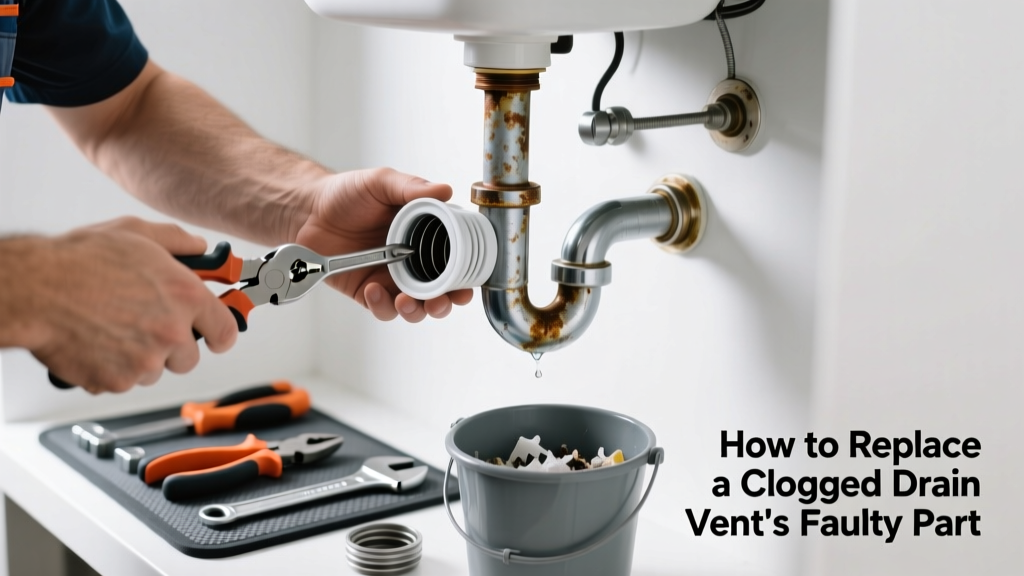
If your sink gurgles, drains slowly, or emits sewer odors—even after snaking the line—the issue may not be the pipe itself but a failed vent component. A clogged or degraded vent cap, air admittance valve (AAV), or roof vent boot can mimic drain blockage symptoms while actually starving the system of airflow. Replacing the faulty part is often faster and cheaper than calling a plumber.
Quick Diagnosis
Before replacing anything, confirm which part has failed. Most clogged drain vent issues stem from one of these:
- A cracked, corroded, or bird-nested roof vent cap (most common on older homes)
- A failed air admittance valve (AAV) — especially if installed under sinks post-2010 and now hissing or leaking
- A collapsed or debris-filled vent stack inside the wall (less common but possible in multi-story homes)
- A frozen or ice-clogged vent pipe during winter (check for frost buildup near roof penetration)
- A deteriorated rubber vent boot where the pipe exits the roof — visible cracks or lifted edges
Tools & Materials Needed
| Item | Purpose | Estimated Cost |
|---|---|---|
| Roof ladder with standoff arms | Safely access roof without damaging shingles or vent pipe | $85–$140 |
| Channel-lock pliers & adjustable wrench | Remove corroded nuts, clamps, or threaded fittings on vent components | $12–$28 |
| Replacement vent cap (3″ PVC or ABS) | Standard replacement for roof stacks; choose UV-resistant model | $7–$15 |
| Neoprene roof boot sealant (e.g., Butyl tape) | Creates watertight seal around new boot or cap base | $6–$11 |
| Plumber’s putty or silicone caulk (roof-grade) | Seals AAV mounting flange or cap base to prevent leaks | $4–$9 |
Step-by-Step Fix
Follow this sequence based on your vent type. Always shut off water supply to affected fixtures first and test vent function with a smoke test (or simple tissue test) after repair.
- Identify vent type: Climb onto roof (with fall protection) and inspect the vent pipe’s top. If it’s a simple capped pipe, you likely need a new cap. If there’s a gray plastic box with a rubber diaphragm beneath the sink cabinet, it’s an AAV—replace the entire unit.
- Remove old component: For roof caps, loosen the retaining nut or unscrew the cap. For AAVs, shut off water, disconnect the tailpiece, and unscrew the mounting nut. Discard any brittle or cracked parts.
- Clean and prep: Scrub interior of vent pipe opening with a wire brush. Wipe away old caulk or sealant. Check for nesting debris (wasps, leaves) and remove with a shop vac or flexible brush.
- Install replacement: Apply butyl tape to base of new cap or boot. Hand-tighten, then snug with wrench (don’t overtighten PVC). For AAVs, mount per manufacturer torque specs—usually 15–20 ft-lbs—and reconnect drain line.
- Test airflow: Run water in connected fixture for 60 seconds. Listen for smooth drainage and no gurgling. Hold tissue near vent opening—it should flutter gently outward, not get sucked in.
When to Call a Pro
DIY isn’t safe or effective in these cases:
- The vent stack runs through multiple floors and shows signs of internal collapse (e.g., water stains on ceilings below)
- You’re unable to locate the vent termination point or suspect it’s improperly tied into another system (common in remodels)
- Your home uses cast iron vent pipes — cutting or threading requires specialized tools and permits in most jurisdictions
- Local code prohibits AAVs in certain applications (e.g., basements, commercial kitchens) and mandates roof vents instead
According to the International Plumbing Code (IPC) 2021, Section 905.2, air admittance valves must be installed at least 4 inches above the horizontal branch drain and within 15 feet of the trap — violations require licensed correction.
Prevention Tips
Extend the life of your vent system with these habits:
- Clean roof vent caps twice yearly—spring and fall—with a stiff brush and garden hose
- Install stainless steel mesh guards over vent openings to deter birds and rodents (avoid fine mesh that traps snow)
- Replace rubber vent boots every 8–10 years—even if they look intact—since UV exposure degrades EPDM
- Never pour grease, coffee grounds, or harsh chemical drain cleaners down sinks; they vaporize and condense inside vent pipes, creating sticky residue
Can I use bleach on this?
No. Bleach reacts with organic debris in vents to form chloramine gas—a respiratory irritant—and does nothing to clear physical obstructions or restore airflow. It also accelerates corrosion of metal vent components. Stick to mechanical cleaning and proper replacement.
Do I need a permit to replace my AAV?
In most residential jurisdictions, replacing an AAV with an identical model doesn’t require a permit—but verify with your local building department. The U.S. EPA estimates that 14% of household water usage is from leaks, many traceable to failed vent-related pressure imbalances (EPA WaterSense Report, 2022).
Why does my vent smell like sewage after rain?
Rainwater entering a cracked or improperly sealed vent boot can wash sewer gases downward into the drain system. This points to boot failure—not a clog. Replace the boot and reseal with roofing cement rated for ponding water.
Is a gurgling toilet always a vent issue?
Not always—but if it happens only when another fixture drains (e.g., shower), it strongly suggests shared vent starvation. Confirm by checking the roof vent for blockage or damage before assuming the toilet’s wax ring or trap is faulty.
Can I install an AAV instead of a roof vent?
Only if local code allows it. Many municipalities ban AAVs in new construction or require them to be accessible for replacement. Check your state’s adoption of IPC 2021 Appendix E, which outlines AAV limitations—including prohibitions in high-wind zones and earthquake-prone areas.
How long does a roof vent cap last?
UV-stabilized PVC caps last 15–20 years; ABS caps degrade faster (10–12 years) in direct sun. Metal caps (stainless or copper) last 30+ years but cost 3× more. Inspect annually for warping, discoloration, or loose mounting hardware.
A properly functioning vent keeps your drains moving, prevents siphoning of trap seals, and stops sewer gases from backing up into your home. Replacing a single failed part takes under an hour once you’ve diagnosed it correctly—and avoids the $250+ service call for what’s often a $12 fix. Keep a spare cap and AAV in your garage, and add vent inspection to your seasonal home maintenance checklist—how to clean roof vents and air admittance valve troubleshooting have step-by-step visuals to help next time.