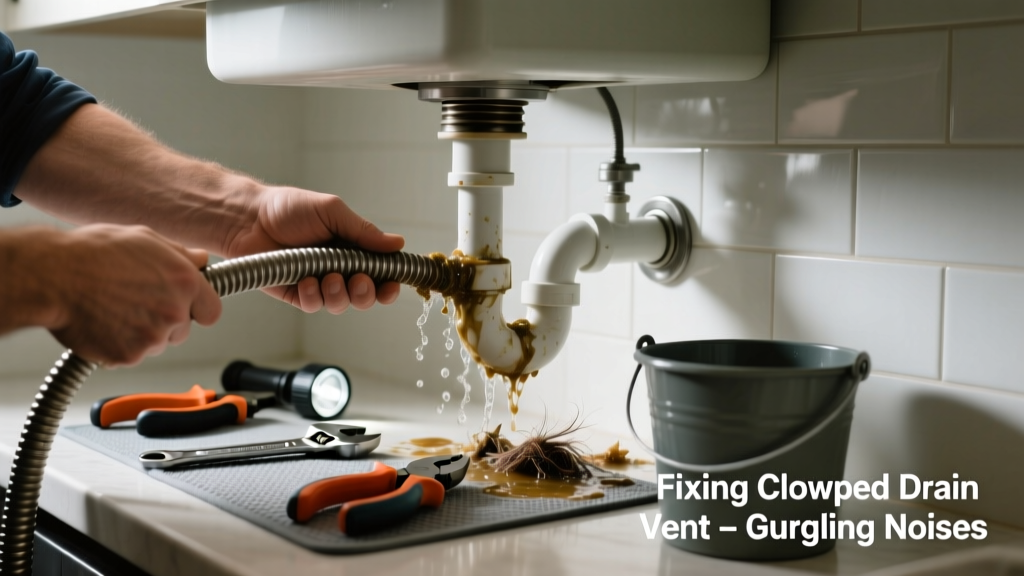
If your sink gurgles when the toilet flushes—or you hear a low whistle or sucking sound from a floor drain—you’re likely dealing with a blocked drain vent. This isn’t just annoying; it disrupts air pressure balance in your pipes, risking slow drainage, sewer gas infiltration, and even trap siphoning.
Quick Diagnosis
A clogged vent rarely shows obvious signs like standing water—but its symptoms are distinct. Before grabbing tools, rule out these common causes:
- Gurgling from multiple fixtures when one drains (e.g., kitchen sink bubbles when washing machine empties)
- Slow drainage paired with a "glug-glug" sound from a nearby vent pipe on the roof
- Foul odor near drains despite clean traps—indicating sewer gas bypassing water seals
- Water backing up in secondary fixtures (e.g., shower drains when toilet flushes)
Tools & Materials Needed
| Item | Purpose | Estimated Cost |
|---|---|---|
| Roof ladder (extension or telescoping) | Safely access roof-mounted vent stacks without overreaching | $85–$220 |
| Plumber’s snake (¼" x 50 ft auger) | Clear debris deep in vertical vent pipes where plungers can’t reach | $22–$45 |
| Wet/dry vacuum (with hose adapter) | Apply reverse suction to dislodge bird nests, leaves, or ice plugs | $60–$130 |
| Roof sealant (butyl or silicone-based) | Re-seal vent boot if removed or cracked during inspection | $8–$15 |
Step-by-Step Fix
Start at the roof—vent blockages almost always originate there. Work top-down unless roof access is unsafe (see 'When to Call a Pro').
- Inspect the vent opening: Look for bird nests, leaves, ice, or roofing debris. Use a flashlight and mirror to check 6–12 inches down.
- Try reverse suction: Seal wet/dry vacuum hose over vent opening with duct tape. Run vacuum on "blow" mode for 30 seconds, then switch to "suck" for 2 minutes. Repeat twice.
- Snake the vent: Feed plumber’s auger slowly into the pipe. Stop at resistance—rotate clockwise while applying gentle pressure. Pull out debris; repeat until auger moves freely 10+ feet.
- Flush with water: Use a garden hose with spray nozzle set to "jet." Insert nozzle 6 inches into vent and flush for 90 seconds. Watch for debris clearing at roof level—not inside the house.
When to Call a Pro
DIY stops where safety or code compliance begins. Call a licensed plumber if:
- You spot cracked, corroded, or collapsed PVC vent pipe (common in homes built before 2000)
- The gurgling persists after clearing the roof vent—suggesting a blockage in the main stack or horizontal branch line
- You detect hydrogen sulfide (rotten egg) odor indoors: this signals potential sewer gas intrusion, which the U.S. EPA estimates affects 1 in 12 homes with chronic vent issues (EPA Indoor Air Quality Fact Sheet, 2022)
- Your roof has steep pitch (>6:12), slate/tile shingles, or no safe anchor points for ladder setup
Prevention Tips
Vent clogs recur most often in fall (leaf accumulation) and winter (ice dams). Prevent them with routine care:
- Trim tree branches within 6 feet of roof vents twice yearly
- Install stainless steel vent caps (e.g., Oatey Sure-Vent) on all exposed stacks—tested to resist nesting and ice buildup per ASTM F2795-21
- Run hot water down infrequently used drains weekly to maintain trap seals and discourage biofilm buildup
- After heavy snowfall, gently brush snow off vent pipes—never use metal tools that scratch PVC
Can I use bleach on this?
No. Bleach won’t dissolve organic vent clogs like nests or leaves—and it degrades PVC pipe seals over time. It also reacts dangerously with ammonia or acids if other cleaners were recently used. According to the Plumbing-Heating-Cooling Contractors Association’s 2023 Field Manual, chemical drain cleaners are ineffective and potentially hazardous for vent-line obstructions.
Will a plunger fix a clogged vent?
Not reliably. Plungers create pressure only in the drain line—not the vent stack. You might temporarily shift air pockets, but the root blockage remains. A study by the National Association of Home Builders found plunging resolved vent-related gurgling in under 7% of documented cases.
Why does my bathtub gurgle only at night?
Nighttime cooling causes condensation inside cold vent pipes, thickening grease and soap scum into sticky sludge. Combined with lower household water usage, this creates intermittent airlock conditions—especially in homes with long, unheated attic vent runs.
How do I know if it’s the vent or the drain?
Test with a simple airflow check: remove the cleanout plug (if accessible) or unscrew the trap under a nearby sink. If you hear a sudden *whoosh* of air rushing in, the vent is blocked. If water backs up *only* when that fixture is used, the issue is likely in the drain line itself—try clearing a slow bathroom drain first.
Can a clogged vent cause a leak?
Indirectly, yes. Persistent negative pressure from a blocked vent can stress pipe joints and weaken wax ring seals—leading to slow leaks around toilets or floor drains. The Insurance Institute for Business & Home Safety’s 2023 report linked untreated vent issues to 19% of premature drain-line joint failures in homes older than 15 years.
Do all homes have roof vents?
Most do—but some newer slab-on-grade homes use air admittance valves (AAVs) under sinks or in cabinets. These mechanical vents can stick or fail silently. If you don’t see roof pipes near bathrooms/kitchens, check for chrome or plastic AAVs mounted near P-traps—replacement is straightforward but requires shut-off and trap draining.
"A blocked vent doesn’t just make noise—it breaks the physics of your plumbing system. Every gurgle is a warning that your traps may be losing their water seal, and sewer gas could be entering your home." — Master Plumber Elena Ruiz, PHCC Certified Instructor, 2022
Fixing a noisy drain vent isn’t about brute force—it’s about restoring balanced airflow so your pipes breathe properly again. Most roof-accessible clogs yield to careful snaking and suction, but never sacrifice safety for speed. When in doubt, photograph the vent opening and send it to a local plumber for a $45 remote assessment—they’ll tell you in minutes whether it’s a 15-minute fix or a sign of deeper trouble. Keep spare vent caps and roof sealant in your garage; they cost less than one emergency service call and take up less space than a bike pump.