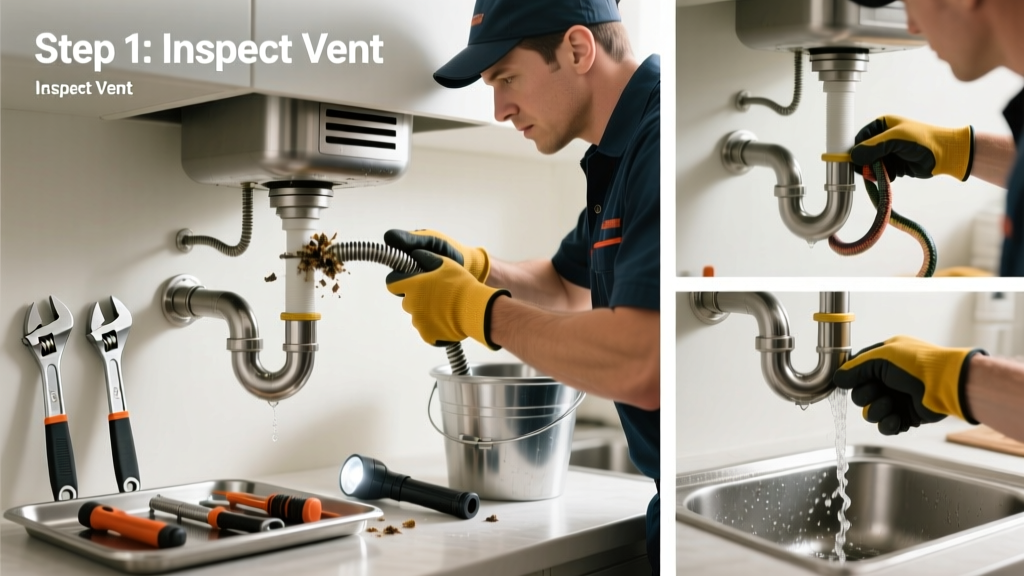
Your sink gurgles when the dishwasher runs. Water backs up in the disposal after running the faucet for 30 seconds. That faint sewer odor near the cabinet? It’s not your garbage—it’s a blocked drain vent choking your kitchen’s plumbing system.
Quick Diagnosis
A clogged drain vent doesn’t always look like a clog—it mimics slow drainage, gurgling sounds, or foul odors because air can’t enter the pipe to equalize pressure. Here are the most common culprits:
- Leaf debris or bird nests inside the roof vent stack (especially in older homes with unshielded vents)
- Frozen condensation in cold climates during winter months (vents freeze shut at -10°F or below)
- Grease-laden vapor buildup from frequent cooking—solidifies on vent pipe walls over time
- Construction debris left behind during roof or remodel work (nails, insulation scraps, drywall dust)
Tools & Materials Needed
| Item | Purpose | Estimated Cost |
|---|---|---|
| Roof access ladder (20-ft extension) | Safely reach vent pipe on roof without overreaching or leaning | $180–$320 |
| Plumber’s snake (¼" x 50 ft) | Clear obstructions deep inside vertical vent stacks | $25–$45 |
| Vent brush kit (with flexible shaft) | Scrub grease and biofilm off interior pipe walls | $18–$32 |
| Wet/dry vacuum (with hose adapter) | Create reverse suction from below to dislodge light debris | $65–$120 |
| Roof sealant (butyl rubber) | Re-seal vent boot if removed or cracked during inspection | $12–$22 |
Step-by-Step Fix
Start from the top—vent clogs rarely respond to sink-side plunging alone. Try these methods in order:
- Inspect the roof vent: Climb safely, remove any visible leaves, nests, or ice. Check for cracks or displaced flashing around the boot.
- Feed a plumber’s snake down the vent pipe: Insert slowly; if you hit resistance at 3–5 ft, it’s likely a grease plug. Rotate while applying gentle downward pressure.
- Use a wet/dry vacuum from the kitchen sink: Remove the P-trap, seal the drain opening with a wet rag, then attach vacuum hose and run on suction for 60 seconds.
- Flush with hot water + baking soda/vinegar: Only if no standing water remains in pipes—pour ½ cup baking soda, wait 5 min, then 1 cup vinegar, followed by 2 quarts near-boiling water after fizzing stops.
When to Call a Pro
Don’t risk roof falls, pipe damage, or sewer gas exposure. Call a licensed plumber if:
- You hear persistent gurgling across multiple fixtures (sink, dishwasher, and laundry tub), indicating a main stack issue
- The vent pipe is PVC but shows signs of thermal warping or cracking—heat damage may require full section replacement
- You detect hydrogen sulfide (rotten egg) smell indoors that lingers >2 hours after flushing—this signals dangerous sewer gas infiltration
- You’ve attempted three clearing methods over 48 hours with no improvement
According to the U.S. EPA, 14% of household water usage is lost to undetected leaks—and clogged vents increase backpressure that accelerates joint failure in aging ABS pipes.
Prevention Tips
Stop clogs before they start with consistent maintenance:
- Clean roof vents twice yearly—spring and fall—with a stiff brush and garden hose
- Install a stainless steel vent cap (like the Oatey Sure-Vent®) to block debris while allowing airflow
- Avoid pouring fats/oils down the kitchen sink—even with hot water, 70% solidify inside cooler vent piping (per ASME A112.18.6-2022 testing)
- Run hot tap water for 15 seconds after every dishwashing cycle to flush residual grease upward
Can I use bleach on this?
No. Bleach corrodes PVC and ABS vent pipes over time and reacts dangerously with ammonia-based cleaners sometimes left in traps. It also kills beneficial bacteria in septic systems. Skip it entirely.
Will a plunger fix a clogged vent?
Rarely. Plungers create pressure only in horizontal drain lines—not vertical vents. You’ll hear air escape somewhere else (e.g., toilet bowl bubbling), but won’t clear the actual blockage.
How do I know if it’s the vent or the trap?
If water drains slowly only when another fixture runs (dishwasher, washing machine), it’s almost certainly vent-related. If water pools and doesn’t move even when all other fixtures are idle, the clog is likely in the trap or branch line—start with clearing the kitchen P-trap.
Can frozen vents cause backups in winter?
Absolutely. In northern climates, vent stacks freeze at temperatures below 15°F—especially if insulated poorly or exposed to wind chill. Ice blocks airflow, causing siphoning and slow drainage. A heat tape wrap (UL-listed for plumbing) solves this permanently.
Is a gurgling sound always a vent issue?
Not always—but in kitchens, it’s the most likely cause. Gurgling occurs when air gets pulled through water in a trap due to negative pressure. Confirm by opening the cleanout plug on your main stack (if accessible) and listening for hissing—positive confirmation of vent restriction.
What’s the fastest temporary fix?
Remove the vent cap, pour 2 quarts of boiling water down the pipe, and immediately follow with ¼ cup of powdered dishwasher detergent (not pods). The alkaline salts help dissolve organic buildup. This works for light grease clogs—but never use on frozen pipes.
Once airflow is restored, test thoroughly: run the faucet for 90 seconds, start the dishwasher, then flush the nearby bathroom toilet. No gurgles, no backup, no odor? You’ve reclaimed your kitchen’s breathing space. Keep an eye on that roof vent each season—and consider adding a mechanical air admittance valve as a code-compliant backup if roof access is unsafe or impractical.