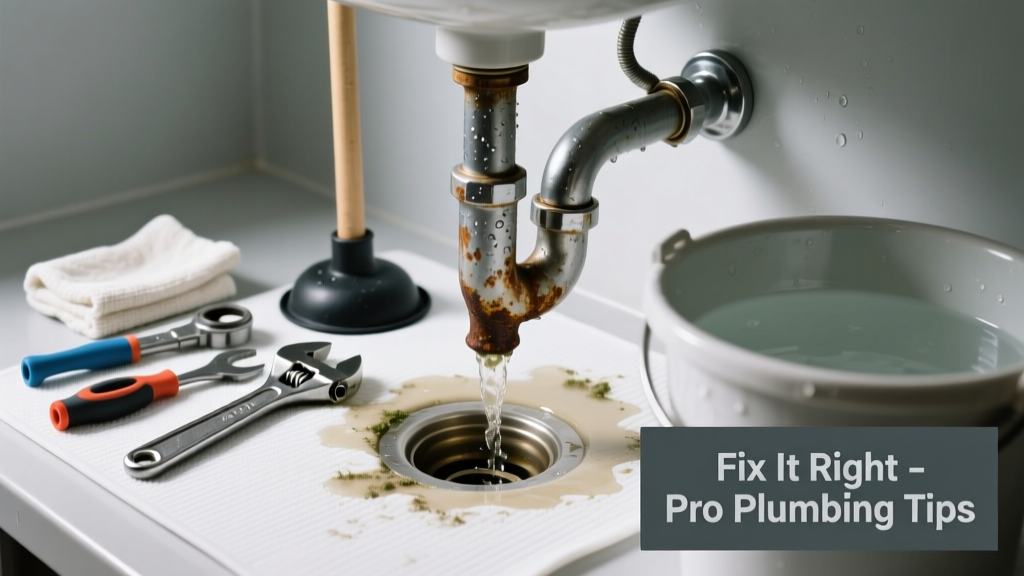
That sour, rotten-egg stench rising from your kitchen sink or bathroom drain isn’t just unpleasant—it’s a red flag that something’s wrong deep in the pipes. When odor pairs with sluggish drainage, it usually means organic gunk is trapped, decaying, and blocking flow. Ignoring it invites mold, corrosion, and worse backups.
Quick Diagnosis
Before grabbing tools, narrow down the culprit. Most smelly, slow drains stem from one (or more) of these:
- Biofilm buildup in the P-trap or tailpiece
- Decomposing food, hair, or soap scum in the drain basket or overflow
- Dry P-trap allowing sewer gas to escape
- Clogged vent stack restricting airflow and siphoning water from traps
- Root intrusion or collapsed pipe (less common but serious)
Tools & Materials Needed
| Item | Purpose | Estimated Cost |
|---|---|---|
| Plumber’s snake (1/4" x 25 ft) | Clears hair and debris past the trap and into branch lines | $12–$22 |
| Zip-it tool or bent wire hanger | Removes surface-level hair from pop-up stoppers and strainers | $3–$8 |
| White vinegar & baking soda | Natural reaction breaks down biofilm and neutralizes odors | $4–$7 |
| Rubber gloves & eye protection | Protects against bacteria, mold spores, and splashes during cleaning | $6–$15 |
| Wet/dry vacuum (optional) | Creates strong suction to dislodge stubborn clogs when used with a wet seal | $40–$90 |
Step-by-Step Fix
Try these methods in order—start simple, escalate only if needed:
- Flush the P-trap: Place a bucket under the sink, loosen the slip-nut on the curved P-trap, and carefully remove it. Empty contents into the bucket, scrub interior with a bottle brush and vinegar, then reassemble tightly.
- Neutralize biofilm: Pour ½ cup baking soda down the drain, wait 5 minutes, then add 1 cup white vinegar. Cover with a plug for 10 minutes, then flush with 4 cups boiling water (not for PVC pipes older than 10 years).
- Snake the line: Feed a hand-crank auger past the trap into the wall pipe. Rotate while advancing 12–18 inches, then pull back slowly—feeling for resistance or hair catch. Repeat until clean water flows freely.
- Check the vent: Climb onto your roof and inspect the vent pipe opening for bird nests, leaves, or ice. Use a garden hose with a spray nozzle to flush downward—if water backs up, the vent is blocked and needs professional clearing.
When to Call a Pro
Stop DIY efforts—and call a licensed plumber—if you encounter any of these:
- Multiple fixtures backing up simultaneously (sign of main sewer line issue)
- Foul odor persists after thorough cleaning and vent check
- Water rises in other drains when you run the faucet (indicates cross-connection or main line blockage)
- You smell sewer gas near floor drains or basement walls (possible cracked pipe or failed wax ring)
- Drain emits bubbling sounds or gurgling—not just slow flow
According to the Insurance Institute for Business & Home Safety's 2023 report, 68% of sewer-related home insurance claims involve undiagnosed vent or trap issues that worsened due to delayed professional intervention.
Prevention Tips
Keep drains flowing and odor-free year-round with these habits:
- Rinse kitchen sinks with hot water for 30 seconds after each use
- Install mesh strainers in all bathroom and kitchen drains—and clean them weekly
- Once a month, pour ¼ cup baking soda + ½ cup vinegar down each drain, followed by hot water after 10 minutes
- Run your garbage disposal with cold water and citrus peels monthly to freshen and cut grease
- In guest bathrooms or infrequently used sinks, pour 1 cup water down the drain weekly to keep P-traps full
Can I use bleach on this?
No—bleach doesn’t break down organic clogs and can corrode metal pipes or react dangerously with ammonia in urine or other cleaners. It masks odor without solving the root cause and may damage seals. Stick to vinegar, enzyme cleaners, or mechanical removal instead.
Why does only one drain smell, but others work fine?
A single smelly drain usually points to localized buildup—a dry P-trap (common in guest bathrooms), hair-packed stopper, or bacterial film in the overflow channel (especially in tubs and lavatories). Test by pouring water down the drain and listening for a ‘glug’—if silent, the trap is likely dry.
Will a plunger fix this?
Sometimes—but only if the clog is shallow and air-tight. For odor-plus-slow-flow, plunging rarely reaches the biofilm layer coating pipe walls. It’s best used as a first test before moving to snaking or chemical-free cleaning. Never use a plunger on a toilet and sink simultaneously—they share venting and could force sewage backward.
How long should vinegar and baking soda sit?
Let the mixture foam and fizz for exactly 10 minutes. Less time won’t fully penetrate biofilm; longer offers no added benefit and risks residue drying in the pipe. Always follow with hot (not boiling) water—especially if you have PVC or ABS pipes installed before 2010.
Do enzyme drain cleaners really work?
Yes—for maintenance. Products like Green Gobbler contain live bacteria that digest organic matter over 24–48 hours. They’re safe for septic systems and pipes but won’t clear hardened clogs. Use weekly for prevention, not emergency unclogging. The U.S. EPA estimates that 14% of household water usage is from leaks—including those caused by neglected drain maintenance.
Is the smell dangerous?
Occasional sewer odor isn’t immediately hazardous, but chronic exposure to hydrogen sulfide (the rotten-egg gas) above 2 ppm can cause headaches, nausea, and respiratory irritation. If you detect a persistent, strong sewer smell—even without visible backup—inspect traps and vents first, then consider calling a plumber with a gas detector. Don’t ignore it: prolonged exposure affects indoor air quality more than most homeowners realize.
Smelly, sluggish drains aren’t just a nuisance—they’re early warnings your plumbing system is out of balance. Tackle them promptly with the right tools and timing, and you’ll avoid costlier repairs down the line. For deeper issues like main line roots or vent stack damage, knowing when to call a plumber saves time, money, and peace of mind. Keep a small bottle of vinegar and a Zip-it tool under every sink—it pays for itself the first time you skip a $129 service call.