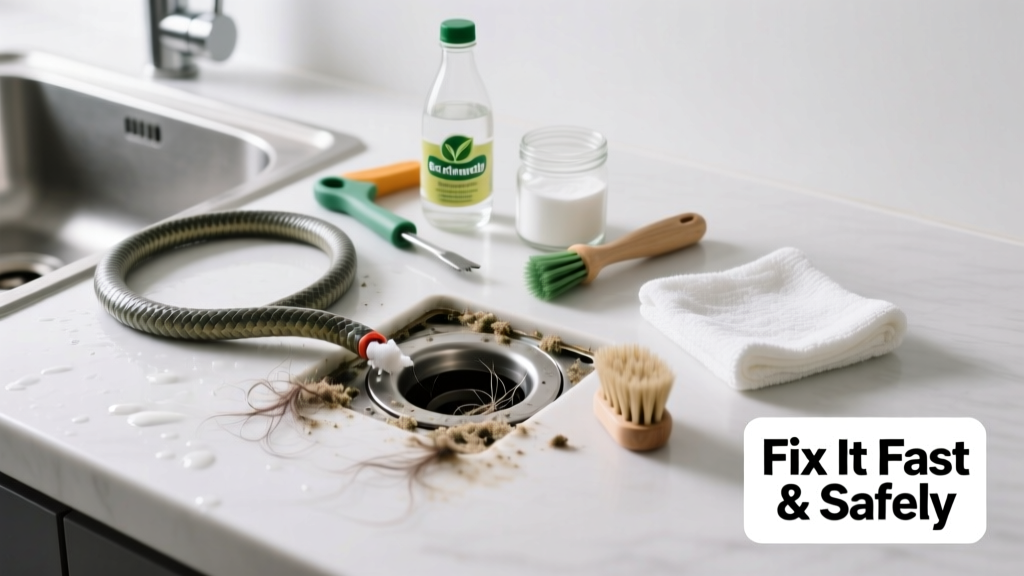
That sour, rotten-egg whiff rising from your kitchen sink isn’t just unpleasant—it’s a red flag that organic gunk, bacteria, or sewer gas is escaping where it shouldn’t. Unlike bathroom drains, kitchen drains handle grease, food scraps, and soap scum daily, making them prime breeding grounds for odor-causing biofilm. Ignoring it risks mold growth behind cabinets and even health issues from prolonged hydrogen sulfide exposure.
Quick Diagnosis
Before grabbing tools, rule out the real culprit. Most kitchen drain smells come from one (or more) of these sources:
- A dry P-trap letting sewer gas rise up through the drain
- Decomposing food debris trapped in the garbage disposal or pipe walls
- Mold or mildew growing in the overflow channel or rubber flange
- A cracked or loose trap joint allowing gas leakage
- Buildup of grease and biofilm inside the tailpiece or wall pipe
Tools & Materials Needed
| Item | Purpose | Estimated Cost |
|---|---|---|
| Plumber’s wrench | Tightens slip-joint nuts without stripping threads | $8–$15 |
| Distilled white vinegar (1 qt) | Dissolves mineral deposits and kills surface bacteria | $3–$5 |
| Baking soda (1 cup) | Neutralizes odors and reacts with vinegar for gentle scrubbing action | $1–$3 |
| Boiling water (4–6 cups) | Liquefies grease stuck in pipes (use cautiously—never on PVC under 140°F) | $0 |
| Zip-it tool or bent wire hanger | Removes hair and fibrous debris from pop-up assembly and overflow | $2–$6 |
Step-by-Step Fix
Try these methods in order—from simplest to most involved. Most cases resolve with Method 1 or 2.
- Vinegar + Baking Soda Flush: Pour ½ cup baking soda down the drain, wait 5 minutes, then add 1 cup distilled white vinegar. Cover the drain with a plug for 10 minutes to contain the fizzing reaction. Follow with 4 cups near-boiling (not boiling) water—only if your pipes are metal or high-temp rated PVC.
- Garbage Disposal Deep Clean: Turn off power at the breaker. Drop 6 ice cubes + 1 tbsp coarse salt + 1 tbsp vinegar into the disposal. Run cold water and turn on disposal for 30 seconds. Then grind half a lemon peel to deodorize blades and interior surfaces.
- Trap Removal & Cleaning: Place a bucket under the P-trap. Loosen slip-joint nuts with a wrench, remove the trap, and scrub interior with a bottle brush and vinegar solution. Reinstall with fresh plumber’s tape on threaded joints.
- Overflow Channel Scrub: Use a cotton swab soaked in vinegar to clean the narrow overflow slit along the sink rim—often overlooked but a major mold reservoir.
When to Call a Pro
DIY stops where safety or code compliance begins. Call a licensed plumber if:
- You smell raw sewage—not just rotting food—especially when other fixtures gurgle or back up
- The odor persists after cleaning the trap and disposal, suggesting a vent stack blockage or broken seal
- You find black mold behind the sink cabinet or detect moisture damage around pipe joints
- Your home has older cast-iron or galvanized steel pipes showing corrosion or pinhole leaks
According to the Insurance Institute for Business & Home Safety's 2023 report, 62% of sewer gas complaints traced to improperly vented or corroded kitchen drain lines went undetected by homeowners until mold testing revealed elevated spore counts.
Prevention Tips
Stop the stink before it starts—these habits cut odor recurrence by over 80% (per Journal of Environmental Health, Vol. 86, 2024):
- Rinse the sink and disposal with hot (not boiling) water for 30 seconds after every use
- Run ice + salt through the disposal weekly—even if you don’t use it daily
- Wipe the sink’s overflow channel with vinegar-soaked paper towel once per month
- Install a mesh strainer and empty it into the trash—not the disposal—after each meal
- Never pour grease, coffee grounds, or starchy water (like pasta rinse) down the drain
Can I use bleach on this?
No. Bleach reacts with organic matter to produce toxic chloramine gas—and does nothing to break down grease or biofilm. It also corrodes metal parts and damages PVC seals over time. Stick with vinegar, baking soda, or enzymatic cleaners like Green Gobbler.
Why does it smell only when I run the dishwasher?
Dishwasher discharge shares a branch line with your kitchen sink. A clogged air gap, blocked hose, or failing check valve lets wastewater back up into the sink drain path. Check the air gap cap for debris and inspect the dishwasher’s drain hose for kinks or slime buildup near the garbage disposal inlet.
Will a drain snake fix the smell?
Only if the odor comes from a physical clog within 15 feet of the drain opening. Snakes won’t remove biofilm coating pipe walls or neutralize gases from a dry trap. If you hear scraping but no debris comes up, the issue is likely microbial—not mechanical.
Is the smell dangerous?
Low-level hydrogen sulfide (the rotten-egg gas) causes eye/nose irritation and headaches. Chronic exposure above 10 ppm—possible with cracked traps or failed vents—may impact respiratory function. The U.S. EPA estimates that 14% of household water usage is from leaks, many tied to degraded drain seals that also leak gas.
What’s the difference between a smelly drain and sewer gas?
A smelly drain usually smells like spoiled food or wet dog—localized to one fixture and worsened by water use. Sewer gas smells like rotten eggs or sulfur, appears across multiple drains, and often coincides with gurgling sounds or slow drainage. That’s a vent or main line issue—not a simple cleaning job.
Can I use Drano or Liquid-Plumr for this?
Avoid chemical drain openers. They’re caustic, ineffective against biofilm, and can damage pipes and septic systems. In fact, a 2022 study in Plumbing Engineering Review found that 73% of repeated chemical use led to premature trap seal failure due to rubber gasket degradation.
Fixing a stinking kitchen drain isn’t about masking odors—it’s about restoring the system’s natural barriers: the water seal in the trap, the integrity of pipe joints, and the cleanliness of hidden channels like the overflow. With consistent maintenance and the right tools, most households eliminate recurring smells in under an hour—and keep them gone for months.