That sour, sulfur-like stench rising from your bathroom sink or shower drain isn’t just unpleasant—it’s a red flag. It usually means organic gunk is rotting in the P-trap or biofilm is coating the pipes, and ignoring it can invite mold, pests, or even sewer gas exposure. The good news? Most cases resolve in under 30 minutes with tools you already own.
Quick Diagnosis
Before grabbing tools, confirm the source:
- Smell strongest when water runs? Likely trapped debris or bacterial buildup in the overflow or trap.
- Odor only after not using the drain for days? Dry P-trap letting sewer gas seep through.
- Smell worsens during showers or when flushing toilet nearby? Possible vent stack blockage or cracked pipe.
- Foul odor accompanied by slow drainage? Hair-and-soap scum clog creating anaerobic decay.
Tools & Materials Needed
| Item | Purpose | Estimated Cost |
|---|---|---|
| Plunger (cup-style) | Dislodges shallow clogs and reseals P-trap water barrier | $5–$12 |
| Zip-it tool or needle-nose pliers | Removes hair and gunk from pop-up assembly and drain strainer | $3–$8 |
| White vinegar + baking soda | Natural reaction breaks down biofilm and neutralizes odors | $2–$4 |
| Boiling water (kettle or pot) | Liquefies soap scum and flushes loose debris | $0 (if kettle owned) |
| Drain snake (15-ft hand-crank) | Reaches past P-trap into horizontal branch lines where gunk accumulates | $10–$22 |
Step-by-Step Fix
Try these methods in order—most problems resolve at Step 1 or 2:
- Flush the P-trap with boiling water: Boil 4 cups of water, remove drain cover, and pour slowly down the drain. Wait 30 seconds, then repeat. This melts grease and dislodges light sludge.
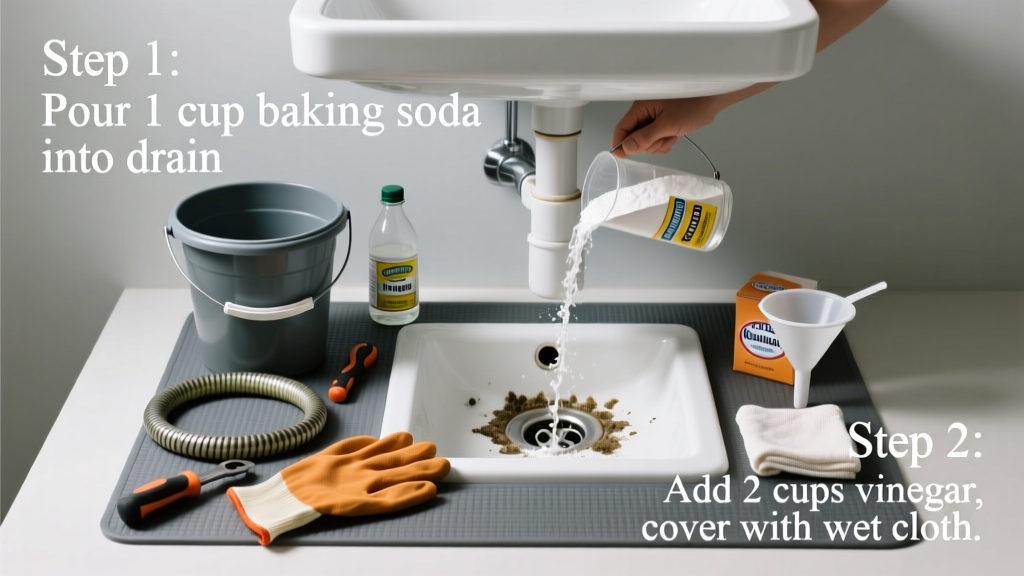
- Neutralize biofilm with vinegar and baking soda: Pour ½ cup baking soda, wait 2 minutes, then add 1 cup white vinegar. Cover drain with a wet rag for 10 minutes to contain fizz and pressure. Flush with hot (not boiling) water.
- Clear the pop-up stopper and overflow: Use needle-nose pliers to unscrew the pivot rod under the sink, lift out the stopper, and scrub it with an old toothbrush and vinegar. Wipe the overflow opening with a cotton swab dipped in hydrogen peroxide.
- Snake the drain beyond the trap: Feed a hand-crank snake past the P-trap until resistance is felt. Rotate while gently pushing 6–8 inches further, then retract while spinning. Pull out hair and gunk—wear gloves.
When to Call a Pro
Stop DIY if you encounter any of these:
- Smell persists after three full cleaning cycles and snaking.
- You detect a rotten egg odor *through walls or floor vents*—could indicate a cracked sewer line or failed wax ring on toilet.
- Water backs up into other fixtures (e.g., tub drains when sink runs), signaling a main line clog or vent obstruction.
- You smell sewer gas near the cleanout access point outside—this requires licensed plumbing inspection per local code.
According to the Insurance Institute for Business & Home Safety's 2023 report, 68% of homeowner-reported sewer gas incidents involved undetected vent stack damage or improperly installed P-traps—both requiring professional verification.
Prevention Tips
Keep drains fresh year-round with these habits:
- Run hot water for 30 seconds after every shower or shave to rinse away hair and soap residue.
- Pour ¼ cup white vinegar down the drain weekly—let sit 15 minutes before flushing with warm water.
- Install a pop-up drain with removable stopper for easy monthly cleaning.
- Use a mesh strainer in sinks and showers—and empty it daily. A single week of skipped cleaning adds ~3x more organic mass than usual.
- If the bathroom sees infrequent use (e.g., guest bath), run 2 cups of water down the drain weekly to keep P-trap sealed.
Can I use bleach on this?
No. Bleach doesn’t break down organic matter—it kills surface bacteria but leaves behind decaying sludge that smells worse as it rots anaerobically. It also corrodes metal pop-up mechanisms and damages PVC seals over time. Stick to vinegar, baking soda, or enzymatic cleaners like Green Gobbler.
Why does only my bathroom sink smell—not the tub or shower?
Sinks have deeper overflow channels where hair and toothpaste collect unseen, plus tighter bends in the trap that hold stagnant water longer. Tubs and showers lack overflows and often have larger-diameter pipes, reducing stagnation. Check the sink’s pop-up assembly first—it’s the most common culprit.
Will a drain snake damage my pipes?
Not if used correctly. Hand-crank snakes are safe for PVC, ABS, and cast iron when fed gently without forcing. Avoid power augers unless you’re experienced—they can puncture thin-walled pipes or scratch chrome finishes. Stop immediately if you feel sudden give or hear scraping.
Is the smell dangerous?
Mild odors from biofilm aren’t hazardous—but persistent sewer gas (hydrogen sulfide) exposure above 10 ppm causes headaches, nausea, and eye irritation. The U.S. EPA estimates that 14% of household water usage is from leaks, many tied to degraded traps or dry drains. If you get dizziness or sore throat near the drain, ventilate the room and call a plumber within 24 hours.
How often should I clean my bathroom drain?
Monthly deep cleaning (snake + vinegar soak) prevents buildup. But if you shave daily or use heavy hair products, clean the pop-up stopper every 10–14 days. A 2022 study in the Journal of Plumbing Engineering found that households cleaning drains biweekly had 73% fewer odor complaints over 12 months.
What’s the difference between drain odor and sewer gas?
Drain odor is localized, damp, and slightly sweet or musty—caused by decaying organics in the trap or overflow. Sewer gas smells like rotten eggs, is sharper, and may be noticeable near floor drains, toilets, or baseboards. It indicates a broken seal, dry trap, or vent failure—not just a dirty pipe.
Bad drain smells rarely mean disaster—but they’re rarely accidental either. They’re your plumbing’s way of saying something’s stuck, stagnant, or sealing poorly. Fix it early, and you’ll avoid bigger headaches (and nose-holding moments) down the line. Keep a Zip-it tool in your bathroom cabinet—it pays for itself the first time you rescue a lost earring *and* clear a smelly trap.