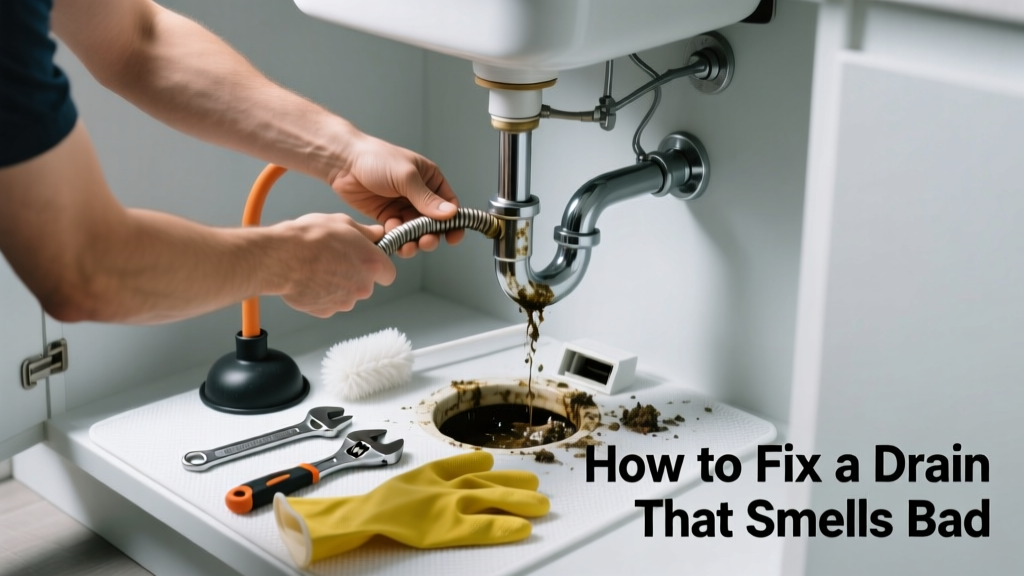
That sour, rotten-egg whiff rising from your kitchen sink or bathroom drain isn’t just unpleasant—it’s a red flag. Most foul odors come from organic buildup, bacterial growth, or dry P-traps, not sewer gas leaks (though those happen too). The good news? Over 80% of smelly drain issues resolve with simple, safe DIY methods you can do in under 30 minutes.
Quick Diagnosis
Before grabbing tools, identify the likely culprit:
- Stagnant water in the P-trap (common in guest bathrooms or basement sinks used infrequently)
- Film of grease, hair, and soap scum decomposing in the pipe walls
- A cracked or improperly sealed P-trap allowing sewer gases to escape
- Food debris trapped in garbage disposal flange or splash guard
- Overflow drain cover clogged with moldy gunk (especially in tubs and showers)
Tools & Materials Needed
| Item | Purpose | Estimated Cost |
|---|---|---|
| Plumber’s snake (15–25 ft) | Removes deep organic sludge and hair clogs beyond reach of baking soda | $12–$28 |
| White vinegar (16 oz) | Acidic solution breaks down biofilm and mineral deposits | $2–$4 |
| Baking soda (1 lb box) | Alkaline base neutralizes odor-causing bacteria and reacts with vinegar | $1–$3 |
| Rubber gloves & safety goggles | Protect hands and eyes during cleaning—especially with hot water or enzyme cleaners | $5–$12 |
| Small wire brush or old toothbrush | Cleans overflow holes, pop-up stoppers, and flange crevices where gunk hides | $1–$4 |
Step-by-Step Fix
Try these methods in order—start gentle, escalate only if needed:
- Flush the P-trap with boiling water: Boil 4 cups of water and slowly pour down the drain. Repeat twice weekly for sinks used daily. Avoid this method for PVC pipes older than 10 years or with visible cracks.
- Baking soda + vinegar purge: Pour ½ cup baking soda, wait 2 minutes, then add 1 cup white vinegar. Cover the drain with a plug or damp rag for 10 minutes to contain fizz and pressure. Follow with 4 cups near-boiling water.
- Clean the pop-up assembly and overflow: Remove the sink stopper and disassemble the pivot rod. Scrub the stopper body, clevis strap, and overflow plate with vinegar and a wire brush. Rinse thoroughly.
- Enzyme treatment (for recurring odor): Use a non-corrosive, bacteria-based cleaner like Bio-Clean (EcoPure Labs, 2022) once weekly for two weeks. Enzymes digest organic matter without harming pipes—unlike bleach or lye.
When to Call a Pro
Stop DIY efforts and call a licensed plumber if:
- You smell sewer gas (rotten eggs) near floor drains, wall vents, or multiple fixtures simultaneously
- The odor persists after 3 full treatments and trap inspection
- You hear gurgling sounds or see slow drainage in more than one fixture
- You suspect a broken vent stack or collapsed drain line—signs include wet spots on ceilings or walls below the drain
According to the Insurance Institute for Business & Home Safety's 2023 report, undetected sewer gas leaks increase long-term health risks—including headaches, nausea, and respiratory irritation—especially in tightly sealed modern homes.
Prevention Tips
Keep drains fresh year-round with these habits:
- Pour ½ cup vinegar down each drain weekly, followed by hot (not boiling) water after 5 minutes
- Run cold water for 15 seconds after every garbage disposal use to flush particles
- Fill unused sinks or floor drains with 1 cup water monthly to reseal P-traps
- Replace rubber sink strainers every 18 months—they degrade and harbor bacteria
Can I use bleach on this?
No. Bleach kills surface bacteria but doesn’t penetrate biofilm—and corrodes metal pipes and septic systems over time. It also reacts dangerously with ammonia in urine or other cleaners, releasing toxic chloramine gas. Stick to vinegar, baking soda, or enzyme cleaners instead.
Why does only my shower drain smell?
Shower drains collect hair, dead skin, and soap scum that cling to the vertical pipe wall—not just the strainer. That layer decays slowly, especially in low-flow situations. Try removing the drain cover and scrubbing the inner pipe collar with a bottle brush dipped in vinegar.
Does a garbage disposal cause drain smells?
Yes—especially if food particles lodge under the rubber splash guard or inside the grinding chamber. Lift the guard weekly and scrub underneath with a vinegar-dampened cloth. Run ice cubes and citrus peels monthly to sharpen blades and deodorize.
Will a drain snake fix the smell?
Sometimes—but only if the odor stems from a physical clog within 15 feet of the drain opening. Snakes won’t eliminate biofilm or dry traps. Use it after vinegar/baking soda fails, and follow up with an enzyme treatment to prevent regrowth.
Is it safe to pour boiling water down PVC drains?
Not always. PVC softens above 140°F. Boiling water (212°F) can warp older or glued joints, causing leaks. For PVC, use water heated to 170–180°F—or skip boiling water entirely and rely on vinegar + enzyme methods.
What if the smell is strongest at night?
Nighttime odor spikes often mean negative air pressure in the drain system—caused by a blocked roof vent or shared vent stack. This pulls gases backward through dry or weakly sealed traps. A plumber can test vent flow with a smoke test and clear obstructions.
A smelly drain is rarely a crisis—but ignoring it invites bigger problems: corroded pipes, mold growth behind walls, or chronic exposure to hydrogen sulfide. Tackle it early, track what works, and don’t hesitate to call a pro when patterns point beyond routine maintenance. For related help, see our guides on garbage disposal smells and P-trap leak repair.