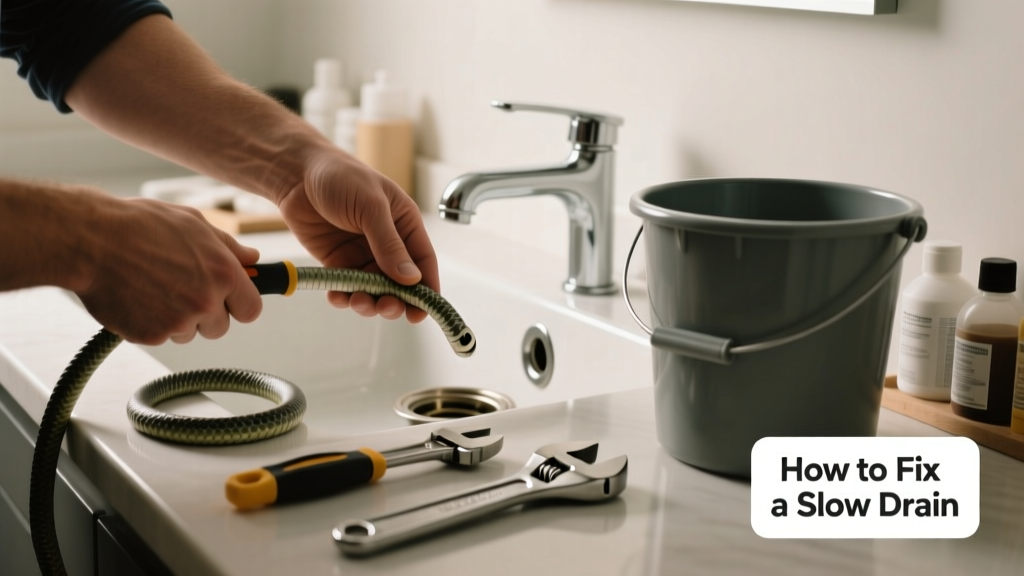
A slow drain isn’t just annoying—it’s a warning sign. Water pooling in your sink or shower means something’s blocking flow, and ignoring it can lead to backups, mold, or even pipe corrosion. Most clogs are shallow and fixable in under 30 minutes with basic tools.
Quick Diagnosis
Before grabbing tools, identify the likely culprit. Slow drainage rarely means a full stoppage—more often, it’s partial obstruction from one of these sources:
- Hair and soap scum buildup (especially in bathroom sinks and showers)
- Food particles and grease (kitchen sinks)
- Mineral deposits from hard water (affecting aerators and P-traps)
- Tree roots infiltrating main sewer lines (if multiple drains are slow simultaneously)
- Collapsed or improperly sloped pipes (less common, but possible in older homes)
Tools & Materials Needed
| Item | Purpose | Estimated Cost |
|---|---|---|
| Plunger (cup-style) | Creates suction to dislodge shallow clogs in sinks and tubs | $5–$12 |
| Zip-it tool or drain snake (15–25 ft) | Reaches and retrieves hair and debris from P-trap and horizontal pipes | $8–$20 |
| Baking soda & white vinegar | Natural reaction helps break down organic gunk without corroding pipes | $3–$6 |
| Wrench or slip-joint pliers | To safely remove and reinstall P-trap without stripping nuts | $12–$25 |
| Rubber gloves & shop towel | Protect hands and contain mess during trap cleaning | $2–$8 |
Step-by-Step Fix
Try these methods in order—start gentle, escalate only if needed:
- Boiling water flush: Pour 2–3 kettles of boiling water down the drain (only for metal pipes; avoid PVC). Repeat twice. Works best on grease or soap buildup.
- Baking soda + vinegar: Pour ½ cup baking soda, wait 5 minutes, then add 1 cup white vinegar. Cover drain, wait 15 minutes, then flush with hot water.
- Plunge with seal: Block overflow holes (e.g., bathtub overflow plate) with a wet rag. Fill basin with enough water to cover plunger cup. Pump vigorously for 20–30 seconds.
- Remove and clean P-trap: Place bucket under trap, loosen slip-nuts with pliers, remove trap, and clear debris with a bottle brush or old toothbrush. Reassemble tightly—no Teflon tape needed on compression fittings.
- Snake the line: Feed a hand-crank auger past the trap into the wall pipe. Rotate while advancing until resistance is met, then twist and pull out hair or sludge.
When to Call a Pro
DIY stops where safety or system complexity begins. Call a licensed plumber if:
- Multiple fixtures (sink, toilet, shower) drain slowly at once—points to main sewer line blockage or vent issue
- You smell sewage gas or see black water backing up—indicates serious sewer breach or septic failure
- Snaking yields no improvement after 3 attempts, or auger won’t advance past 20 feet
- Your home was built before 1970 and has galvanized steel pipes—corrosion may require repiping
- You suspect tree roots—requires camera inspection and hydro-jetting, not a homeowner tool
According to the Insurance Institute for Business & Home Safety's 2023 report, 68% of sewer backups linked to root intrusion occur in homes with trees planted within 10 feet of lateral lines.
Prevention Tips
Consistent habits beat emergency fixes every time. Install these routines:
- Use mesh strainers in every sink and shower drain—and clean them weekly
- Flush kitchen drains monthly with ¼ cup baking soda + ½ cup vinegar, followed by 2 quarts near-boiling water
- Never pour grease, coffee grounds, or eggshells down the kitchen sink—even with a garbage disposal
- Run cold water for 15 seconds after using the disposal to solidify and flush fats
- Have your main sewer line scoped and cleaned every 3–5 years if you have mature trees nearby
Can I use bleach on this?
No. Bleach doesn’t dissolve hair or grease—it only disinfects surface bacteria and can damage PVC seals over time. It also reacts dangerously with ammonia or vinegar if mixed accidentally. Stick to mechanical removal or enzyme-based cleaners like Bio-Clean for organic buildup.
Why does my bathroom sink gurgle when the toilet flushes?
This signals a blocked or undersized vent stack. Air can’t escape properly, so pressure shifts cause gurgling. A clogged roof vent (leaves, nests, ice) is the usual suspect. Try clearing it with a garden hose from the roof—see our roof vent cleaning guide.
Will a plunger work on a shower drain?
Yes—but only if you seal the overflow opening first. Use a wet washcloth or rubber stopper to block it tightly. Without that seal, plunging creates zero suction. If water still drains slowly afterward, the clog is deeper than the drain shoe—move to snaking.
Is Drano safe for old pipes?
No. Chemical drain openers like Drano generate intense heat and corrosive reactions. They accelerate deterioration in cast iron, galvanized steel, or aged PVC. The U.S. EPA estimates that 14% of household water usage is lost to leaks—including those worsened by chemical corrosion. Opt for mechanical methods instead.
How do I know if it’s the P-trap or the wall pipe?
If water backs up immediately after running the faucet, the clog is likely in the P-trap. If water drains slowly but never fully stops, the blockage is farther down the wall pipe or branch line. Remove the trap first—it’s the easiest access point and solves ~70% of single-fixture slowdowns.
Can I rent a power snake instead of buying one?
Yes—and it’s often smarter. Rental units ($35–$60/day) deliver more torque and length (50+ ft) than most $20 hand augers. But read the manual carefully: over-rotating can damage pipe joints or drill through thin-walled copper. For most homeowners, a 25-ft hand-crank model is safer and sufficient for routine maintenance.
Fixing a slow drain isn’t about brute force—it’s about matching the right tool to the right location in your plumbing anatomy. Most slowdowns live within arm’s reach of the fixture, not deep in the walls. Stay patient, keep your tools organized, and remember: if water starts rising instead of draining, stop and call a pro. You’ll save yourself stress, water damage, and costly callbacks down the line. For persistent issues, consider upgrading to a drain camera inspection to map trouble spots before they become emergencies.