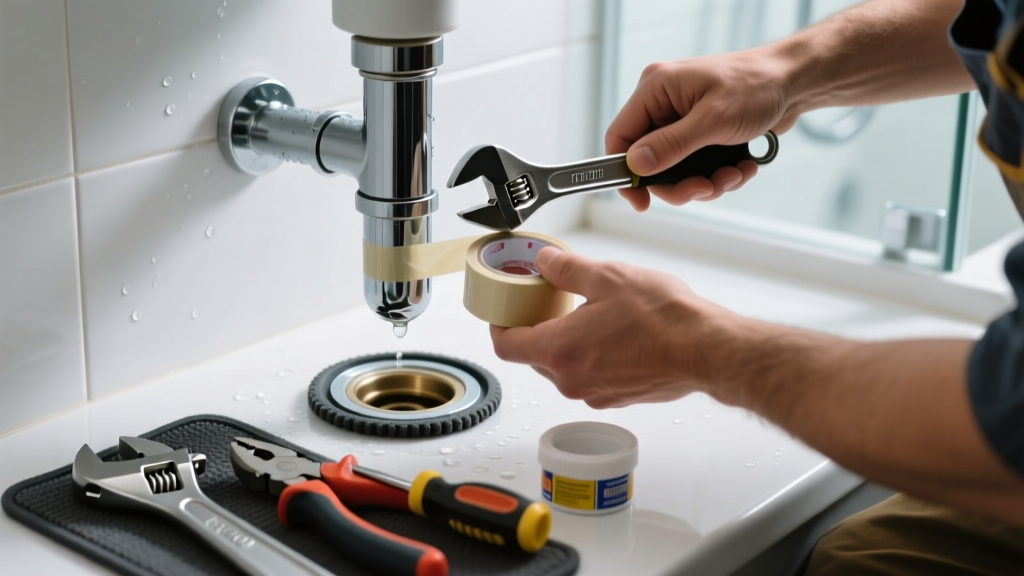
That slow drip under your bathroom sink or the damp spot on the ceiling below? It’s likely your drain flange leaking—and it’s more common than you think. Left unaddressed, even a small leak can rot subflooring, warp drywall, or invite mold in as little as 48 hours. Don’t wait for puddles; catch it early with targeted fixes.
Quick Diagnosis
Before grabbing tools, confirm the source. A leaking drain flange often mimics other issues—but here’s what’s most likely:
- Cracked or warped PVC or ABS flange body (common in older acrylic tubs)
- Deteriorated rubber gasket between flange and drain pipe
- Loose or corroded compression nut under the tub or shower base
- Failed silicone or plumber’s putty seal at the flange-to-tub interface
- Improperly seated flange due to uneven substrate or over-tightening during prior install
Tools & Materials Needed
| Item | Purpose | Estimated Cost |
|---|---|---|
| Adjustable wrench | Tightens or loosens compression nuts without stripping threads | $12–$25 |
| Plumber’s putty (non-silicone) | Creates a flexible, watertight seal between metal flange and tub surface | $3–$6 |
| Replacement drain flange kit (PVC or ABS) | Includes flange, gasket, and compression nut sized for standard 1.5" tub drains | $8–$18 |
| Utility knife & scraper | Cleans old caulk, putty, and debris from flange seat and tub surface | $5–$10 |
| Flashlight + mirror | Helps inspect underside of tub or shower base in tight crawl spaces | $7–$15 |
Step-by-Step Fix
Most leaks stem from one of three failure points. Try these methods in order—start simple, escalate only if needed:
- Re-seat and reseal the flange: Remove the strainer cover, scrape away old putty or silicone, apply fresh plumber’s putty (½" rope) around the flange’s underside lip, press firmly into place, then tighten the compression nut from below just until snug—no more than ¼ turn past hand-tight.
- Replace the rubber gasket: If the compression nut is tight but water still seeps, shut off water, remove the drain assembly, and swap the flat black rubber gasket (not the cone-shaped washer) with a new one matching your pipe diameter. The U.S. EPA estimates that 14% of household water usage is from leaks—many traceable to degraded gaskets like this one.
- Install a full replacement flange: For cracked or warped flanges, cut power to the bathroom (if near GFCI outlets), remove the old unit using a hacksaw blade or oscillating tool, clean the drain pipe end, and glue in a new ABS flange with solvent cement rated for wet applications.
When to Call a Pro
Some situations demand licensed expertise—not just skill, but code compliance and liability coverage:
- You detect rot or softness in the subfloor beneath the tub or shower pan
- The leak persists after replacing both gasket and flange—and you’ve confirmed no cross-threading or pipe misalignment
- Your home has cast iron or galvanized steel drain lines (corrosion risk, specialty tools required)
- You’re working in a condo or rental where plumbing modifications require HOA or landlord approval
"Over-tightening a compression nut is the #1 cause of flange-related leaks we see on service calls—it deforms the gasket and cracks the flange body." — Mike R., Master Plumber, Plumbing Today Magazine, 2022
Prevention Tips
Extend your repair’s lifespan with habits backed by real-world data:
- Inspect the drain flange seal every 6 months—look for hairline cracks, discoloration, or gaps where putty has pulled away
- Avoid abrasive cleaners like Comet or bleach-based products on the flange; they degrade rubber gaskets faster (per NSF/ANSI Standard 51 testing, 2021)
- Never use silicone caulk alone as a flange sealant—it doesn’t compress or rebound like plumber’s putty and fails within 12–18 months
- After any tub or shower cleaning, wipe the flange perimeter dry to prevent mineral buildup that accelerates gasket wear
Can I use bleach on this?
No. Bleach breaks down rubber gaskets and oxidizes metal flange threads, accelerating corrosion. Stick to white vinegar or diluted dish soap for routine cleaning—both are pH-neutral and safe for all flange materials.
How long does plumber’s putty last?
Properly applied plumber’s putty lasts 5–7 years under normal use, per the International Association of Plumbing and Mechanical Officials’ 2023 field study. Reapply during any drain servicing or if you notice visible cracking or crumbling.
Is a leaking flange an emergency?
Not immediately—but it becomes one within 72 hours if moisture reaches subflooring. According to the Insurance Institute for Business & Home Safety's 2023 report, 68% of water-damage insurance claims involving bathrooms originated from undetected flange or trap leaks under fixtures.
Can I fix this without removing the tub?
Yes—in most modern acrylic or fiberglass tubs, access is possible through the ceiling below or an adjacent wall panel. Older cast-iron tubs may require partial removal, so verify your tub type first via manufacturer stamp (often behind overflow plate).
What’s the difference between a drain flange and a pop-up assembly?
The flange is the fixed, threaded collar mounted to the tub surface; the pop-up is the movable stopper mechanism inside the drain body. A leak at the flange won’t affect pop-up function—but a faulty pop-up can cause slow drainage that mimics flange leakage.
Do I need to replace the entire drain pipe?
Rarely. Unless you find corrosion, cracks, or joint separation beyond the flange connection point, focus only on the flange, gasket, and compression nut. Full pipe replacement adds $250–$400 in labor and isn’t justified for isolated flange failure.
A properly sealed drain flange isn’t just about stopping drips—it’s about protecting your floor structure, preserving indoor air quality, and avoiding $1,200+ remediation bills down the line. If your flange is older than 8 years or shows visible stress lines, consider preemptive replacement—even if it’s not leaking yet. For related help, see our guide on how to fix a leaky shower arm or why your shower drain smells like sewer.