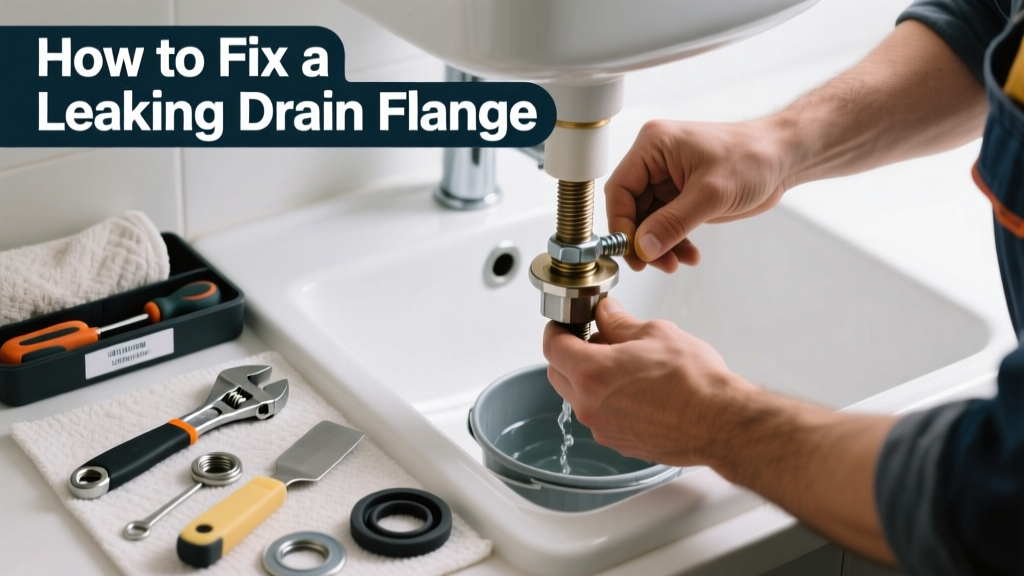
A slow drip around your shower drain flange isn’t just annoying—it’s a red flag for hidden water damage under the tile or subfloor. Left unaddressed, that leak can rot framing, grow mold, and compromise your bathroom’s structural integrity in as little as six weeks. Most leaks are simple fixes, but only if caught early and diagnosed correctly.
Quick Diagnosis
Before grabbing tools, identify the source. A leaking drain flange rarely means the flange itself is cracked—it’s usually one of these:
- Failed silicone or caulk seal between flange and tile
- Loose or corroded mounting screws
- Deteriorated rubber gasket beneath the flange (common with older ABS or PVC drains)
- Cracked or warped flange body from overtightening or thermal stress
- Subfloor sagging or tile movement breaking the seal
Tools & Materials Needed
| Item | Purpose | Estimated Cost |
|---|---|---|
| Adjustable wrench or basin wrench | Tightens or loosens flange nuts without scratching chrome | $12–$25 |
| 100% silicone caulk (mold-resistant) | Re-seals flange-to-tile joint; must be 100% silicone—not acrylic | $4–$8 |
| Utility knife + fresh blades | Cuts away old caulk cleanly without gouging grout or tile | $3–$6 |
| Small flathead screwdriver | Removes decorative caps and tests screw tightness | $2–$5 |
| Rubber gasket kit (for 2" or 3" drains) | Replacement gasket for drains with internal compression seals | $8–$15 |
Step-by-Step Fix
Choose the method based on your diagnosis. Start with the least invasive:
- Caulk Re-Seal: Remove all old caulk with a utility knife. Clean the joint with isopropyl alcohol. Apply a continuous 1/8" bead of 100% silicone caulk around the flange perimeter. Smooth with a damp finger and let cure 24 hours before use.
- Screw Tightening: Pop off the drain cover. Check for visible corrosion on screws. Tighten each mounting screw evenly—no more than ¼ turn past snug. Overtightening warps flanges and breaks seals.
- Gasket Replacement: Unscrew the flange from below (access via basement or crawlspace). Discard the old rubber gasket. Install new gasket with light silicone lubricant. Reassemble and torque to manufacturer specs—usually 15–20 ft-lbs.
When to Call a Pro
Don’t risk it if you see any of these signs:
- Water pooling under adjacent cabinets or baseboards—not just at the drain
- Visible subfloor softness or discoloration around the drain location
- No access panel below the shower (e.g., slab-on-grade foundation)
- Drain pipe misalignment or cracked ABS/PVC visible during inspection
- Leak persists after two full re-caulking attempts with proper prep
According to the Insurance Institute for Business & Home Safety's 2023 report, 68% of bathroom water damage claims involved undetected flange leaks that went unrepaired for over three months.
Prevention Tips
Maintaining your drain flange takes minimal effort—but consistency matters:
- Re-caulk the flange-to-tile seam every 18–24 months, even if no leak is visible
- Avoid using abrasive cleaners or steel wool near the flange—they degrade silicone and scratch metal finishes
- Check mounting screw tightness twice yearly with a small screwdriver
- Never pour boiling water down a shower drain—thermal shock cracks rubber gaskets
Can I use bleach on this?
No. Bleach degrades silicone caulk and accelerates rubber gasket breakdown. It also reacts with metals, causing pitting on chrome or brass flanges. Use white vinegar diluted 1:1 with water for mild cleaning instead.
How long does silicone caulk take to dry?
Surface dry time is 30–60 minutes, but full waterproof cure takes 24 hours. Don’t run water during that time—even a quick rinse compromises adhesion. For heavy-use showers, wait 48 hours before full use.
Is plumber’s putty okay instead of silicone?
No. Plumber’s putty is designed for sink basket strainers—not shower drain flanges. It dries out, shrinks, and fails under constant wet/dry cycling. The U.S. EPA estimates that 14% of household water usage is from leaks caused by improper sealant choices.
Why does my flange leak only when the shower is running?
This points to pressure-related failure—often a compromised gasket or loose compression nut below the subfloor. Water backs up slightly under flow, forcing past the weak seal. It’s not a surface issue; you’ll need underside access.
Can I replace just the flange without removing tile?
Yes—if the flange is a standard threaded type (like those used with PVC or ABS drains) and the tile opening matches the replacement size. But avoid retrofitting oversized or non-standard flanges. Mismatched diameters cause uneven pressure and premature seal failure.
What’s the average lifespan of a shower drain flange?
Well-maintained stainless steel or brass flanges last 15–20 years. Cheaper zinc-alloy or plastic flanges often fail in 7–10 years due to galvanic corrosion or thermal fatigue. Replace them proactively if yours is older than 12 years and shows pitting or discoloration.
A properly sealed drain flange is silent insurance against thousands in water damage repairs. Most fixes take under an hour—and cost less than $25 in materials. If your shower still weeps after re-caulking and tightening, don’t ignore it: that moisture is migrating downward, weakening your floor structure one drop at a time. For deeper issues like shower drain replacement or subfloor repair, professional help isn’t optional—it’s urgent.