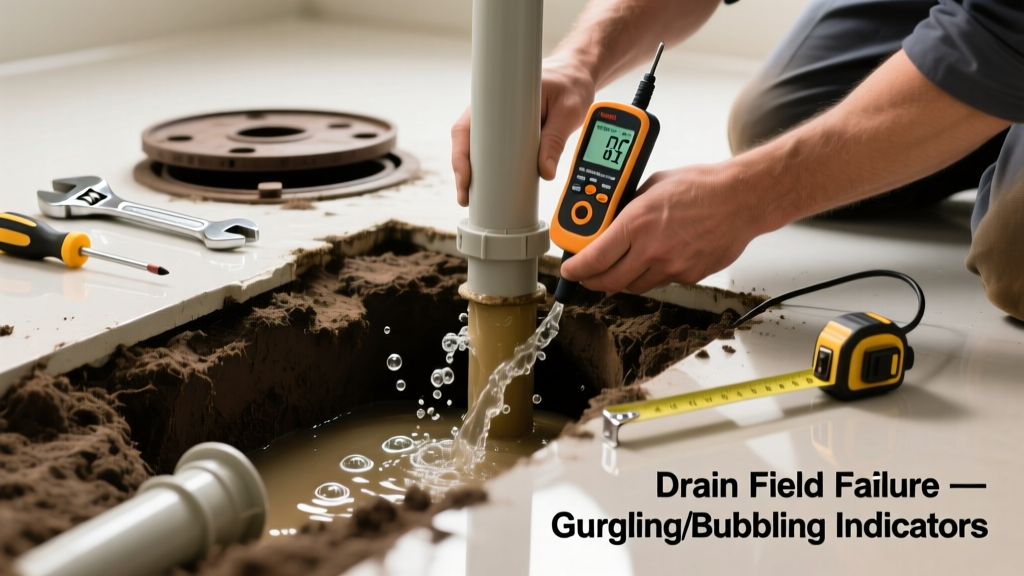
If your drain field is making gurgling, bubbling, or low-frequency rumbling noises—especially after flushing or running water—it’s likely under hydraulic stress or failing. These sounds aren’t normal and often signal air trapped in saturated soil, collapsed pipes, or bio-mat overgrowth. Ignoring them can lead to surfacing effluent, pooling, or full system failure within weeks.
Quick Diagnosis
Unusual noises from your drain field usually stem from one or more of these issues:
- Excessive hydraulic loading (too much water entering the system too fast)
- Clogged or cracked distribution pipes allowing air pockets and uneven flow
- Advanced biomat buildup restricting percolation and forcing air displacement
- Soil saturation or compaction reducing infiltration capacity
- Collapsed or crushed lateral lines causing turbulent flow and vibration
Tools & Materials Needed
| Item | Purpose | Estimated Cost |
|---|---|---|
| Soil probe (6 ft stainless steel) | Locates wet spots, compaction zones, and pipe depth without excavation | $28–$45 |
| Septic-safe enzyme treatment | Breaks down organic biomat without harming beneficial bacteria | $19–$32 |
| Pressure washer with sewer jetting nozzle | Cleans clogged laterals by hydro-scouring debris and biofilm | $120–$220 (rental) |
| Percolation test kit | Measures soil absorption rate to confirm infiltration loss | $35–$65 |
| Sludge judge (septic tank measuring stick) | Determines scum/slime layer thickness before pumping | $14–$26 |
Step-by-Step Fix
Try these methods in order—start conservative and escalate only if noise persists:
- Reduce hydraulic load: Cut water use by 40% for 72 hours (no laundry, limit showers), then monitor noise. According to the U.S. EPA, 14% of household water usage is from leaks—fix dripping faucets first.
- Apply septic enzyme treatment: Pour 2 quarts of septic-safe enzyme solution directly into the cleanout or toilet (follow label instructions). Repeat weekly for three weeks.
- Jet-lateral cleaning: Insert jetter nozzle into the distribution box inlet and flush each lateral line individually at 2,500 PSI for 90 seconds. Wear gloves and eye protection—backflow can eject foul water.
- Aerate the drain field: Use a soil aerator (not a tiller) to create 2-inch-deep holes every 18 inches across the field. This improves oxygen diffusion and temporarily reduces biomat density.
When to Call a Pro
DIY stops where safety or code compliance begins. Call a licensed septic contractor immediately if you observe any of these:
- Visible effluent surfacing or black water pooling near the drain field
- Sewage odor indoors or strong sulfur smell outdoors
- Cracks or settling in the ground above the field (indicates structural collapse)
- Noise accompanied by slow drains *and* a high sludge level (>24" in tank)
- Your state requires permits for drain field modifications (e.g., WA, MA, VT)
According to the National Environmental Services Center’s 2022 Septic System Performance Report, 68% of premature drain field failures were linked to delayed professional intervention after early warning signs—including unusual acoustics.
"Gurgling isn’t just annoying—it’s your system screaming that air is being forced through saturated biomat. That sound means percolation has dropped below 0.2 inches/hour." — Dr. Lena Cho, Onsite Wastewater Research Lead, University of Rhode Island (2023)
Prevention Tips
Extend your drain field life with consistent maintenance habits:
- Pump your septic tank every 3–5 years (every 2 years if using a garbage disposal)
- Install high-efficiency fixtures to reduce daily flow by up to 35%
- Divert roof and foundation drains away from the drain field zone
- Avoid planting trees or shrubs with aggressive roots within 30 feet of laterals
- Use only biodegradable, septic-safe toilet paper and cleaners—never fabric softeners or antibacterial soaps
Can I use bleach on this?
No. Household bleach kills beneficial bacteria essential for breaking down solids in both the tank and drain field. Even diluted bleach disrupts microbial balance for 7–10 days and accelerates biomat formation. Stick to certified septic-safe cleaners instead.
Will a drain snake fix the noise?
Not reliably. Snaking clears clogs in house plumbing or the main line—but it won’t reach or clear collapsed or root-infiltrated laterals buried 18–36 inches deep. A snake may temporarily relieve pressure but masks underlying failure.
How long does enzyme treatment take to work?
You’ll typically hear reduced gurgling within 5–7 days, but full biomat reduction takes 3–6 weeks. Enzymes don’t replace pumping—they buy time. Track progress with a soil probe; moisture should recede 1–2 inches deeper weekly.
Is the noise worse in winter? Why?
Yes—cold temperatures slow bacterial activity and freeze shallow soil layers, trapping air and effluent. Frost heave can also shift or crack laterals. Insulate the drain field with 6–12 inches of dry straw mulch before first frost to maintain microbial function.
Can heavy rain cause this noise?
Absolutely. Saturated soil prevents effluent from dispersing, backing up pressure into pipes and forcing air through standing water—creating gurgles and bubbles. If noise starts *only* during or right after rain, check surface grading and install French drains uphill of the field.
Do I need to replace the whole drain field?
Not yet—if noise responds to enzyme treatment and jetting within 10 days, replacement isn’t urgent. But if percolation tests show <0.1 in/hr absorption after 72 hours of rest, or if lateral inspection reveals >30% collapse, replacement is inevitable. Most fields last 20–30 years; yours may be nearing end-of-life.
A noisy drain field is rarely an emergency—but it’s always a deadline. Address it now with targeted fixes, not hope, and pair every repair with smarter water habits. You’ll gain months or even years of reliable service—and avoid the $12,000+ cost of full system replacement. For ongoing support, see our guide on how often to pump your septic tank and our troubleshooting page for septic odors inside the house.