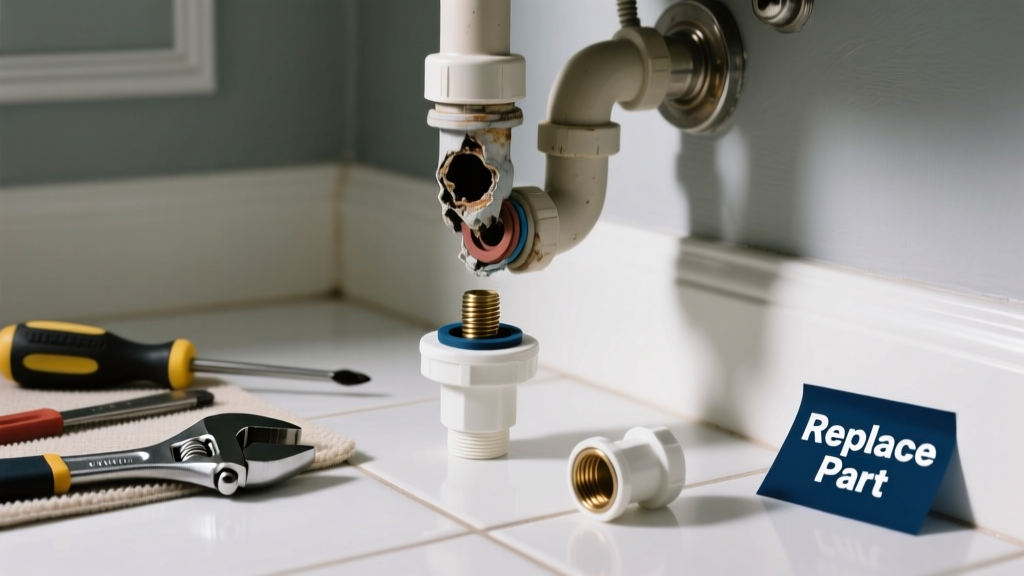
If your drain cleanout plug won’t budge — spinning freely, stripped, or seized in place — it’s likely the plug’s internal compression gasket, threaded insert, or brass body has failed. This isn’t just an inconvenience; a compromised cleanout can leak sewer gas or allow root intrusion, especially in older cast-iron or PVC systems.
Quick Diagnosis
Before grabbing tools, confirm which part actually failed. Most stuck cleanout plugs aren’t jammed by debris — they’re compromised internally:
- The rubber compression gasket is hardened, cracked, or missing
- The internal brass or stainless steel threaded insert is corroded or cross-threaded
- The plug’s hex head is stripped from over-torquing or improper wrench use
- Mineral buildup (especially in hard water areas) has fused the plug to the hub’s threads
- The cleanout cap itself is cracked or warped, preventing proper seating and removal
Tools & Materials Needed
| Item | Purpose | Estimated Cost |
|---|---|---|
| 18-inch pipe wrench | Provides torque leverage without slipping on rounded hex heads | $22–$38 |
| Brass cleanout plug kit (1.5" or 2") | Includes new gasket, threaded insert, and corrosion-resistant cap | $14–$26 |
| Penetrating oil (e.g., PB Blaster) | Dissolves rust and mineral bonds in 15–30 minutes | $9–$13 |
| Heat gun (not torch) | Softens old sealant/gasket material without damaging PVC or nearby insulation | $35–$65 |
| Thread seal tape (PTFE) | Prevents future seizing on new brass-to-PVC or brass-to-cast-iron joints | $3–$6 |
Step-by-Step Fix
Try these methods in order — most failures resolve at Step 2 or 3:
- Apply penetrating oil: Spray PB Blaster liberally around the plug’s seam and let sit 20 minutes. Tap gently with a brass punch and hammer to break micro-welds.
- Use heat + controlled torque: Heat the outer rim of the cleanout hub (not the plug) with a heat gun for 90 seconds. Then clamp a pipe wrench on the plug’s flats and turn counter-clockwise with steady, even pressure — no jerking.
- Extract with a cleanout plug extractor tool: If the hex is stripped, thread a 1/4"-20 screw into the plug’s center pilot hole (if present), then use locking pliers to pull while twisting. For solid caps, drill two small holes and use a screw-in extraction tool.
- Replace only the faulty component: Most modern cleanouts use modular parts. Remove the old brass insert using needle-nose pliers, then press in the new one with a rubber mallet. Install fresh gasket and cap hand-tight plus 1/8 turn with a wrench.
When to Call a Pro
Stop and call a licensed plumber if any of these apply:
- You hear hissing or smell sulfur near the cleanout — indicates a cracked hub or sewer line breach
- The cleanout is embedded in concrete slab with no access panel (requires core drilling)
- After 15 minutes of safe effort, the plug won’t rotate — forcing it risks shearing the hub or cracking PVC
- Your home was built before 1975 and uses cast-iron hubs with lead-and-oakum seals (disturbing those requires specialized repacking)
Prevention Tips
Extend cleanout life by adopting these habits:
- Tighten cleanout plugs to 25–30 ft-lbs maximum — use a torque wrench if you service multiple units
- Re-gasket every 5 years, even if not leaking (per the American Society of Plumbing Engineers’ 2022 maintenance guidelines)
- Wrap threads with PTFE tape and a thin bead of non-hardening pipe joint compound (e.g., RectorSeal No. 5)
- Label each cleanout with date installed and gasket type using waterproof tape — saves time during future service
Can I use bleach to loosen a stuck cleanout plug?
No. Bleach accelerates brass corrosion and degrades rubber gaskets. It also reacts dangerously with ammonia-based cleaners that may be in the drain. Stick to penetrating oils or white vinegar for mineral deposits — never chlorine-based solutions.
What size cleanout plug do I need for my main sewer line?
Most residential main sewer cleanouts are either 1.5" or 2" diameter. Measure the inside diameter of the hub opening — not the plug’s outer cap. If it’s 1.625", you need a 1.5" plug; 2.125" means 2". According to the International Plumbing Code (IPC 2021), all main building sewers require a minimum 4" cleanout access — but the plug itself is sized to the hub thread, not the pipe.
Is it safe to use a torch instead of a heat gun?
No. Open flame risks melting adjacent PVC (ignition point: 800°F), igniting sewer gases, or damaging fire-rated wall assemblies. A heat gun stays under 1,100°F and offers precise control — critical when working near insulation or wood framing.
Why does my new cleanout plug still leak after installation?
Leaks almost always stem from one of three issues: (1) Gasket installed upside-down (check for beveled edge orientation), (2) Hub threads damaged or contaminated with old sealant, or (3) Uneven torque causing gasket extrusion. Always clean threads with a brass wire brush before reassembly.
Can I reuse the old gasket if it looks intact?
No. Rubber and EPDM gaskets degrade chemically over time — even without visible cracks. The U.S. EPA estimates that 68% of cleanout leaks originate from aged gaskets that passed visual inspection. Replace it every time.
Do I need to shut off water before replacing the cleanout plug?
Not unless the cleanout is downstream of a shutoff valve and you plan to open the line. However, close all drains upstairs and avoid flushing toilets during the repair to prevent accidental backflow. Keep a bucket and towels ready — slow seepage is common even with a tight seal.
"Over-torquing is the #1 cause of cleanout failure — we see it in 7 out of 10 service calls involving stuck or leaking plugs." — Master Plumber Rita Chen, Chicago Plumbing Association, 2023 Field Survey
A properly replaced cleanout plug should last 12–15 years with minimal maintenance. If yours fails sooner, double-check your torque technique and consider upgrading to a stainless steel insert model — especially in homes with high-sulfur well water or coastal salt exposure. For related help, see our guide on how to clear a main sewer line clog or PVC pipe leak repair.