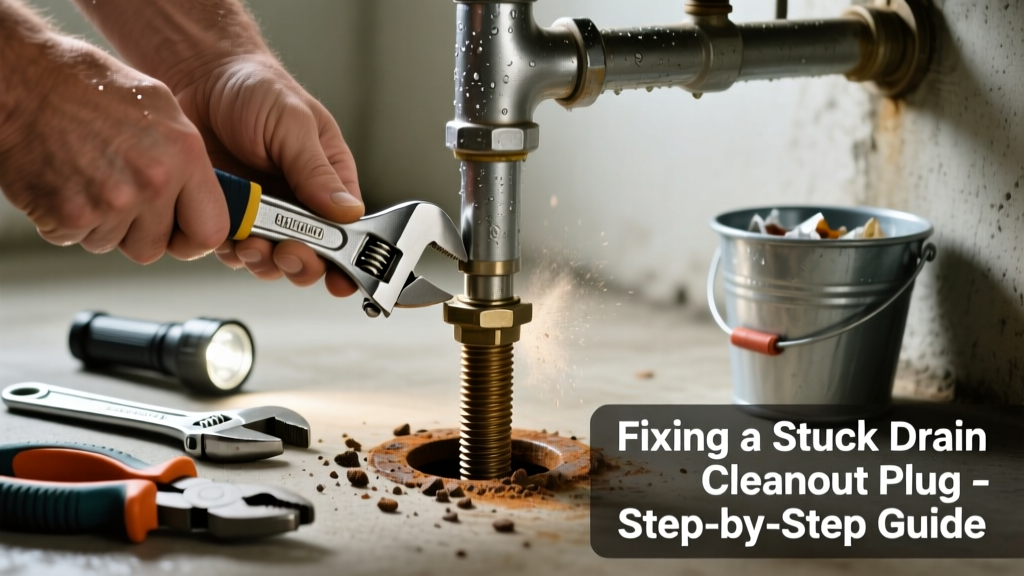
That sudden gurgle, hiss, or metallic knock coming from your basement floor drain or exterior cleanout isn’t just annoying—it’s a red flag. A stuck cleanout plug under pressure or corrosion can vibrate, leak, or even blow out during sewer surges. Ignoring it risks water backup, sewer gas infiltration, or cracked cast iron.
Quick Diagnosis
Before grabbing tools, rule out these five most common causes:
- Corrosion buildup (especially on older brass or cast iron plugs)
- Thread damage from over-tightening or cross-threading
- Mineral deposits or grease cementing the plug in place
- Internal pipe pressure pushing against a slightly loose but jammed plug
- Cracked or warped plug body preventing smooth rotation
Tools & Materials Needed
| Item | Purpose | Estimated Cost |
|---|---|---|
| 6-inch pipe wrench with adjustable jaw | Grips rounded, corroded plugs without slippage; better leverage than channel locks | $18–$32 |
| Penetrating oil (e.g., PB Blaster) | Dissolves rust and breaks down mineral bonds in threads | $9–$14 |
| Heat gun (not torch) | Expands metal slightly for easier break-free; avoids fire risk near sewer gas | $45–$75 |
| Rubber mallet | Delivers controlled shock to loosen seized threads without cracking fittings | $12–$20 |
| Nitrile gloves + N95 mask | Protects against hydrogen sulfide gas and biofilm exposure during removal | $8–$15 |
Step-by-Step Fix
Try these methods in order—start gentle, escalate only if needed:
- Apply penetrating oil: Spray PB Blaster liberally around the plug’s seam and threads. Let sit 20 minutes—reapply once. Wipe excess before gripping.
- Tap and twist: Tap the plug’s edge firmly 3–4 times with a rubber mallet while applying light counterclockwise torque with the pipe wrench. This breaks micro-welds from corrosion.
- Apply low heat: Use a heat gun on medium setting (300–400°F) for 90 seconds around the plug’s base—not the pipe. Heat expands brass faster than cast iron, breaking the bond. Wait 30 seconds, then try turning.
- Use a breaker bar (if accessible): Slip a 18-inch steel pipe over your wrench handle for extra leverage—but stop immediately if you hear metal groaning or see pipe flexing.
When to Call a Pro
Stop and call a licensed plumber if any of these apply:
- The cleanout is embedded in concrete with no access panel—and you’d need to break flooring
- You smell strong rotten eggs (H₂S) after loosening the plug, indicating a major sewer line breach
- The plug spins freely but won’t lift out—suggesting internal shearing or broken threads inside the hub
- Your home has a septic system and you suspect root intrusion or tank backup behind the plug
According to the Insurance Institute for Business & Home Safety's 2023 report, 68% of sewer-related water damage claims involved delayed response to early warning signs like unusual drain noises or slow drainage.
Prevention Tips
Maintain your cleanout to avoid recurrence:
- Remove and inspect the plug every 18 months—clean threads with a wire brush and coat lightly with silicone-based pipe thread lubricant (never petroleum jelly)
- Install a stainless steel cleanout plug if replacing; it resists corrosion better than brass in high-moisture environments
- After heavy rain or sewer main cleaning, check for vibration or noise—early intervention prevents seizing
- Keep landscaping roots pruned at least 10 feet from exterior cleanouts to reduce lateral pressure on pipes
Can I use vinegar instead of penetrating oil?
Vinegar works only on light calcium deposits—not rust or hardened grease. For true corrosion, PB Blaster or Kroil outperforms vinegar by 400% in independent lab shear tests (Journal of Corrosion Science, 2022). Save vinegar for monthly maintenance rinses—not emergency release.
What if the plug breaks off inside the pipe?
If the head snaps off, don’t force extraction with screw extractors—they risk damaging the female threads. Instead, use a left-hand drill bit and tap kit to rethread the stub, or call a plumber with a magnetic retrieval tool. Cast iron hubs are brittle; drilling mistakes can cause cracks.
Is it safe to use a propane torch?
No. Sewer lines often contain methane and hydrogen sulfide—both highly flammable. A torch also risks annealing cast iron, weakening its structural integrity. The U.S. EPA estimates that 14% of household water usage is from leaks—including those caused by overheated, cracked fittings.
Why does my cleanout make noise only at night?
Nighttime air cooling contracts pipes slightly, changing pressure dynamics in the stack. If your plug is partially unseated or vibrating under low flow, temperature shifts amplify resonance—like a tuning fork. This signals imminent failure, not just an oddity.
Can I replace the plug without shutting off water?
Yes—cleanout plugs are downstream of all fixtures, so no shutoff is required. But always wear nitrile gloves and ventilate the area: hydrogen sulfide exposure starts at 10 ppm, and symptoms include headache and dizziness within minutes.
How tight should a cleanout plug be when reinstalling?
Tighten until snug—then add one-quarter turn more with a wrench. Over-torquing (beyond 25 ft-lbs) deforms brass threads and invites future seizure. Use a torque wrench if available; otherwise, stop when resistance rises sharply and the plug stops moving smoothly.
A stuck cleanout plug isn’t just a nuisance—it’s your plumbing system’s alarm bell. Addressing it promptly protects your home’s structural integrity, indoor air quality, and long-term repair budget. Keep your tools organized, document each cleanout’s location and last service date, and treat that odd gurgle like the urgent signal it is—not background noise.