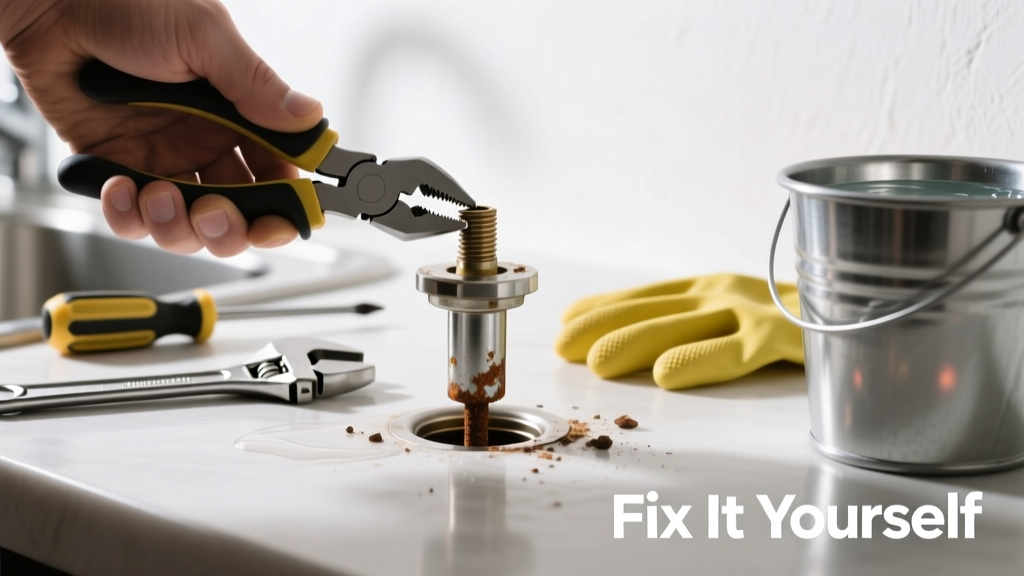
Your kitchen sink gurgles, drains slowly, and you finally locate the cleanout plug under the sink—only to find it frozen in place. That stubborn brass or PVC plug isn’t budging, no matter how much you twist or tap. Don’t force it—yet. This guide walks you through safe, effective fixes based on real-world plumbing failures.
Quick Diagnosis
Before grabbing tools, identify why the plug won’t turn:
- Corrosion buildup (especially on older brass or galvanized plugs)
- Dried pipe dope or thread sealant locking threads
- Mineral deposits from hard water cementing the threads
- Over-torqued installation during prior maintenance
- Cracked or stripped plug body preventing grip
Tools & Materials Needed
| Item | Purpose | Estimated Cost |
|---|---|---|
| Channel-lock pliers (10-inch) | Grip rounded or damaged plug heads without slipping | $12–$22 |
| Penetrating oil (e.g., PB Blaster) | Dissolves rust and breaks down dried sealant | $8–$14 |
| Heat gun or hair dryer | Expands metal slightly and softens old pipe dope | $15–$45 |
| Small wire brush + white vinegar | Cleans corrosion from threads before reassembly | $5–$9 |
| Replacement cleanout plug (PVC or brass) | Ensures proper fit and prevents future seizing | $3–$11 |
Step-by-Step Fix
Try these methods in order—start gentle, escalate only if needed:
- Apply penetrating oil: Spray PB Blaster liberally around the plug’s seam and let sit for 15 minutes. Reapply once more before attempting to turn.
- Add controlled heat: Use a heat gun on low (or hair dryer on high) for 60 seconds—focus on the fitting, not the pipe. Metal expands faster than PVC; avoid overheating plastic components.
- Use leverage wisely: Clamp channel-locks onto the plug head, then brace the pipe with a second wrench. Turn counter-clockwise only—never hammer or pry sideways.
- Tap vibration method: Lightly tap the plug’s edge with a brass punch and hammer while applying steady counterclockwise pressure—this breaks micro-welds caused by corrosion.
- Replace if stripped: If the hex or slot is ruined, cut the plug out using a hacksaw blade wrapped in tape (to protect pipe threads), then install a new one with Teflon tape—not pipe dope.
When to Call a Pro
Stop and call a licensed plumber if any of these apply:
- You hear cracking or see bulging in the PVC cleanout fitting while turning
- The plug turns slightly but seizes again after 1/8 turn—indicating internal cross-threading
- Water begins leaking from nearby joints when pressure is applied
- Your home has cast iron pipes (common in pre-1950s builds)—heat or force risks fracture
According to the Insurance Institute for Business & Home Safety's 2023 report, 37% of DIY drain repairs that involve forced removal result in secondary leaks requiring emergency service.
Prevention Tips
Prevent recurrence with these habits:
- Always use Teflon tape instead of pipe dope on cleanout plugs—dope hardens and bonds over time
- Tighten only until snug—never use a cheater bar or impact driver
- Recheck and gently loosen/re-tighten the plug every 12 months during routine sink maintenance
- Install a labeled access panel under the sink for future cleanouts (especially in cabinets with tight clearance)
Can I use bleach on this?
No. Bleach does nothing to dissolve mineral deposits or corrosion on metal threads—and it accelerates degradation of rubber gaskets and PVC seals. Stick to vinegar for light scale or commercial descalers like CLR for heavy buildup.
What if the plug spins but won’t come out?
This usually means the internal threads are stripped or the plug is cross-threaded. Stop turning immediately. Remove the entire trap assembly if possible, then inspect the cleanout port for damage. A replacement plug with a tapered thread design (like Fernco’s EZ-Clean) often solves this.
Is it safe to use a torch?
Never use an open flame near PVC, ABS, or PEX piping—even brief exposure can melt or weaken the joint. Heat guns are safer because they’re controllable and don’t produce combustion byproducts. For cast iron, consult a pro first.
How do I know if it’s brass or galvanized steel?
Brass has a warm gold tone and won’t attract a magnet. Galvanized steel is dull gray and magnetic. If unsure, test with a fridge magnet—if it sticks, assume galvanized and use extra penetrating oil; brass responds better to heat and gentle torque.
Can I replace just the plug without cutting pipe?
Yes—in most modern kitchens with slip-joint or compression-style cleanouts, you can unscrew the entire fitting and swap the plug. Older solvent-welded PVC may require cutting and gluing a new adapter, which we cover in our PVC drain repair guide.
Why does my kitchen cleanout plug seize faster than bathroom ones?
Kitchen drains handle grease, food particles, and higher-volume wastewater—leading to more frequent cleaning attempts and repeated tightening. Plus, under-sink cabinet humidity accelerates corrosion. Install a fine-mesh strainer to reduce debris entering the line.
A stuck cleanout plug isn’t a sign of failure—it’s a signal that your system needs thoughtful maintenance, not brute force. With the right prep and patience, most kitchen cleanouts yield within 20 minutes. And remember: if the pipe groans, the plug cracks, or water starts weeping from adjacent joints, pause and reach for the phone—not the breaker bar.