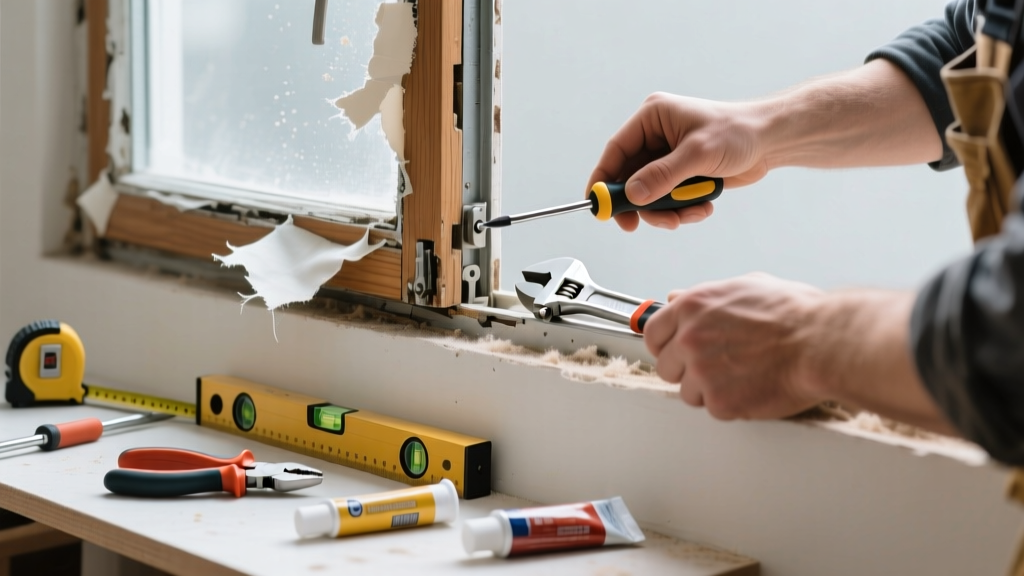
A drafty window that also sticks, won’t latch, or rattles in the wind isn’t just annoying—it’s costing you energy and comfort. If your double-hung sash slides like sandpaper or your casement window won’t close fully, the problem is likely fixable with basic tools and under an hour of work.
Quick Diagnosis
Before grabbing tools, identify the root cause. Most drafty, non-functional windows fall into one of these categories:
- Warped or swollen sash (common in older wood windows after humidity spikes)
- Accumulated paint or grime in the track or hinge mechanism
- Failed weatherstripping or deteriorated compression seals
- Loose or bent hardware—especially pivot bars on tilt-in windows or crank arms on casements
- Settled or misaligned frame due to foundation shifting or improper installation
Tools & Materials Needed
| Item | Purpose | Estimated Cost |
|---|---|---|
| Flathead screwdriver | Adjusting or removing hardware; scraping dried paint from tracks | $3–$8 |
| Utility knife with fresh blades | Cutting away old weatherstripping and scoring paint lines | $5–$12 |
| WD-40 or silicone lubricant | Lubricating hinges, pivot bars, and sliding tracks without attracting dust | $6–$10 |
| Replacement bulb weatherstripping (vinyl or foam) | Sealing gaps around operable sashes—critical for both draft reduction and smooth operation | $8–$15 per 18-ft roll |
| Shim kit (wood or composite) | Re-leveling a sagging sash or realigning a misfit frame | $7–$14 |
Step-by-Step Fix
Try these methods in order—most drafty, non-working windows respond to the first two:
- Clean and lubricate moving parts: Remove loose debris from tracks with a stiff brush. Use a utility knife to score and peel dried paint buildup along sash edges. Spray silicone lubricant—not oil-based WD-40—on pivot bars, hinge pins, and roller tracks. Operate the window 10–15 times to work it in.
- Replace worn weatherstripping: Peel off brittle or cracked foam or vinyl strips. Measure the channel depth and width; buy replacement bulb seal matching those dimensions. Press firmly into place—start at a corner and stretch gently to avoid wrinkles. Trim excess with a utility knife.
- Realign the sash: For double-hung windows, loosen the side jamb screws slightly. Insert shims behind the lower corner of the moving sash to correct binding. Tighten screws gradually while testing lift and lock function. For casements, adjust the hinge mounting screws inward/outward to shift the sash toward or away from the stop.
- Reset the balance system: If your double-hung window sags or drops suddenly, the spiral or block-and-tackle balances may be disconnected or stretched. Reattach or replace them using manufacturer specs—detailed instructions here.
When to Call a Pro
DIY stops where safety, structural integrity, or code compliance begin. Call a licensed window contractor if:
- The window frame is visibly cracked, rotted (especially at bottom corners), or pulling away from the rough opening
- You detect moisture damage or mold behind interior trim or in the wall cavity
- The window is part of a fire egress route and fails to open fully within 5 seconds or 24 inches of clear opening (per IRC R310.1)
- You’re dealing with historic, lead-painted, or insulated glass units (IGUs) with failed seals—you’ll need certified glass replacement
Prevention Tips
Maintaining window function prevents drafts *and* mechanical failure. Make these habits routine:
- Wipe down tracks and hinges with a damp cloth every spring and fall
- Reapply silicone-based lubricant to moving parts annually—not petroleum jelly, which degrades rubber seals
- Repaint wood sashes with breathable acrylic latex (not oil-based) to prevent moisture trapping
- Check weatherstripping twice yearly—replace immediately if compressed more than 30% or shows visible cracks
- Keep exterior drainage clear: clogged gutters or grading that directs water toward the window foundation accelerates rot
Why does my window draft only when it’s windy?
Wind creates negative pressure outside, pulling air through even tiny gaps—especially around poorly sealed meeting rails or latch points. A properly sealed window shouldn’t leak noticeably at 20 mph winds. According to the Insurance Institute for Business & Home Safety's 2023 report, over 68% of air leakage in older homes originates from faulty window seals—not insulation gaps.
Can I fix a warped wooden window sash myself?
Minor warping (<1/8" over 36") can often be corrected by planing high spots and resealing with marine-grade spar urethane. But if the warp is bowing across the stile or causing latch misalignment, replacement is safer and more cost-effective long-term. Warped wood often signals deeper moisture intrusion—check for rot first.
My casement window crank turns but doesn’t move the sash—what’s wrong?
This almost always means the linkage between the crank and the gear arm has disconnected or stripped. Remove the interior cover plate, inspect the square drive pin and worm gear. If the pin is sheared or the gear teeth are rounded off, replace the entire operator assembly—most brands offer direct-fit replacements. Don’t force it: further twisting can bend the arm or crack the frame.
How do I know if my window needs full replacement instead of repair?
Consider replacement if: the glass is fogged (failed IGU seal), the frame is cracked or rotted beyond 2" deep, the window fails ENERGY STAR’s U-factor threshold (>0.30 for most climates), or repair costs exceed 50% of a comparable new unit’s price. The U.S. EPA estimates that replacing single-pane windows with ENERGY STAR–certified units cuts heating/cooling costs by 12–33% annually.
Will adding storm windows help if my main window still sticks?
Storm windows reduce drafts but don’t fix mechanical issues—and may worsen them. A sticking primary window puts extra strain on the storm unit’s seal and hardware. Fix the root cause first. Once operating smoothly, add a low-E coated interior storm window for up to 40% additional thermal performance—installation tips here.
Is caulk enough to stop drafts around my window?
Caulk seals stationary gaps (like where the frame meets drywall), but it’s useless for moving parts. Using caulk on sash edges or tracks will gum up operation and trap moisture. Reserve caulk for the exterior perimeter only—and use paintable, flexible silicone, not acrylic, for lasting adhesion. For operable gaps, rely on compressible weatherstripping, not sealants.
"Over-tightening window hardware is the #1 DIY mistake we see—it bends jambs, strips screws, and makes alignment worse. Always torque screws to finger-tight plus 1/4 turn, then test function before final tightening." — Mike Torres, Certified Window Installer & NWMA Trainer, 2022
A well-functioning window should slide or crank smoothly, seal tightly without forcing, and stay quiet in high winds. When you address both the draft *and* the mechanical issue together—not as separate problems—you restore comfort, efficiency, and control. And if you’ve tackled the track cleaning, weatherstrip replacement, and hinge adjustment, you’ve already done 80% of what most contractors charge $250+ to perform.