That icy whistle around your window frame isn’t just annoying—it’s costing you up to 10–20% more on heating bills each winter, according to the U.S. Department of Energy’s 2022 Home Energy Audit Guide. Most drafty windows don’t need full replacement; they just need one worn-out component swapped out—often weatherstripping, sash locks, or compression gaskets. Pinpointing and replacing that single part is faster, cheaper, and far more sustainable.
Quick Diagnosis
Before grabbing tools, confirm which part is failing. Drafts usually trace back to one of these culprits:
- Cracked, brittle, or missing weatherstripping along the sash edges
- Loose or bent window lock hardware preventing full compression
- Warped or misaligned vinyl or wood sash that won’t seat flush
- Failed compression gasket (common in double-hung windows’ meeting rail)
- Rotted or cracked sill sealant allowing air infiltration at the bottom
Tools & Materials Needed
| Item | Purpose | Estimated Cost |
|---|---|---|
| Utility knife with fresh blades | Cuts old adhesive-backed weatherstripping cleanly without gouging wood or vinyl | $5–$12 |
| 3M Super 77 Spray Adhesive | Bonds foam or vinyl weatherstripping securely—even on cold or slightly dusty surfaces | $8–$11 |
| Vinyl V-strip (0.125" x 0.25") | Replaces worn compression seals in double-hung windows; self-adhesive backing included | $6–$9 per 10-ft roll |
| Window lock repair kit (e.g., Truth Hardware #7001) | Includes cam locks, screws, and strike plates for common tilt-turn and double-hung models | $14–$22 |
| Butyl rope caulk (1/4" diameter) | Seals gaps at the window sill where air bypasses the main seal—non-hardening and removable | $4–$7 |
Step-by-Step Fix
Match your symptom to the method below. Most repairs take under 45 minutes per window:
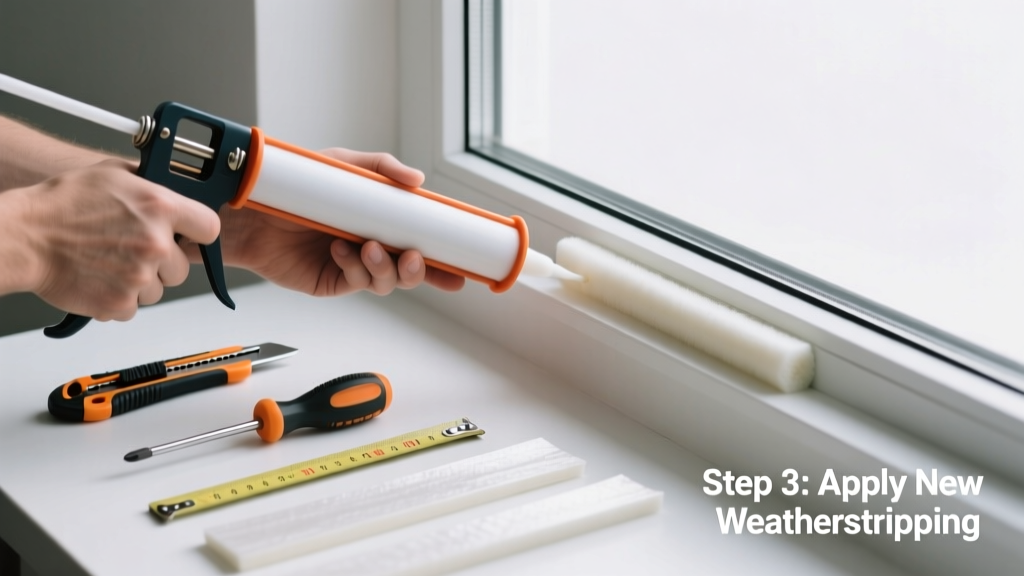
- Replace adhesive-backed weatherstripping: Peel off old strip with a putty knife, clean residue with isopropyl alcohol, let dry, then press new V-strip or bulb seal firmly into place—starting at the top corner and working down.
- Reset or replace window locks: Loosen mounting screws, close the sash fully, reposition the lock so the cam engages the strike plate with firm resistance, then tighten. If the cam is bent or stripped, swap it using a matching repair kit.
- Install compression gasket on meeting rail: For double-hung windows, remove the old gasket from the lower sash’s top edge using needle-nose pliers, insert new vinyl gasket into the groove with a plastic spackling tool, and trim excess with a utility knife.
- Reseal the sill gap: Apply butyl rope caulk along the interior sill where the lower sash meets the frame—press gently to bond, then close and open the sash once to seat it evenly.
When to Call a Pro
Don’t risk injury or further damage if any of these apply:
- The window sash is warped more than 1/8" over its height (measured with a straightedge)—this indicates structural failure or water damage behind the frame
- You’re dealing with historic, stained-glass, or insulated glass units (IGUs) showing fogging or seal failure—the entire unit may need replacement by a certified glazier
- The draft persists after replacing all seals and hardware—and infrared imaging (or a $20 smoke pencil test) reveals airflow coming from inside the wall cavity, signaling failed insulation or flashing
Prevention Tips
Extend the life of your window parts with simple habits:
- Clean weatherstripping quarterly with mild soap and water—avoid solvents that degrade rubber or vinyl
- Lubricate lock mechanisms twice yearly with silicone spray (never WD-40—it attracts dust and dries out plastics)
- Inspect seals every fall before heating season begins—replace at first sign of cracking or loss of springiness
- Keep exterior weep holes clear on vinyl windows to prevent internal condensation that degrades gaskets
Can I reuse old weatherstripping adhesive?
No—old adhesive loses tack within 1–2 years and rarely bonds reliably to new material. Always remove it completely with citrus-based adhesive remover or warm vinegar, then wipe with rubbing alcohol before applying new tape.
What type of weatherstripping works best for aluminum windows?
Aluminum frames expand and contract significantly with temperature swings, so avoid rigid PVC or rubber. Instead, use silicone-faced foam tape (like Frost King S-800) or magnetic weatherstripping—both accommodate movement without peeling or cracking.
How do I know if my window lock is adjustable or needs full replacement?
Most modern locks have a small adjustment screw near the cam base. Turn it clockwise ¼ turn, close the window, and check for increased resistance. If no change occurs—or if the cam spins freely without engaging—the internal gear is stripped and replacement is required.
Is it safe to caulk the exterior perimeter of my window myself?
Only if you’re resealing visible gaps *above* the brickmold or casing—not the original installation seam between window flange and sheathing. That primary barrier requires proper flashing tape and is best handled by a licensed contractor. DIY exterior caulk here often traps moisture and accelerates rot.
Why does my draft get worse when it’s windy, even after sealing?
This points to pressure-driven infiltration—likely a hidden gap at the header or rough opening. The U.S. EPA estimates that 14% of household air leakage originates from poorly sealed framing cavities, not the window itself. You’ll need to inspect attic or crawl space access points near the window header.
Can I install weatherstripping on a window with broken glass?
Yes—but only as a temporary measure. Broken glass compromises structural integrity and thermal performance. Replace the pane first via how to replace window glass, then seal. Never rely on weatherstripping to compensate for missing or cracked glazing.
"Over 60% of draft complaints stem from degraded weatherstripping—not faulty windows. Replacing it correctly restores 92% of original airtightness, per the National Fenestration Rating Council’s 2021 Field Performance Study."
A well-maintained window should last 20+ years without full replacement—especially when you treat symptoms early and match parts to your window’s make and model. Keep a small weatherstripping kit in your garage, check seals every season, and refer to your window’s manufacturer diagram (often found on the jamb sticker or online by model number). For deeper issues like air leakage behind the frame, consult a BPI-certified home energy auditor—they’ll pinpoint exactly where your house is breathing and how to stop it. And if you’re tackling multiple windows, consider upgrading to energy-efficient window seals designed for high-wind or extreme-climate zones.